 1 citations
,
January 2022 in “MedieKultur: Journal of Media and Communication Research”
1 citations
,
January 2022 in “MedieKultur: Journal of Media and Communication Research” YouTube is changing the way health-related advice is shared, altering traditional roles of experts and patients.
1 citations
,
May 1987 in “The Lancet” Topical minoxidil may help hair growth by improving blood flow to hair follicles.
4 citations
,
October 2021 in “Journal of The European Academy of Dermatology and Venereology” Low-dose oral minoxidil increases hair density and thickness in people with hair loss.
 29 citations
,
August 1985 in “Contact Dermatitis”
29 citations
,
August 1985 in “Contact Dermatitis” Minoxidil can cause allergic reactions like burning, itching, and red bumps.
 December 2024 in “Biological and Pharmaceutical Bulletin”
 Gum arabic improves minoxidil delivery to hair follicles, enhancing hair growth.
December 2025 in “Actas Dermo-Sifiliográficas” 3 citations
,
January 1987 in “Archives of Dermatology” Most dermatologists prescribed topical minoxidil for hair loss, with few reporting complications.
 July 2025 in “ACS Pharmacology & Translational Science”
 Maslinic acid from olive extracts promotes hair growth like minoxidil.
7 citations
,
October 1988 in “Clinics in Dermatology” Minoxidil may help hair regrowth in alopecia areata by affecting T-cells.
1 citations
,
April 2018 in “Медицинский совет” Minoxidil effectively treats early-stage androgenic alopecia with visible results in 4-6 months and minimal side effects.
March 2025 in “International Journal of Trichology” Low-dose oral minoxidil is safe for the heart.
May 2025 in “Actas Dermo-Sifiliográficas” High-dose oral minoxidil can improve hair growth but may cause side effects.
1 citations
,
July 2025 in “Journal of Human Immunity” Minoxidil helps restore thymus size in 22q11.2 deletion syndrome.
 9 citations
,
July 2017 in “Journal of Drug Delivery Science and Technology”
9 citations
,
July 2017 in “Journal of Drug Delivery Science and Technology” Scientists developed a new method to deliver alopecia treatment directly to hair follicles, which could be a promising treatment for hair loss and other hair diseases.
 December 2023 in “Toxicology communications”
 Minoxidil overdose caused severe low blood pressure, but the patient recovered with specific treatments.
4 citations
,
November 2021 in “Journal of The American Academy of Dermatology” Bicalutamide may reduce unwanted hair growth caused by minoxidil in women with hair loss.
 May 1987 in “Inpharma (Balgowlah)”
 Topical minoxidil may slow hair loss but often doesn't lead to satisfactory hair regrowth and requires ongoing treatment.
 39 citations
,
January 2015 in “Journal of Electroanalytical Chemistry”
39 citations
,
January 2015 in “Journal of Electroanalytical Chemistry” New sensor detects minoxidil accurately and effectively.
253 citations
,
June 2004 in “Journal of Controlled Release” Smaller nanoparticles improve minoxidil delivery through hair follicles.
477 citations
,
March 2004 in “Proceedings of the National Academy of Sciences” The DMI3 gene is essential for nodule development and symbiosis in certain plants.
 July 2024 in “Skin Appendage Disorders”
 Low dose oral minoxidil is safe for treating hair loss in men.
 July 2025 in “Journal of Investigative Dermatology”
 Minoxidil may improve nail growth and appearance.
March 2023 in “Clinical Toxicology”  104 citations
,
March 1987 in “Journal of The American Academy of Dermatology”
104 citations
,
March 1987 in “Journal of The American Academy of Dermatology” Minoxidil helps hair growth in 63.6% of alopecia patients, with 27.3% having excellent results.
 March 2026 in “Journal of Pakistan Association of Dermatologists”
 Low-dose oral minoxidil is more effective and convenient for treating male pattern baldness than topical minoxidil.
September 2019 in “Zagazig university medical journal” Minoxidil helps hair growth but has side effects.
 June 2026 in “Preprints.org”
 Oral minoxidil can harm arteries at higher doses, while dutasteride may be safer.
 12 citations
,
January 2014 in “The Pan African medical journal”
12 citations
,
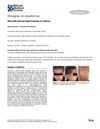
January 2014 in “The Pan African medical journal” Minoxidil caused unwanted hair growth in a child, but stopped after stopping treatment.
 December 2025 in “Archives of Dermatological Research”
 Topical minoxidil can cause unwanted hair growth and eye issues, especially in infants, so better education and guidelines are needed.
5 citations
,
August 2021 in “The Journal of the American Animal Hospital Association/Journal of the American Animal Hospital Association” Accidental minoxidil exposure can cause serious illness or death in pets.