 May 2018 in “International journal of cell science & molecular biology”
 Early anti-aging hair treatments should focus on anti-inflammatory agents and promoting healthy hair growth cycles.

Some treatments like minoxidil, finasteride, and surgery can help with hereditary hair loss.
January 2018 in “Food Additives and Contaminants Part A-chemistry Analysis Control Exposure & Risk Assessment” Researchers developed a precise method to detect illegal hair-growth drugs in dietary supplements.
 January 2018 in “Elsevier eBooks”
 The document concludes that alopecia has various forms, each with specific treatments, but no definitive cure for certain types like CCCA has been proven.
 September 2017 in “Springer eBooks”
 Low-level laser therapy seems to promote hair growth but requires more research to confirm its effectiveness.
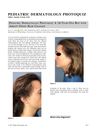 September 2017 in “Pediatric Dermatology”
 A 14-year-old boy was diagnosed with a rare hair condition that may lead to hair thinning and has no known effective treatments.
 August 2017 in “DOAJ (DOAJ: Directory of Open Access Journals)”
 New treatments for common hair loss might be safer and more effective than current options.
Hair loss causes emotional distress, leading to high spending on treatments, with Minoxidil and Propecia being common but having side effects.
 January 2017 in “Journal of Investigative Dermatology Symposium Proceedings”
 The 2015 Hair Research Congress concluded that stem cells, maraviroc, and simvastatin could potentially treat Alopecia Areata, topical minoxidil, finasteride, and steroids could treat Frontal Fibrosing Alopecia, and PTGDR2 antagonists could also treat alopecia. They also found that low-level light therapy could help with hair loss, a robotic device could assist in hair extraction, and nutrition could aid hair growth. They suggested that Alopecia Areata is an inflammatory disorder, not a single disease, indicating a need for personalized treatments.
 January 2017 in “Korean Journal of Pharmacognosy”
 Modified red ginseng extract promotes hair growth and has antioxidant and anti-inflammatory effects.
 January 2017 in “Springer eBooks”
 Over 40% of postmenopausal women experience hair loss, with treatments aiming to stop further loss and possibly thicken hair.

Red ginseng extract (GS-E3D) may promote hair growth and has antioxidant and anti-inflammatory properties.
 January 2017 in “Clinical approaches and procedures in cosmetic dermatology”
 Men are increasingly seeking quick-result cosmetic treatments for their thicker, oilier skin and hair loss issues.
January 2017 in “Touro Scholar (Touro College)” Hair loss can be managed and sometimes reversed with certain drugs, but not permanently cured.
 September 2016 in “Medical Journal of Australia”
 Planting trees and doing yoga might make you feel better; yoga can help with asthma symptoms, and certain treatments can improve female hair loss.
 August 2016 in “JAMA Facial Plastic Surgery”
 Hair restoration can improve attractiveness and trustworthiness, but it should be done aesthetically; advancements in technology and medical therapies are making it more accessible and effective.
 April 2016 in “Medical Acupuncture”
 The document concludes that hair loss in women is treated with medications, therapies, and surgery in Western medicine, and with acupuncture and herbs in Chinese medicine, but hereditary hair loss is hard to reverse.
February 2016 in “Aktuelle Dermatologie” Be enthusiastic, curious, and engage in research.

Modern hair restoration techniques can effectively treat hair loss and provide natural-looking results.
 January 2016 in “Springer eBooks”
 The document concludes that there are various causes and treatments for hair loss, with hair transplantation being a notable option.
 January 2016 in “Georg Thieme Verlag eBooks”
 The document recommends personalized, culturally sensitive treatments to rejuvenate the aging Asian face, focusing on natural results and specific techniques for skin, hair, and facial features.
The article concludes that understanding the causes of hair loss and using continuous treatments like minoxidil and finasteride can help manage it, despite potential side effects.
September 2015 in “Der Internist” Finasteride and minoxidil are effective for hair loss, with potential side effects, and JAK inhibitors show promise for alopecia areata.
 July 2015 in “Cambridge University Press eBooks”
 Androgens like testosterone affect skin health and can lead to conditions such as acne and hair loss, with various treatments available.
 January 2015 in “Hair therapy & transplantation”
 Some botanical products may help increase hair growth in people with alopecia, but more research is needed.
New treatments for hair loss are being researched for better effectiveness and safety.
 January 2015 in “Indian Journal of Dermatology, Venereology and Leprology”
 The document concludes that various skin conditions have specific characteristics and treatments, and highlights the importance of vitamin D in managing these dermatological issues.
 January 2015 in “Вестник дерматологии и венерологии”
 Some treatments like minoxidil, finasteride, and dutasteride are effective for hair loss, but there's no agreed best treatment.
December 2014 in “대한피부미용학회지” Natural hair-loss preventers from plants and herbs are becoming popular due to fewer side effects and added benefits.
December 2014 in “DOAJ (DOAJ: Directory of Open Access Journals)” Developing plant-based treatments for alopecia is promising and necessary.