
Minoxidil and finasteride are the only FDA-approved treatments for hair loss caused by genetic and hormonal factors, but their effectiveness is often doubted, indicating a need for new treatments.
 April 2022 in “Medicina estética”
 Minoxidil is the only FDA-approved treatment for female hair loss, with other potential treatments needing more research for effectiveness.
 October 2021 in “Cosmoderma”
 Hair loss can be managed with treatments like minoxidil, finasteride, and others, but there are still gaps in effectiveness and off-label usage is increasing.
 July 2018 in “Elsevier eBooks”
 Telogen Effluvium is a common, usually reversible hair loss condition, often improved by removing the trigger and possibly treated with various products, though their effectiveness is uncertain.
 July 2011 in “Springer eBooks”
 The document concluded that FDA-approved treatments like minoxidil and finasteride are effective for hair loss, while the effectiveness of natural remedies and other non-approved treatments is not well-supported by evidence.
 January 2007 in “Elsevier eBooks”
 Alopecia areata is a reversible, autoimmune-related hair loss that can have significant emotional impact and uncertain treatment effectiveness.
 February 2023 in “International Journal of Pharmaceutics”
 A new version of minoxidil, a hair loss treatment, was made using nanotechnology. This version, called minoxidil cubosomes, works better and causes fewer skin reactions than the old version. It also penetrates and stays in the skin better, promoting hair regrowth. It's safe and could be a good alternative to current treatments.
September 2022 in “Journal of The American Academy of Dermatology” Combining dutasteride mesotherapy with oral minoxidil is more effective for hair loss than using oral minoxidil alone.
 November 2020 in “Postepy Dermatologii I Alergologii”
 Sulfotransferase SULT1A1 activity may predict minoxidil treatment success for hair loss.
 May 2015 in “Journal of The American Academy of Dermatology”
 Niosomal minoxidil, when applied topically, increases hair count more than conventional minoxidil solution.
 November 2014 in “British Journal of Dermatology”
 Hair loss is due to thinner hairs, not less hairs; hair diameter indicates balding progression and treatment effectiveness.

Alopecia areata, a type of hair loss, may be passed through T cells and has genetic links, while treatments vary in effectiveness. Male pattern baldness can be treated with finasteride and is influenced by androgens in hair follicles.

Exosome therapy is the most effective for hair growth, but it's experimental and expensive.
1 citations
,
April 2018 in “Медицинский совет” Minoxidil effectively treats early-stage androgenic alopecia with visible results in 4-6 months and minimal side effects.
 October 2025 in “JEADV Clinical Practice”
 Minoxidil may help hair regrowth in traction alopecia, but changing hair habits is the main treatment.
 November 2024 in “RECIMA21 - Revista Científica Multidisciplinar - ISSN 2675-6218”
 Minoxidil is a safe and effective hair loss treatment, with pharmacists enhancing its benefits.
 September 2024 in “Journal of Skin and Stem Cell”
 MMP® with minoxidil may improve hair growth in chronic telogen effluvium.
 January 2024 in “SAGE Open Medical Case Reports”
 Minoxidil can help increase facial hair growth.
 17 citations
,
April 1975 in “The Journal of Pediatrics”
17 citations
,
April 1975 in “The Journal of Pediatrics” Minoxidil effectively controls severe high blood pressure in children with few side effects.
 13 citations
,
June 2016 in “Dermatologic Therapy”
13 citations
,
June 2016 in “Dermatologic Therapy” Minoxidil works better when applied on a damp scalp than a dry one.
 4 citations
,
May 2020 in “Medicine in Drug Discovery”
4 citations
,
May 2020 in “Medicine in Drug Discovery” The study developed a method to detect minoxidil and its sulfate form, found that minoxidil sulfate is temperature-sensitive, and identified a way to potentially increase its stability for hair loss treatment.
3 citations
,
January 1990 in “DICP” Minoxidil and tretinoin together may help hair growth but need more research.
 January 2025 in “Acta Dermatovenerologica Alpina Pannonica et Adriatica”
 Oral minoxidil boosts hair growth and reduces shedding in androgenetic alopecia.
 November 2024 in “Journal of Drugs in Dermatology”
 Injectable minoxidil is a promising, effective treatment for hair loss.
 October 2022 in “Journal of Kermanshah University of Medical Sciences”
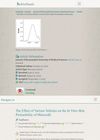
 Different substances can affect how well the skin absorbs minoxidil, a hair loss drug. Caprylic acid helps the skin absorb it the best, followed by propylene glycol and water.
 65 citations
,
April 2020 in “International Journal of Molecular Sciences”
65 citations
,
April 2020 in “International Journal of Molecular Sciences” PRP injections may be a safe, effective alternative for hair loss treatment compared to minoxidil and finasteride.
36 citations
,
March 1989 in “Cleveland Clinic Journal of Medicine” 3% topical minoxidil effectively treats extensive alopecia areata.
 25 citations
,
May 1986 in “The American Journal of the Medical Sciences”
25 citations
,
May 1986 in “The American Journal of the Medical Sciences” Minoxidil helps hair growth and boosts self-esteem in balding men.
 19 citations
,
June 2020 in “International Journal of Dermatology”
19 citations
,
June 2020 in “International Journal of Dermatology” Low-dose oral minoxidil effectively treats non-scarring hair loss with some side effects like hypertrichosis and postural hypotension.
 9 citations
,
April 2018 in “JAMA Dermatology”
9 citations
,
April 2018 in “JAMA Dermatology” Topical minoxidil improves hair loss in 80% of women with breast cancer undergoing endocrine therapy.