 February 2018 in “Medicine - Programa De Formación Médica Continuada Acreditado”
 Minoxidil and finasteride are the main FDA-approved treatments for hair loss, with other methods showing promise but lacking strong evidence.
The 7.5% talok and 2% pare leaf extract hair tonic effectively promotes hair growth, similar to minoxidil.
 January 2018 in “International journal for pharmaceutical research scholars”
 Meniran extract hair tonic may stimulate hair growth in rats, with the version containing 1% menthol being more effective.
Many hair loss myths lack strong evidence, but some treatments are proven to work.
 May 2017 in “InTech eBooks”
 Hair pulling disorder is treated with therapy and medication; hair loss from tension can be reversed if caught early.
 April 2017 in “Australasian Journal of Dermatology”
 The session covered updates on skin treatments, including radiotherapy, imiquimod, acitretin, JAK inhibitors, and strategies for managing rosacea and preventing surgical infections.
 January 2017 in “Journal of Investigative Dermatology Symposium Proceedings”
 The 2015 Hair Research Congress concluded that stem cells, maraviroc, and simvastatin could potentially treat Alopecia Areata, topical minoxidil, finasteride, and steroids could treat Frontal Fibrosing Alopecia, and PTGDR2 antagonists could also treat alopecia. They also found that low-level light therapy could help with hair loss, a robotic device could assist in hair extraction, and nutrition could aid hair growth. They suggested that Alopecia Areata is an inflammatory disorder, not a single disease, indicating a need for personalized treatments.
January 2017 in “Touro Scholar (Touro College)” Hair loss can be managed and sometimes reversed with certain drugs, but not permanently cured.
January 2016 in “Çağdaş tıp dergisi” Topical 1% pimecrolimus effectively treated alopecia areata.

The article concludes that understanding the causes of hair loss and using continuous treatments like minoxidil and finasteride can help manage it, despite potential side effects.
 December 2015 in “Actas Dermo-Sifiliográficas”
 Hair transplantation for Frontal Fibrosing Alopecia may work if the disease is inactive for 2 years and with ongoing treatment to maintain results.
 January 2015 in “British journal of medicine and medical research”
 A woman with severe hair loss due to systemic sclerosis regrew her hair in 4 months using a combination of treatments.

The document discusses various treatments for different types of hair loss, including steroids, minoxidil, and anthralin.
 January 2014 in “Anales Médicos de la Asociación Médica del Centro Médico ABC”
 The treatment effectively promoted hair growth with minimal side effects.
 May 2013 in “Trends in Urology & Men's Health”
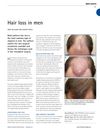
 Male-pattern hair loss is normal, often involves hormone effects on hair follicles, and can be treated with medication or surgery, but new treatments are being researched.
 March 2013 in “DOAJ (DOAJ: Directory of Open Access Journals)”
 Minoxidil and finasteride are effective long-term treatments for male hair loss.
January 2013 in “Journal of Clinical Dermatology” The combination of oral finasteride and topical 5% minoxidil effectively treats androgenic alopecia, especially after 3 months.
May 2011 in “Harper's Textbook of Pediatric Dermatology” Alopecia areata causes patchy hair loss and has no cure, but treatments like corticosteroids and minoxidil can help.
 June 2008 in “British Journal of Dermatology”
 Herpes gestationis is linked to certain antigens, atopic eczema affects T cell populations and may be eased by breastfeeding, higher doses of anti-androgen treatment can improve androgenic alopecia, topical minoxidil increases hair thickness, long-term methotrexate therapy can cause liver fibrosis in psoriasis patients, and Lichen Sclerosus et Atrophicus patients aren't at higher risk for autoimmune disorders.
 May 2003 in “Journal of Investigative Dermatology”
 The meeting covered advances in understanding hair growth, causes of hair loss, and potential treatments.
October 2001 in “Journal of the American Academy of Dermatology” Topical minoxidil and anthralin work for patchy alopecia areata but not for alopecia totalis/universalis.
 July 1996 in “College & Research Libraries News”
 Male pattern baldness is mostly hereditary and treated with varying success.
 August 1994 in “Drugs & Therapy Perspectives”
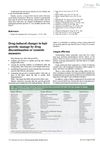
 Some drugs can cause hair loss or growth, but hair usually returns to normal after stopping the drug.
Minoxidil effectively promotes hair growth in seborrheic alopecia.
 August 1986 in “Journal of The American Academy of Dermatology”
 Minoxidil showed a 30% success rate for hair growth in a study, and various skin treatments were effective, but some had limitations or side effects.
June 1986 in “Journal of the American Academy of Dermatology” Topical minoxidil showed promise for early male pattern baldness.
 June 2001 in “International Journal of Cosmetic Surgery and Aesthetic Dermatology”
 The editorial concludes that the field of hair loss treatment has become more scientific and that effective treatments are important for self-esteem and job prospects.
November 2022 in “Clinical, Cosmetic and Investigational Dermatology” The combined treatment for hair loss is effective, easy to use, and has mild side effects.
Microneedling may be an effective treatment for pattern hair loss.
Sansevieria trifasciata Prain shows promise for treating hair loss by inhibiting androgen receptors.