
Alopecia Areata has no cure, treatments are limited, and the condition often recurs, but new therapies like JAK inhibitors show promise.

The review found that PRP is the most effective treatment for hair loss with few side effects.
 November 2019 in “Harper's Textbook of Pediatric Dermatology”
 Understanding normal hair growth and loss in children is key to diagnosing and treating hair disorders.
 September 2018 in “Open Repository of the University of Porto (University of Porto)”
 The internship highlighted the pharmacist's important role in health education and community engagement.
 April 2017 in “Australasian Journal of Dermatology”
 The session covered updates on skin treatments, including radiotherapy, imiquimod, acitretin, JAK inhibitors, and strategies for managing rosacea and preventing surgical infections.

Off-label drug use can be risky but sometimes beneficial when standard treatments fail.
 January 2016 in “Georg Thieme Verlag eBooks”
 The document recommends personalized, culturally sensitive treatments to rejuvenate the aging Asian face, focusing on natural results and specific techniques for skin, hair, and facial features.
 January 2015 in “Hair therapy & transplantation”
 Some botanical products may help increase hair growth in people with alopecia, but more research is needed.
 January 2004 in “Side effects of drugs annual”
 Certain skin drugs and topical agents, including some natural extracts and fragrances, can cause allergic reactions. Some hair dyes and extensions, as well as minoxidil, a hair growth treatment, can also cause allergies. Botulinum toxin A can effectively reduce sweat but may have temporary side effects.
 September 2003 in “Clinics in Family Practice”
 Different hair diseases affect people during childbearing years, with treatments ranging from medication to psychological support.
 August 1994 in “Drugs & Therapy Perspectives”
 The document concludes that H2-antagonists and proton pump inhibitors are highly effective for ulcers, eradicating Helicobacter pylori is important to prevent recurrence, and misoprostol helps with NSAID-related ulcers.
The combination of oral minoxidil, oral dutasteride, and mesotherapy is the most effective and safe for hair growth in AGA.

Combined oral minoxidil and finasteride significantly improve hair density in men with male pattern baldness.
 December 2024 in “Journal of Cosmetic Dermatology”
 Oral minoxidil rarely causes pericardial effusion, especially at low doses.
 April 2024 in “MRIMS journal of health sciences”
 Using growth factor injections and minoxidil together can significantly improve hair growth in people with hair loss.
 December 2023 in “Journal of Drugs in Dermatology”
 Media coverage increased public interest in oral minoxidil for hair loss but may also spread misinformation.
 August 2023 in “Journal of Cosmetic Dermatology”
 Both minoxidil-spironolactone and minoxidil-finasteride treatments work for hair loss, but minoxidil-spironolactone is slightly more effective, especially in women.
 May 2023 in “International Journal of Trichology”
 Low-dose oral Minoxidil is an effective treatment for hair loss with minimal serious side effects.
 July 2018 in “Elsevier eBooks”
 Telogen Effluvium is a common, usually reversible hair loss condition, often improved by removing the trigger and possibly treated with various products, though their effectiveness is uncertain.
 June 2008 in “British Journal of Dermatology”
 Herpes gestationis is linked to certain antigens, atopic eczema affects T cell populations and may be eased by breastfeeding, higher doses of anti-androgen treatment can improve androgenic alopecia, topical minoxidil increases hair thickness, long-term methotrexate therapy can cause liver fibrosis in psoriasis patients, and Lichen Sclerosus et Atrophicus patients aren't at higher risk for autoimmune disorders.
January 2023 in “Journal of Clinical and Diagnostic Research” Microneedling with PRP is as effective and safe as minoxidil+finasteride for treating hair loss.
January 2022 in “International Journal of Trichology” Using both PRP and minoxidil together works better for treating hair loss in men than using either one alone.
 January 2022 in “Journal of Healthcare Sciences”
 Male Androgenetic Alopecia, a common hair loss in men, can be slowed and partially restored with treatments like minoxidil and finasteride, or hair transplantation. Serenoa repens may be an alternative treatment. More research is needed for new treatments.
November 2021 in “Arquivos Médicos dos Hospitais e da Faculdade de Ciências Médicas da Santa Casa de São Paulo” Microneedling with minoxidil, platelet-rich plasma, and mesotherapy improves hair growth significantly.
 December 2018 in “Evidence-Based Practice”
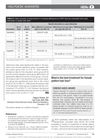
 Topical minoxidil 1% and 2% are twice as effective as placebo for female pattern hair loss.
April 2023 in “Dermatology and therapy” Most patients stop using topical minoxidil due to side effects.
December 2022 in “Clinical and experimental dermatology and therapies” Adding the topical gel improved hair growth more than using minoxidil or finasteride alone.

Topical minoxidil helps treat hair loss in teens, but more research needed for safe options.
 November 2014 in “British Journal of Dermatology”
 Hair loss is due to thinner hairs, not less hairs; hair diameter indicates balding progression and treatment effectiveness.
 February 2026 in “Editora Pasteur eBooks”
 A comprehensive, personalized approach is needed for treating female pattern hair loss and obesity, involving multiple medical disciplines and lifestyle changes.