July 2024 in “Journal of Investigative Dermatology” OR101 may effectively treat atopic dermatitis and similar skin conditions.
 1 citations
,
April 2017 in “Journal of Investigative Dermatology”
1 citations
,
April 2017 in “Journal of Investigative Dermatology” A new one-step test can quickly identify skin cancer during surgery.
7 citations
,
May 2025 in “Journal of Biomedical Science” Keratin 6A increases skin inflammation, suggesting it could be a target for treating certain skin diseases.
June 2008 in “Wound Repair and Regeneration” Msx-2 gene removal speeds up skin wound healing in mice.
 April 2023 in “Journal of Investigative Dermatology”
 The document's conclusion cannot be provided because the content is not accessible.
April 2025 in “Asian Journal of Surgery” 15 citations
,
May 2009 in “Chemical Physics Letters” A new method accurately measures molecular movement without complex modeling.
 1 citations
,
July 1998 in “Hair transplant forum international”
1 citations
,
July 1998 in “Hair transplant forum international” The document's conclusion cannot be determined as the content is not available for analysis.
8 citations
,
April 2016 in “Experimental dermatology” B6.Cg-Tyr c−2J Hr hr /J mice have a stronger delayed sunburn reaction and are good for UV research.
 April 2018 in “Journal of Investigative Dermatology”
 The conclusion is that a new method combining magnetic tweezers and traction force microscopy may help understand skin cell interactions and diseases.
74 citations
,
February 2018 in “Journal of the American Academy of Dermatology”  January 2020 in “Juntendo Medical Journal”
 The document's conclusion cannot be determined as the content is not available.
October 2019 in “Research Square (Research Square)” YH0618 granules may help prevent hair loss in breast cancer patients undergoing chemotherapy.
54 citations
,
February 1994 in “Journal of Investigative Dermatology” September 2023 in “Journal of the American Academy of Dermatology”  November 2021 in “World Family Medicine Journal /Middle East Journal of Family Medicine”
 The document's conclusion cannot be provided because the document is not readable or understandable.
1 citations
,
April 2010 in “Digital WPI” CLK1 is needed for skin cells to become epidermal cells but not sebocytes.
 April 2023 in “The journal of investigative dermatology/Journal of investigative dermatology”
 Folliculotropic mycosis fungoides has unique molecular features and cell interactions that could guide targeted therapy.
 2 citations
,
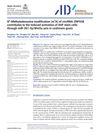
November 2022 in “Animal Bioscience”
2 citations
,
November 2022 in “Animal Bioscience” A specific RNA modification in cashmere goats helps activate hair growth-related stem cells.
 April 2016 in “Journal of Investigative Dermatology”
 Mefloquine, an antimalarial drug, is effective in killing melanoma cells resistant to other treatments by causing lethal stress in the cells.
17 citations
,
September 2018 in “Matrix Biology” Laminin-511 is essential for proper melanocyte movement and development in mice.
 1 citations
,
March 2015 in “Journal of the European Academy of Dermatology and Venereology”
1 citations
,
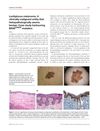
March 2015 in “Journal of the European Academy of Dermatology and Venereology” A clinically suspected melanoma appeared benign under the microscope but was confirmed by specific tests and a rare mutation.

Removing SIX1 in fat cells reduces skin fibrosis.
4 citations
,
May 2023 in “Pigment Cell & Melanoma Research” BMI1 is essential for preventing hair greying and maintaining hair color.
 2 citations
,
August 2019 in “BMC Complementary and Alternative Medicine”
2 citations
,
August 2019 in “BMC Complementary and Alternative Medicine” Asiasari radix extract may be a potential treatment for melanoma because it selectively triggers cell death in melanoma cells by affecting p53 regulation.
June 2019 in “Research Square (Research Square)” YH0618 granules may help prevent hair loss in breast cancer patients undergoing chemotherapy.
The treatment was ineffective in humans.
 January 2026 in “Materials Horizons”
 KRTAP6 genes affect wool quality in sheep.
14 citations
,
February 2022 in “The Journal of clinical investigation/The journal of clinical investigation” Scientists made a mouse model of a serious skin cancer by changing skin cells with a virus and a specific gene, which is similar to the disease in humans.