32 citations
,
January 2000 in “Human Heredity” Monilethrix severity varies and may be influenced by other genetic or environmental factors.
2 citations
,
April 1984 in “BMJ”  1 citations
,
April 2016 in “Journal of The American Academy of Dermatology”
1 citations
,
April 2016 in “Journal of The American Academy of Dermatology” Ixekizumab helps improve life quality, physical ability, and work performance in patients with psoriatic arthritis who haven't used biologic drugs before.
 32 citations
,
May 2015 in “Journal of Investigative Dermatology”
32 citations
,
May 2015 in “Journal of Investigative Dermatology” Mice without collagen VI have slower hair growth normally but faster regrowth after injury.
3 citations
,
November 1983 in “BMJ”  January 2024 in “Journal of Crohn's and colitis”
 Janus Kinase inhibitors are effective and have an acceptable safety profile for treating moderate to severe Ulcerative Colitis.
January 2025 in “Journal of College of Physicians And Surgeons Pakistan” Minimally invasive glaucoma surgery can effectively manage glaucoma in GAPO syndrome when other treatments fail.
11 citations
,
May 2011 in “The Journal of Dermatology” A man had two rare autoimmune diseases that might be connected.
1 citations
,
November 2022 in “Journal of Investigative Dermatology” ALRN-6924 may prevent hair loss caused by chemotherapy.
1 citations
,
October 2023 in “BMC Genomics” miRNAs in the Dlk1-Gtl2 region may improve lamb fur quality.
 28 citations
,
July 2017 in “Expert Review of Anticancer Therapy”
28 citations
,
July 2017 in “Expert Review of Anticancer Therapy” Breast cancer patients taking CDK4/6 inhibitors are more likely to experience fatigue, hair loss, and mouth sores.
1 citations
,
September 2023 in “Journal of the American Academy of Dermatology” Mini pulse corticosteroid therapy with oral dexamethasone is effective and has fewer side effects for treating extensive alopecia areata.
3 citations
,
September 2022 in “European Journal of Dermatology” Gene sequencing is crucial for diagnosing Junctional epidermolysis bullosa.
 11 citations
,
May 2010 in “Journal of the South African Veterinary Association”
11 citations
,
May 2010 in “Journal of the South African Veterinary Association” Mycophenolate mofetil helped reduce steroid use in treating a dog's autoimmune skin disease.
December 2012 in “http://isrctn.org/>”  6 citations
,
April 2017 in “Experimental dermatology”
6 citations
,
April 2017 in “Experimental dermatology” CD80CD86 deficiency causes hair loss by disrupting regulatory T cells.
June 2022 in “Mayo Clinic Proceedings” The man was diagnosed with stage III multiple myeloma and treated to improve kidney function.
 2 citations
,
October 1990 in “The Lancet”
2 citations
,
October 1990 in “The Lancet” Some people have a genetic variation that makes them less effective at breaking down drugs.
 November 2012 in “Actas Dermo-Sifiliográficas”
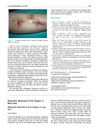
 An 86-year-old man had a rare tongue melanoma but refused treatment, showing the need for early cancer detection and treatment.
July 2025 in “Journal of Investigative Dermatology” Upadacitinib effectively treats pyoderma gangrenosum.
16 citations
,
September 2015 in “International Journal of Molecular Sciences” A specific gene variant causes severe skin issues and increases infection risk, requiring careful medical monitoring.
 November 2023 in “The journal of investigative dermatology/Journal of investigative dermatology”
 OR-101 shows promise for treating alopecia areata by improving hair growth.
47 citations
,
June 1994 in “Experimental Cell Research” mHa2 and mHa3 keratins have different structures and roles in mouse hair and tongue tissues.
 9 citations
,
March 2022 in “Journal of radiation research”
9 citations
,
March 2022 in “Journal of radiation research” Boron neutron capture therapy for head and neck cancer can cause side effects like mouth sores and skin irritation, which vary depending on where the treatment is aimed.
2 citations
,
November 2012 in “Archimer (Ifremer)” Marxan is better for designing Marine Protected Areas in the Eastern English Channel.
44 citations
,
December 2005 in “Journal of Investigative Dermatology” Certain genetic markers, especially the MICA gene, are linked to alopecia areata.
58 citations
,
September 2019 in “EMBO Molecular Medicine” CDK4/6 inhibitors can protect hair cells from chemotherapy damage.
5 citations
,
April 2022 in “Cell Biology International” JAM-A modification speeds up skin wound healing by boosting fibroblast growth.
8 citations
,
August 1987 in “The Journal of Dermatology” BKN-1 antibody targets specific keratin in basal cell epithelioma and normal skin basal cells.