 36 citations
,
November 2000 in “Journal of the American Academy of Dermatology”
36 citations
,
November 2000 in “Journal of the American Academy of Dermatology” A woman with dermatomyositis showed rare skin symptoms, was treated successfully, and her case suggests checking for cancer in similar patients.
 June 2024 in “British Journal of Dermatology”
 Black women with CCCA are more likely to have uterine fibroids.
25 citations
,
June 1998 in “Journal of Investigative Dermatology” Murine cytomegalovirus does not cause alopecia areata in these mice.
 3 citations
,
February 2011 in “Journal of Biomedical Research/Journal of biomedical research”
3 citations
,
February 2011 in “Journal of Biomedical Research/Journal of biomedical research” A new mutation in the KRT86 gene was found to cause the hair disorder monilethrix in a Han family.
28 citations
,
June 2007 in “Journal of Cutaneous Pathology” IRS premature desquamation is not unique to CCCA and occurs in various scarring alopecias.
 June 2024 in “International Journal of Research in Dermatology”
 Combining PRP and minoxidil is more effective for hair loss than using either alone.
3 citations
,
December 1991 in “PubMed” The infant was diagnosed with Rothmund-Thomson syndrome, a rare genetic disorder causing various physical and developmental issues.
May 2022 in “Dermatology practical & conceptual” Trichoscopy is crucial for diagnosing and managing androgenetic alopecia, showing increased vellus hairs, empty follicles, and fibrosis with severity.
 January 2023 in “International Journal of Molecular Sciences”
 Maxillariinae orchids contain 62 compounds with potential health benefits, including treating skin conditions and diseases like cancer and diabetes.
 77 citations
,
March 2004 in “Human Reproduction”
77 citations
,
March 2004 in “Human Reproduction” Women with irregular periods and/or excessive body hair are more likely to have polycystic ovaries, and this condition is linked to higher health risks.
 April 2016 in “Journal of The American Academy of Dermatology”
 Women with PCOS often have hirsutism and skin changes, which indicate a need for metabolic health checks.
November 2024 in “International Journal of Women’s Dermatology” Frontal fibrosing alopecia in Bogotá mainly affects postmenopausal women, with possible links to hormonal changes and sunscreen use.
 9 citations
,
July 2010 in “British Journal of Dermatology”
9 citations
,
July 2010 in “British Journal of Dermatology” The document suggests a rare skin condition might be caused by a genetic phenomenon.
3 citations
,
April 2022 in “Biomolecules” Higher miR-34a levels and the A variant of the MIR-34A gene are linked to increased risk and severity of alopecia areata.
November 2023 in “International Journal of Trichology” A rare form of lupus caused hair loss and skin bumps, diagnosed through biopsy, improved partially with treatment.
 5 citations
,
February 2014 in “PubMed”
5 citations
,
February 2014 in “PubMed” The document concludes that objective methods are important for diagnosing different types of alopecia and monitoring treatment, and standardizing these techniques is necessary.
 June 2023 in “British journal of dermatology/British journal of dermatology, Supplement”
 A girl with Becker naevus syndrome has a genetic variant in the ACTB gene related to her symptoms.
October 2025 in “Journal of the Endocrine Society” A postmenopausal woman had rare symptoms due to a possible ovarian tumor, needing thorough evaluation.
September 2025 in “Headache The Journal of Head and Face Pain” The ACP's migraine treatment guidelines are flawed and don't prioritize patient safety.
1 citations
,
July 2025 in “Indian Dermatology Online Journal” Certain hair and scalp features indicate a worse outcome in alopecia areata.

Men with benign prostate hyperplasia have more meibomian gland loss and tear film problems.
 December 2022 in “International Journal of Women's Dermatology”
 The Sinclair Shedding Scale is effective for diagnosing Alopecia Areata Incognita and monitoring treatment success.
4 citations
,
November 2024 in “Journal of Advanced Research” Targeting NMMHC IIA may help treat blood-brain barrier damage.
Histopathological confirmation is crucial for accurately diagnosing challenging alopecia areata cases.
 January 2015 in “IP Indian journal of clinical and experimental dermatology”
 The study concluded that women with female pattern hair loss had higher waist circumference, triglyceride levels, lower HDL, and blood glucose levels compared to those without hair loss.
10 citations
,
November 2016 in “Clinical and experimental dermatology” PAS III can cause multiple autoimmune diseases with noticeable skin issues.
October 1967 in “Archives of Dermatology” A 42-year-old woman had a scalp lesion that didn't cause hair loss and showed specific changes under a microscope.
 17 citations
,
January 2014 in “Journal of Clinical and Diagnostic Research”
17 citations
,
January 2014 in “Journal of Clinical and Diagnostic Research” Patients with oral lichen planus or oral lichenoid reactions had worse cholesterol levels and a higher risk of obesity compared to healthy individuals.
 4 citations
,
June 2011 in “PubMed”
4 citations
,
June 2011 in “PubMed” Alopecia should be treated as a medical condition because it may increase the risk of serious diseases and psychological issues.
 3 citations
,
March 2012 in “Actas Dermo-Sifiliográficas”
3 citations
,
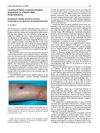
March 2012 in “Actas Dermo-Sifiliográficas” An elderly man with skin amyloidosis and abnormal blood proteins was monitored without finding widespread disease after 18 months.