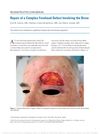
 3 citations
,
April 2016 in “Dermatologic Surgery”
3 citations
,
April 2016 in “Dermatologic Surgery” A man's forehead and eyebrow were successfully reconstructed with a skin and hair graft that matched his other eyebrow, without needing frequent trimming.
 1 citations
,
January 2019 in “Springer eBooks”
1 citations
,
January 2019 in “Springer eBooks” Hidradenitis Suppurativa is a chronic skin condition best treated early with surgery for better outcomes and less recurrence.
 January 2005 in “Boletín del Instituto de Estudios Giennenses”
 The test product significantly improved hair growth and reduced hair fall without causing skin issues.
 April 2001 in “Dermatologic Surgery”
 Michael L. Beehner proposed a standardized naming system for balding scalp areas to help hair restoration surgery.
January 2026 in “International Journal of Rheumatic Diseases” The painting may show signs of lupus, like a butterfly-shaped rash.
September 2024 in “Archives of Dermatological Research” 6 citations
,
January 2008 in “Indian Journal of Dermatology” Monilethrix, a genetic hair disorder causing fragile hair, affects three generations in a family.
 37 citations
,
August 2012 in “European Journal of Obstetrics & Gynecology and Reproductive Biology”
37 citations
,
August 2012 in “European Journal of Obstetrics & Gynecology and Reproductive Biology” A simplified scoring system can effectively diagnose hirsutism in Chinese women of reproductive age.
 3 citations
,
October 2021 in “Postepy Dermatologii I Alergologii”
3 citations
,
October 2021 in “Postepy Dermatologii I Alergologii” Checking the chin, thighs, upper lip, or lower abdomen is enough to predict hirsutism.
 2 citations
,
January 2014 in “The Korean journal of medicine”
2 citations
,
January 2014 in “The Korean journal of medicine” The 2012 SLICC criteria provide an updated method for classifying Systemic Lupus Erythematosus.
January 2023 in “Mansoura Medical Journal” Higher ischemia-modified albumin levels are linked to acne severity.
 39 citations
,
November 2017 in “Journal of The American Academy of Dermatology”
39 citations
,
November 2017 in “Journal of The American Academy of Dermatology” The document suggests using standardized methods to track and measure hair loss in alopecia areata, including patient self-assessment and a 50% improvement in specific scores as a treatment goal.
 August 2025 in “Indian Dermatology Online Journal”
 Metaphors like "butterfly rash" and "moth-eaten" help doctors identify and describe skin conditions.
A man with four autoimmune diseases suggests a new category for multiple autoimmune syndrome.

Centralized imaging provides more accurate and consistent hair loss measurements in alopecia areata.
May 2025 in “Preprints.org” Unique microRNA patterns can help diagnose and treat severe alopecia areata.
2 citations
,
May 1979 in “PubMed” Monilethrix is not caused by a metabolic defect.
 February 2009 in “Journal of The American Academy of Dermatology”
 Female hair loss can be diagnosed using specific trichoscopy criteria.
 April 2026 in “Academic Dermatology”
 Current methods for grading hair loss from cancer treatment are not accurate enough and need improvement.
3 citations
,
October 2024 in “Experimental Dermatology” Higher CRHR1 levels in AA patients lead to increased inflammation.
21 citations
,
January 2008 in “Indian Journal of Dermatology Venereology and Leprology” June 2026 in “Value in Health” The measures for eyebrow and eyelash hair loss in severe Alopecia Areata are reliable and useful for clinical trials.
 16 citations
,
April 2007 in “Journal of Medical Primatology”
16 citations
,
April 2007 in “Journal of Medical Primatology” The monkey's hair loss was due to an autoimmune disease, not genetics.
 May 2025 in “Pediatric Dermatology”
 Topical and oral minoxidil are the best treatments for monilethrix.
 October 2021 in “Journal of Investigative Dermatology”
 Skin changes in Pseudoxanthoma elasticum patients can indicate the severity of related health issues.
January 2025 in “Medical Research Archives” A new classification and scoring system is needed for alopecia areata to better assess severity.
 6 citations
,
August 2012 in “The Journal of Pediatrics”
6 citations
,
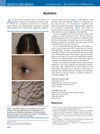
August 2012 in “The Journal of Pediatrics” A 12-year-old girl was diagnosed with monilethrix, a genetic condition causing fragile, beaded hair that breaks easily, with no effective treatment available.
13 citations
,
March 2014 in “Journal of Clinical Laboratory Analysis” Higher MIF levels in alopecia areata patients suggest it could be a treatment target and disease predictor.
September 2023 in “Journal of the American Academy of Dermatology” Current guidelines may overlook beard and sideburn involvement in diagnosing frontal fibrosing alopecia in men.
 62 citations
,
April 2016 in “Best Practice & Research in Clinical Obstetrics & Gynaecology”
62 citations
,
April 2016 in “Best Practice & Research in Clinical Obstetrics & Gynaecology” The conclusion is that there's a need for a new conference to establish stricter guidelines for diagnosing Polycystic Ovary Syndrome (PCOS).