 January 2018 in “Springer eBooks”
 Congenital triangular alopecia is a harmless, non-spreading hair loss condition often seen in young children.
 8 citations
,
February 2010 in “Journal für Kardiologie (Krause & Pachernegg GmbH)”
8 citations
,
February 2010 in “Journal für Kardiologie (Krause & Pachernegg GmbH)” A new system helps better diagnose and treat female androgenization conditions like PCOS.
 January 2025 in “Journal of Raman Spectroscopy”
 Polarized Raman spectra can reveal changes in hair keratin's protein structures.
12 citations
,
March 2004 in “Journal of Investigative Dermatology”  December 2022 in “Skin Pharmacology and Physiology”
 Special scalp and hair examination techniques can identify hair problems.
59 citations
,
November 2002 in “Pediatric Dermatology” A 19-month-old Saudi girl had a rare skin condition with no other defects, and her family was unaffected.
July 2024 in “Journal of Investigative Dermatology” The new skin organoid system effectively mimics human skin for studying its functions, injuries, and diseases.
29 citations
,
February 1989 in “Journal of Cutaneous Pathology” A unique hair tumor with a rippled pattern was identified, showing incomplete differentiation and unusual cell arrangements.
 2 citations
,
June 2019 in “International Journal of Dermatology”
2 citations
,
June 2019 in “International Journal of Dermatology” The modified hair loss classification is more detailed but less user-friendly.
April 2019 in “Faculty Opinions – Post-Publication Peer Review of the Biomedical Literature” PCOS shares similar genetic traits across different diagnosis criteria and is linked to other health conditions.
4350 citations
,
May 2012 in “Arthritis & Rheumatism” The new SLICC criteria for diagnosing lupus are more sensitive and accurate than the old criteria.
5 citations
,
November 1979 in “PubMed” A hereditary condition causes hair loss and twisted hair in some family members.
 January 2013 in “The Pan African medical journal”
 Monilethrix causes short, fragile hair with no specific treatment available.
January 2022 in “Clinical Cases in Dermatology” A 4-year-old boy has a rare type of hair loss in a line pattern on his scalp.
 3 citations
,
October 2017 in “Journal of Cosmetic Dermatology”
3 citations
,
October 2017 in “Journal of Cosmetic Dermatology” Dr. Muhammad Ahmad created a hair classification system to help improve hair restoration surgery outcomes.
20 citations
,
February 2015 in “Anais brasileiros de dermatologia/Anais Brasileiros de Dermatologia” A 6-year-old girl was diagnosed with a rare hair disorder and started treatment with topical minoxidil.
 1 citations
,
May 2001 in “Proceedings of SPIE, the International Society for Optical Engineering/Proceedings of SPIE”
1 citations
,
May 2001 in “Proceedings of SPIE, the International Society for Optical Engineering/Proceedings of SPIE” The system helps monitor hair properties using RGB video microscopy.
 3 citations
,
January 2011 in “Intestinal Research”
3 citations
,
January 2011 in “Intestinal Research” Cronkhite-Canada syndrome can cause multiple gastrointestinal polyps and various physical symptoms.
8 citations
,
July 2015 in “International Journal of Dermatology” A new DSG4 gene mutation causes hair defects in a young girl.
 10 citations
,
June 2019 in “Case reports in dermatology”
10 citations
,
June 2019 in “Case reports in dermatology” LALPS causes non-scarring hair loss along the Blaschko line, with unique trichoscopic findings.
![Benzo[c]quinolizin-3-ones Theoretical Investigation: SAR Analysis and Application to Untested Compounds](/images/research/6712367a-949f-47c7-a756-2bfe6316fc69/small/15331.jpg) 6 citations
,
August 2004 in “Journal of Chemical Information and Computer Sciences”
6 citations
,
August 2004 in “Journal of Chemical Information and Computer Sciences” The research found a link between certain molecular features and the biological activity of BC3, which can help identify or create new active compounds.

Mohamed Kandil suggests renaming Polycystic Ovary Syndrome to "Polyfollicular Anovulatory Androgenic Syndrome" to better describe its symptoms, but concerns exist that it may not cover all related issues like obesity and depression.
 125 citations
,
May 2007 in “Journal of The American Academy of Dermatology”
125 citations
,
May 2007 in “Journal of The American Academy of Dermatology” The BASP classification is a detailed and accurate way to categorize hair loss in both men and women.
 2 citations
,
November 1998 in “Journal of The European Academy of Dermatology and Venereology”
2 citations
,
November 1998 in “Journal of The European Academy of Dermatology and Venereology” Prednisone reduces organ mast cell infiltration but does not alter the abnormal appearance of mast cells in systemic mastocytosis.
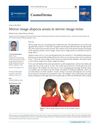
Mirror-image twins can have alopecia areata on opposite sides of their heads.
37 citations
,
January 1993 in “Journal of Investigative Dermatology” 
The digital system for measuring melasma shows promise but needs more development for better accuracy and automation.
 November 2020 in “Holistic Nursing Practice”
 COVID-19 can cause hair loss, loss of taste and smell, skin changes, and eye problems.
 2 citations
,
October 2023 in “Dermatology practical & conceptual”
2 citations
,
October 2023 in “Dermatology practical & conceptual” More research is needed to understand hair and scalp disorders in people with skin of color.
 16 citations
,
October 2012 in “The Journal of Dermatology”
16 citations
,
October 2012 in “The Journal of Dermatology” The BASP classification is more reliable than the Norwood-Hamilton for classifying hair loss in men and women.