 January 2026 in “Zenodo (CERN European Organization for Nuclear Research)”
 Thorough evaluation and treatment are crucial for thyroid nodules.
 April 2023 in “The journal of investigative dermatology/Journal of investigative dermatology”
 The study suggests that a specific type of immune cell, memory-like NK cells, may increase during active hair loss in Alopecia areata.
 January 2026 in “Zenodo (CERN European Organization for Nuclear Research)”
 The thyroid nodule was benign, and surgery was successful with a smooth recovery.
 2 citations
,
August 2017 in “British Journal of Dermatology”
2 citations
,
August 2017 in “British Journal of Dermatology” Hair loss in Cronkhite-Canada syndrome may be due to an autoimmune response.
3 citations
,
October 2024 in “Experimental Dermatology” Higher CRHR1 levels in AA patients lead to increased inflammation.
 80 citations
,
June 2000 in “Modern Pathology”
80 citations
,
June 2000 in “Modern Pathology” Long-standing benign tumors can become cancerous, especially in people with weakened immune systems.
 October 2025 in “JOURNAL OF CLINICAL AND DIAGNOSTIC RESEARCH”
 Waldenstrom’s Macroglobulinaemia can mimic multiple myeloma, so accurate diagnosis is crucial.
July 2019 in “Zenodo (CERN European Organization for Nuclear Research)” Follicular mucinosis in a 15-year-old is usually harmless but needs monitoring for possible lymphoma.
17 citations
,
January 2015 in “JOURNAL OF CLINICAL AND DIAGNOSTIC RESEARCH” Cronkhite-Canada syndrome is a rare, non-inherited condition causing various symptoms like polyps, hair loss, and weight loss.
 October 2019 in “Journal of Evolution of Medical and Dental Sciences”
 A 56-year-old man was diagnosed with Cronkhite-Canada Syndrome after showing symptoms like diarrhea, weight loss, and skin changes.
 April 2016 in “Journal of Investigative Dermatology”
 A specific type of immune cells, called CD301b-expressing macrophages, are crucial for skin repair processes.
26 citations
,
April 2011 in “British Journal of Dermatology” New mutations in the DSG4 gene cause a rare hair condition.
 March 2025 in “OncoTargets and Therapy”
 A specific genetic trait in tumor cells is linked to longer survival without disease in certain lymphoma patients.
 19 citations
,
August 2020 in “Gastroenterology report”
19 citations
,
August 2020 in “Gastroenterology report” There is no standard treatment for the rare Cronkhite–Canada syndrome, which can be fatal and lead to cancer.
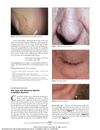 19 citations
,
December 2006 in “Archives of dermatology”
19 citations
,
December 2006 in “Archives of dermatology” Hair casts and cutaneous spicules can be signs of multiple myeloma.
6 citations
,
June 1986 in “The Journal of Dermatology” Reticular erythematous mucinosis syndrome can occur with minimal mucin deposition.
6 citations
,
December 2015 in “Medicine” Cronkhite-Canada syndrome may be more treatable and less severe than previously thought.
Alopecia areata involves immune system changes, especially in severe cases, with potential new treatment targets identified.
October 2017 in “The American Journal of Gastroenterology” Early diagnosis and nutritional support are crucial for managing Cronkhite-Canada Syndrome.
June 2025 in “British Journal of Dermatology” A rare skin condition in a boy is likely due to a specific genetic mutation pattern.

Dual TCR Treg cells are common in various mouse tissues and show diverse characteristics.
July 2026 in “Journal of Investigative Dermatology” 18 citations
,
April 2016 in “The journal of immunology/The Journal of immunology” Thymic mesenchymal cells have unique gene expression that supports their specific functions in the thymus.
June 2022 in “Mayo Clinic Proceedings” The man was diagnosed with stage III multiple myeloma and treated to improve kidney function.
29 citations
,
February 1989 in “Journal of Cutaneous Pathology” A unique hair tumor with a rippled pattern was identified, showing incomplete differentiation and unusual cell arrangements.
24 citations
,
January 1998 in “Dermatology” Merkel cell increase is specific to certain skin diseases, not general skin growth.
7 citations
,
October 2008 in “Arthritis Care & Research” Aggressive immunosuppressive treatment improved a woman's severe heart condition linked to autoimmune disease.
 February 2026 in “Nature Communications”
 A specific group of immune and skin cells may cause chronic inflammation in atopic dermatitis.
 April 2017 in “Our Dermatology Online”
 A 22-year-old with multiple autoimmune diseases needs a multidisciplinary treatment approach.
54 citations
,
January 1995 in “Human Molecular Genetics” Monilethrix is linked to a gene cluster on chromosome 12.