 34 citations
,
January 2012 in “Journal of Dermatological Science”
34 citations
,
January 2012 in “Journal of Dermatological Science” Hydrogen peroxide and monoethanolamine in hair dye can cause dermatitis and hair loss.
 4 citations
,
May 2014 in “PubMed”
4 citations
,
May 2014 in “PubMed” Monoethanolamine-based hair colorants can cause more damage to hair than ammonia-based ones.
9 citations
,
July 2022 in “Journal of Cosmetic Dermatology” The ammonia-free hair dye is safe and improves hair shine, color, moisture, porosity, and combability.
12 citations
,
July 2017 in “International Journal of Cosmetic Science” N‐AOHPA is a promising alternative to traditional surfactants for better hair conditioning.
1 citations
,
January 1998 in “Cosmetics and toiletries” Both amodimethicone and dimethicone copolyol amine are effective hair conditioners.
 January 2011 in “Journal of Society of Cosmetic Chemists of Japan”
 18-MEA and SPDA can restore damaged hair's smoothness and reduce frizz.
25 citations
,
May 2019 in “Cosmetics” 18-MEA and cationic surfactants can restore and maintain hair's hydrophobic nature, improving its beauty and feel.
February 2026 in “Journal of Surfactants and Detergents” Potassium monoester maleates can effectively repair damaged hair and improve haircare products.
 3 citations
,
January 1989 in “Journal of Japan Oil Chemists Society”
3 citations
,
January 1989 in “Journal of Japan Oil Chemists Society” AMT is the best surfactant for hair and scalp care.
2 citations
,
June 2018 in “Cosmetics” AMPD is a better and less damaging alternative to ammonium hydroxide for hair bleaching.
 21 citations
,
October 2014 in “Actas dermo-sifiliográficas/Actas dermo-sifiliográficas”
21 citations
,
October 2014 in “Actas dermo-sifiliográficas/Actas dermo-sifiliográficas” Hair dyes can change hair color temporarily or permanently but may cause side effects like skin reactions and hair damage.
 20 citations
,
July 1988 in “Clinics in dermatology”
20 citations
,
July 1988 in “Clinics in dermatology” Thioglycolate lotions are the most popular method for permanent waving and hair straightening.
 12 citations
,
December 2017 in “Food and chemical toxicology”
12 citations
,
December 2017 in “Food and chemical toxicology” Permanent hair dye mixtures can irritate and damage the skin.
 12 citations
,
May 2015 in “Molecular Medicine Reports”
12 citations
,
May 2015 in “Molecular Medicine Reports” Troxerutin helps protect skin cells from oxidative stress and may be good for treating hair loss.
 9 citations
,
June 2011 in “International Journal of Cosmetic Science”
9 citations
,
June 2011 in “International Journal of Cosmetic Science” The new mild shampoo helped prevent hair loss in the subjects.
 8 citations
,
March 2020 in “Dermatologic Therapy”
8 citations
,
March 2020 in “Dermatologic Therapy” The new hair loss treatment kit was safe and improved hair growth without any adverse effects.
 7 citations
,
January 2007 in “Elsevier eBooks”
7 citations
,
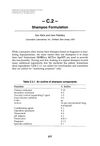
January 2007 in “Elsevier eBooks” Shampoos clean hair mainly with surfactants and have added ingredients for extra benefits.
 4 citations
,
March 2021 in “Journal of Surfactants and Detergents”
4 citations
,
March 2021 in “Journal of Surfactants and Detergents” Shampoo B, which uses water-soluble silicone, is better at detangling hair in wet conditions due to its two-layer conditioning film.
 3 citations
,
October 2021 in “Cureus”
3 citations
,
October 2021 in “Cureus” Smoking can cause yellow discoloration of upper lip hair and nails.
 3 citations
,
May 2021 in “Dermatologic Clinics”
3 citations
,
May 2021 in “Dermatologic Clinics” The document concludes that more research is needed to understand hair loss in men and to find new treatments.
 2 citations
,
January 2015 in “Elsevier eBooks”
2 citations
,
January 2015 in “Elsevier eBooks” The document says biodegradable cosmetics and packaging are better for the environment and user experience.
 1 citations
,
December 2022 in “Middle East Journal of Science”
1 citations
,
December 2022 in “Middle East Journal of Science” Permanent hair dyes use chemicals that react with hydrogen peroxide to create color.
research Hair
1 citations
,
January 2016 in “Springer briefs in molecular science” The document suggests using safer, plant-based hair products instead of harmful synthetic ones.
 1 citations
,
January 1987 in “Journal of Society of Cosmetic Chemists of Japan”
1 citations
,
January 1987 in “Journal of Society of Cosmetic Chemists of Japan” The method accurately measures hair damage and strength, revealing effects of cosmetics and metal correlations.
 February 2026 in “Frontiers in Medical Technology”
 Keratinocyte stem cells are crucial for skin renewal and have potential in wound healing and tissue regeneration.
 September 2025 in “Nano Biomedicine and Engineering”
 Nanomedicines could offer better, longer-lasting psoriasis treatments with fewer side effects.
 January 2025 in “Clinical and Medical Engineering Live”
 Implementing safety strategies is crucial to prevent radiation-related health issues.

Personalized care and evidence-based treatments are crucial for managing skin and hair conditions.

Hair product allergies are common, especially to hair dyes, and hairdressers are at higher risk.
 January 2019 in “Durham e-Theses (Durham University)”
 Advanced microscopy shows hair damage and keratin proteins' roles, aiding future cosmetic treatments.