 8 citations
,
January 2020 in “International Journal of Trichology”
8 citations
,
January 2020 in “International Journal of Trichology” Different patterns on the scalp help diagnose types of hair loss without needing a biopsy.
 August 2018 in “Pediatric Dermatology”
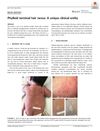
 A baby had a unique skin condition with a pale patch and surrounding dark hairs, not linked to other health issues.
Goats can have various genetic skin diseases affecting hair, skin, and thyroid function.
8 citations
,
May 2003 in “Clinical and Experimental Dermatology” A 14-year-old girl's black hair showed unique color changes, suggesting early greying.
 January 2012 in “International Journal of Trichology”
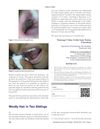
 Two siblings have a rare genetic condition causing curly, coarse hair.
1 citations
,
July 2017 in “PubMed” Two patients with Cronkhite-Canada syndrome achieved remission after treatment.
Onychomatricoma is a unique nail tumor, not related to other hair-related tumors.
66 citations
,
July 2010 in “Journal of Proteome Research” Trichohyalin may trigger the immune response causing alopecia areata.
 2 citations
,
January 2019 in “Dermatology Review”
2 citations
,
January 2019 in “Dermatology Review” Pigmented vellus and upright regrowing hairs predict hair regrowth in severe alopecia.
February 2025 in “International Journal of Clinical & Experimental Dermatology” Trichotillomania in children is a sign of emotional distress needing tailored treatment and family support.
 3 citations
,
January 2022 in “Medical Mycology Journal”
3 citations
,
January 2022 in “Medical Mycology Journal” Malassezia fungi in healthy noses can form a "spaghetti-and-meatballs" structure.
36 citations
,
January 1994 in “Cell and Tissue Research”  February 2022 in “International journal of research in dermatology”
 The document concludes that proper diagnosis and treatment of hair shaft disorders require understanding their unique causes and avoiding hair-damaging practices.
 February 2026 in “Frontiers in Pediatrics”
 Consider trichobezoars in young girls with vague symptoms for accurate diagnosis.
 4 citations
,
February 2022 in “International Journal of Molecular Sciences”
4 citations
,
February 2022 in “International Journal of Molecular Sciences” Myotonic Dystrophy may age cells faster, and drugs that target aging could be potential treatments.
 March 2021 in “Revista Medicina Cutánea Ibero-Latino-Americana”
 Trichoscopy helps diagnose scarring alopecia early and non-invasively.
7 citations
,
May 1988 in “International Journal of Dermatology” The patient's hair has unique structural differences with alternating bright and dark bands.
13 citations
,
July 2020 in “Anais brasileiros de dermatologia/Anais Brasileiros de Dermatologia” Trichoscopy can help diagnose and monitor the progression of dissecting cellulitis.
 29 citations
,
January 2019 in “Journal of the European Academy of Dermatology and Venereology”
29 citations
,
January 2019 in “Journal of the European Academy of Dermatology and Venereology” Trichoscopy is useful for diagnosing and monitoring systemic lupus erythematosus, with certain hair and scalp changes indicating more active disease.
 July 2019 in “Journal der Deutschen Dermatologischen Gesellschaft”
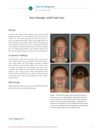
 A mother and daughter have a rare genetic hair loss disorder with no effective treatment.
 November 2016 in “대한피부과학회지”
 The document's conclusion cannot be summarized as it is not provided in a language I can understand.
 May 2012 in “Nature Genetics”
 Blond hair in Solomon Islanders is due to a unique genetic variant, not European ancestry.
 7 citations
,
August 2013 in “Journal of the European Academy of Dermatology and Venereology”
7 citations
,
August 2013 in “Journal of the European Academy of Dermatology and Venereology” Less than a quarter of alopecia areata cases were unusual forms or had paradoxical regrowth.
 January 2022 in “bioRxiv (Cold Spring Harbor Laboratory)”
 Skin lesions in Carney complex are likely caused by a specific group of skin cells that promote pigment production due to a genetic mutation.
55 citations
,
April 2008 in “Clinical Genetics” A new mutation in the ST14 gene was found in a patient with ARIH syndrome, showing milder symptoms and no tooth issues.
 February 2026 in “Journal of the American Academy of Dermatology”
 Ophiasis mainly affects females, lasts longer, and has lower regrowth rates, with a new classification system helping predict treatment response.
 15 citations
,
December 2014 in “PLoS ONE”
15 citations
,
December 2014 in “PLoS ONE” A mutation in the iRhom2 gene causes hairless mice due to abnormal hair follicle development.
July 2025 in “Frontiers in Medicine” Mutations in the LIPH gene cause woolly hair in a child.
21 citations
,
April 2004 in “Australasian Journal of Dermatology” A 3-year-old girl has a rare condition causing sparse hair and nail issues, with minimal improvement from treatment.
 6 citations
,
January 2014 in “Clinical hemorheology and microcirculation”
6 citations
,
January 2014 in “Clinical hemorheology and microcirculation” Hereditary elliptocytosis causes elongated red blood cells and can lead to mild or no symptoms.