FGF5 spliceosomes inhibit rabbit hair growth by affecting gene expression.
 May 2015 in “Journal of The American Academy of Dermatology”
 5% minoxidil foam helps women with thinning hair.
 November 2022 in “CARDIOMETRY”
 A group has developed therapies that show promise for treating cancer and various other conditions.
9 citations
,
November 2022 in “Biology” Key genes and pathways influence wool traits in Merino sheep.
Sox13 is a marker for early hair follicle development but not essential for skin and hair growth.
7 citations
,
January 2025 in “Journal of Experimental & Clinical Cancer Research” PRMT5 inhibitors effectively fight adenoid cystic carcinoma in salivary glands.
 July 2022 in “The journal of investigative dermatology/Journal of investigative dermatology”
 Blocking mTORC1 activity with rapamycin could help increase hair pigmentation and growth, potentially reversing gray hair.
 December 2024 in “http://isrctn.com/”
 MpowerTM may improve hair growth and satisfaction more than plain minoxidil, with mild side effects.
June 2025 in “British Journal of Dermatology” Melanocytic matricoma can look like skin cancer but is usually harmless; surgery and follow-up are advised.
 May 2023 in “Pharma xplore : jurnal sains dan ilmu farmasi”
 Hair tonic with equal parts Moringa and rambutan leaf extracts grew rabbit hair longer and heavier than the control product.
1 citations
,
August 2024 in “GeroScience” August 2025 in “Therapeutics” Low-dose DMSO may help treat castration-resistant prostate cancer by reducing key cancer cell receptors.
 February 2024 in “International Journal of Health and Pharmaceutical”
 Avemor, a natural tonic made from aloe vera and moringa, was less effective than minoxidil in promoting hair growth on rabbits.
2 citations
,
September 2024 in “Diagnostics” A new method accurately measures cell changes in breast cancer.
 7 citations
,
December 2014 in “Journal of dermatology”
7 citations
,
December 2014 in “Journal of dermatology” Hair shaft miR-221 levels can help detect malignant melanoma.
 April 2026 in “Human Genome Variation”
 The MBTPS2 gene variant c.970+5G>A is a common mutation causing IFAP syndrome.
6 citations
,
June 2012 in “PloS one” A new mRNA variant of the SCF gene in sheep skin produces a shorter, different protein.
 November 2023 in “Animal Bioscience”
 miR-133a-3p and miR-145-5p help goat hair follicle stem cells differentiate by controlling NANOG and SOX9.
 1 citations
,
March 2015 in “Journal of the European Academy of Dermatology and Venereology”
1 citations
,
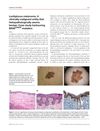
March 2015 in “Journal of the European Academy of Dermatology and Venereology” A clinically suspected melanoma appeared benign under the microscope but was confirmed by specific tests and a rare mutation.
26 citations
,
January 1992 in “Carcinogenesis” TPA strongly increases ODC activity in certain skin cells, potentially aiding tumor growth.
September 2025 in “Jurnal Penelitian Pendidikan IPA” Two genetic variations in Moa buffalo help them adapt to heat.
15 citations
,
May 2009 in “Chemical Physics Letters” A new method accurately measures molecular movement without complex modeling.
2 citations
,
September 2018 in “JAAD case reports” A rare type of skin cancer with mucosal involvement was partially treated but eventually relapsed.
Knocking out the FGF5 gene in sheep increased wool production and hair-follicle density.
7 citations
,
June 2017 in “Gene” Overexpression of FGF5s makes Chinese Merino sheep grow longer and heavier wool.
 November 2023 in “Scientific reports”
 The research identified and described a gene important for hormone conversion in endangered catfish, which varies in activity during different reproductive stages and after hormone treatment.
7 citations
,
September 2006 in “Molecular Carcinogenesis” Homozygous K5Cre transgenic mice have wavy hair and faster cancer progression.
January 2024 in “Kafkas Universitesi Veteriner Fakultesi Dergisi” A specific genetic variation affects wool quality in sheep.
 10 citations
,
July 2013 in “British Journal of Dermatology”
10 citations
,
July 2013 in “British Journal of Dermatology” High MUC-18/MCAM levels in blood indicate a worse outlook for melanoma patients.
12 citations
,
August 2015 in “Experimental Dermatology” The mineralocorticoid receptor temporarily affects mouse skin development, but the glucocorticoid receptor has a more lasting impact.