 February 2026 in “HCA Healthcare Journal of Medicine”
 Recognizing keratosis pilaris in all skin tones helps diagnose related skin issues and reduce distress.
37 citations
,
October 2017 in “Advanced drug delivery reviews” The review suggests that there are various treatments to help restore skin color after severe burns.

Melanocyte transplantation can safely restore skin color, especially in stable vitiligo, but must be chosen carefully based on the disease phase.
February 2022 in “Brazilian Journal of Health Review” Most cases were lichen planus pigmentosus, highlighting the need for accurate diagnosis for proper treatment.
8 citations
,
January 2014 in “Indian Dermatology Online Journal” Trichostasis spinulosa is a common but often unnoticed skin condition involving bundled vellus hairs, especially in people with darker skin or UV exposure.
November 2025 in “Journal of Investigative Dermatology” Tanning ability is linked to specific DNA changes in skin genes.
26 citations
,
December 2022 in “Molecules” Nanotechnology can improve treatments for skin discoloration.
 September 2023 in “Curēus”
 A 21-year-old male has a benign skin condition called Becker's nevus, which he chose not to treat.
10 citations
,
July 2022 in “Journal of Cosmetic Dermatology” Medicago sativa extract may help treat vitiligo by enhancing skin and hair pigmentation.
February 2022 in “Authorea (Authorea)” PAON shows skin patterns due to genetic mosaicism.
 April 2018 in “Journal of Investigative Dermatology”
 The research found that a specific skin cell type not only triggers hair growth but also controls hair color, and that aging can lead to hair loss and color changes.
2 citations
,
January 2023 in “Dermatologic Therapy” CEFFE injections effectively and safely improve postinflammatory hyperpigmentation.
40 citations
,
January 2013 in “Clinical Cosmetic and Investigational Dermatology” Desonide is more effective than niacinamide for reducing underarm darkening.
 March 2026 in “Preprints.org”
 Plerixafor may help treat pigmentation disorders by promoting skin repigmentation.
 10 citations
,
February 2006 in “Archives of dermatology”
10 citations
,
February 2006 in “Archives of dermatology” A man's chest hair turned white after a shingles infection, possibly due to virus-damaged pigment cells.
 1 citations
,
January 2015 in “Journal of Pigmentary Disorders”
1 citations
,
January 2015 in “Journal of Pigmentary Disorders” Treating melasma in men is difficult, especially for the deeper skin layers, and may need more than just topical treatments.
January 2016 in “UNESP Institutional Repository (São Paulo State University)” Melasma results from changes in the skin's pigment and structure, not just pigment cell growth.
186 citations
,
October 1957 in “A M A Archives of Dermatology” Alopecia mucinosa is a challenging condition with unclear diagnosis and treatment.
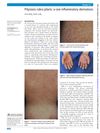 February 2018 in “BMJ case reports”
 An 18-year-old woman was diagnosed with a rare skin condition called Pityriasis rubra pilaris.
19 citations
,
November 1985 in “Archives of Dermatology” The newborn's skin blisters healed without scarring, leaving some light spots, and stopped forming after four months.
1 citations
,
August 2018 in “Dermatologic Surgery”  60 citations
,
October 2010 in “Molecular Imaging and Biology”
60 citations
,
October 2010 in “Molecular Imaging and Biology” Increased skin pigmentation in mice reduces bioluminescent signal accuracy.
July 1974 in “Archives of Dermatology” Ultraviolet light treatment with trioxsalen was ineffective for vitiligo in the cases described.
 January 2025 in “American Journal of Stem Cells”
 Melanocyte stem cells hold promise for skin regeneration and treating pigmentation issues.
January 2026 in “Deutsches Ärzteblatt international” 5 citations
,
August 2012 in “Archives of Dermatology” The immune system can cause permanent skin and hair whitening by attacking pigment cells.
Cryotherapy is the best depigmentation method for vitiligo but needs an expert to perform it.
127 citations
,
November 2010 in “Pigment cell & melanoma research” We need more research on human hair follicle pigmentation, not just mouse models.
1 citations
,
January 1986 in “PubMed” The boy's symptoms suggest a possible new medical condition.
10 citations
,
April 2004 in “Journal of the American Academy of Dermatology” Localized hair growth and fat loss may share a common cause in lupus panniculitis.