17 citations
,
May 2013 in “Journal of Investigative Dermatology” Mutations in β1 integrins cause embryonic death but have milder effects on skin.
7 citations
,
March 2025 in “Free Radical Biology and Medicine” Imbalanced redox dynamics cause skin aging by damaging fibroblasts and stem cells.
6 citations
,
December 2024 in “F1000Research” Fibroblast and immune cell interactions affect tissue repair and fibrosis.
 2 citations
,
May 2023 in “Marine Drugs”
2 citations
,
May 2023 in “Marine Drugs” Marine-derived saccharides may help reduce aging effects on skin and hair by promoting cell growth and collagen production.
September 2017 in “Journal of Investigative Dermatology” RCS-01 is safe and may help rejuvenate aging skin.
10 citations
,
November 2008 in “Veterinary Dermatology” The mouse hairy ears mutation causes longer ear hair due to changes in gene expression.
 17 citations
,
November 2015 in “Oxidative Medicine and Cellular Longevity”
17 citations
,
November 2015 in “Oxidative Medicine and Cellular Longevity” Fibroblast Growth Factor-9 helps repair heart damage after a heart attack by creating new blood vessels, especially in diabetics.
 64 citations
,
December 2012 in “Stem Cell Reviews and Reports”
64 citations
,
December 2012 in “Stem Cell Reviews and Reports” Human hair follicle cells can be turned into stem cells similar to embryonic stem cells.
 December 2023 in “The journal of cell biology/The Journal of cell biology”
 The mTurq2-Col4a1 mouse model shows how the basement membrane develops in live mammals.
 September 2023 in “bioRxiv (Cold Spring Harbor Laboratory)”
 The mTurq2-Col4a1 mouse model shows that cells can divide while attached to stable basement membranes during development.
 154 citations
,
November 2017 in “Development”
154 citations
,
November 2017 in “Development” Fibroblast Growth Factors (FGFs) are important for tissue repair and regeneration, influencing cell behavior and other factors involved in healing, and are crucial in processes like wound healing, bone repair, and hair growth.
 67 citations
,
August 2007 in “American Journal of Pathology”
67 citations
,
August 2007 in “American Journal of Pathology” Overexpressing the mineralocorticoid receptor in mouse skin causes skin thinning, early skin barrier development, eye issues, and hair loss.
41 citations
,
September 2003 in “Journal of Investigative Dermatology” Overexpression of COX-2 causes early hair loss in mice, but can be prevented with a COX-2 inhibitor.
24 citations
,
March 2021 in “Frontiers in Cell and Developmental Biology” Wnt signaling is disrupted in asthma, affecting cell growth and inflammation.
19 citations
,
February 2022 in “Journal of Investigative Dermatology” Mechanical stretching can improve or hinder skin regeneration depending on duration.
18 citations
,
March 2023 in “Molecular Therapy — Nucleic Acids” Mechanical stimuli and CCL2 can help regenerate hair follicles in adult mice.
4 citations
,
September 2024 in “Development” Researchers converted human embryonic stem cells into trophoblast stem cells using specific transcription factors.
 January 2026 in “Current Issues in Molecular Biology”
 FGF-7 helps hair grow by activating hair follicles and is a promising target for hair loss treatments.
August 2025 in “Biomolecules” Fibroblast growth factors could be a better, safer treatment for hair loss than current options.
 November 2024 in “The Journal of Cell Biology”
 Basement membrane changes are crucial for hair follicle development.
 44 citations
,
March 2015 in “PLOS ONE”
44 citations
,
March 2015 in “PLOS ONE” Fibroblast Growth Factor-9 (FGF-9) can help improve heart function in diabetic mice after a heart attack by reducing inflammation and harmful changes to the heart's structure.
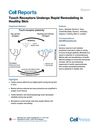 31 citations
,
November 2016 in “Cell Reports”
31 citations
,
November 2016 in “Cell Reports” Touch sensitivity in mouse skin decreases during hair growth due to changes in touch receptors.
 3 citations
,
January 2018 in “PeerJ”
3 citations
,
January 2018 in “PeerJ” Researchers created a long-lasting mouse skin cell strain that may help with hair growth research and treatments.
 March 2025 in “International Journal of Molecular Sciences”
 The study created a mouse model to better understand hair follicle stem cells' role in hair growth and repair.
28 citations
,
June 1994 in “Journal of Dermatological Science” Proteolytic activity in mouse skin changes with hair cycle stages, peaking in early anagen.
 145 citations
,
November 2018 in “Nature Communications”
145 citations
,
November 2018 in “Nature Communications” The Sonic hedgehog pathway is crucial for new hair growth during mouse skin healing.
 3 citations
,
July 2021 in “Life science alliance”
3 citations
,
July 2021 in “Life science alliance” PNKP is essential for keeping adult mouse progenitor cells healthy and growing normally.
3 citations
,
October 2020 in “Journal of Investigative Dermatology” Removing β-catenin in certain stem cells causes hair whitening and pigmentation issues.
53 citations
,
January 2013 in “Journal of toxicologic pathology” The project created a standardized system for classifying skin lesions in lab rats and mice.
31 citations
,
November 2015 in “PloS one” Reducing Tyrosinase prevents mature color pigment cells from forming in mouse hair.