 April 2026 in “Laboratory Animal Research”
 The new Hairless R/J mice model improves imaging for tumor monitoring and cancer therapy evaluation.
 13 citations
,
June 2020 in “BMC genomics”
13 citations
,
June 2020 in “BMC genomics” A specific microRNA, chi-miR-30b-5p, slows down the growth of hair-related cells by affecting the CaMKIIδ gene in cashmere goats.
 182 citations
,
June 2002 in “Journal of Neuroscience”
182 citations
,
June 2002 in “Journal of Neuroscience” Androgens can help prevent memory problems caused by apoE4.
 137 citations
,
September 2005 in “Proceedings of the National Academy of Sciences of the United States of America”
137 citations
,
September 2005 in “Proceedings of the National Academy of Sciences of the United States of America” The HR protein helps hair grow by blocking a hair growth inhibitor, aiding in hair follicle regeneration.
 131 citations
,
November 1998 in “The journal of investigative dermatology/Journal of investigative dermatology”
131 citations
,
November 1998 in “The journal of investigative dermatology/Journal of investigative dermatology” Skin grafts on mice can cause an immune response leading to hair loss, useful for studying human hair loss conditions.
 104 citations
,
October 2016 in “PLoS ONE”
104 citations
,
October 2016 in “PLoS ONE” CRISPR/Cas9 gene editing in cashmere goats increases hair follicles and fiber length, boosting cashmere yield.
 65 citations
,
February 2017 in “Pflügers Archiv - European Journal of Physiology”
65 citations
,
February 2017 in “Pflügers Archiv - European Journal of Physiology” Macrophages are vital for skin healing, hair growth, salt balance, and cancer defense.
 62 citations
,
January 2004 in “The journal of investigative dermatology/Journal of investigative dermatology”
62 citations
,
January 2004 in “The journal of investigative dermatology/Journal of investigative dermatology” A second domain of high sulfur KAP genes on chromosome 21q23 is crucial for hair structure.
 49 citations
,
October 2009 in “Cancer research”
49 citations
,
October 2009 in “Cancer research” Disrupting Stat3 in hair follicle stem cells greatly reduces skin tumor formation.
 47 citations
,
November 2012 in “Expert Opinion on Therapeutic Patents”
47 citations
,
November 2012 in “Expert Opinion on Therapeutic Patents” The document concludes that research on sulfatase inhibitors should continue due to their potential in treating various diseases, despite some clinical trial failures.
 42 citations
,
December 2016 in “Cell Death & Differentiation”
42 citations
,
December 2016 in “Cell Death & Differentiation” Damaging mitochondrial DNA in mice speeds up aging due to increased reactive oxygen species, not through the p53/p21 pathway.
 41 citations
,
September 2012 in “Cellular and Molecular Life Sciences”
41 citations
,
September 2012 in “Cellular and Molecular Life Sciences” MicroRNAs play a crucial role in skin and hair health, affecting everything from growth to aging, and could potentially be used in treating skin diseases.
 39 citations
,
December 2001 in “JNCI: Journal of the National Cancer Institute”
39 citations
,
December 2001 in “JNCI: Journal of the National Cancer Institute” Using a gene therapy with the Sonic Hedgehog gene helps mice regrow hair faster after losing it from chemotherapy.
 28 citations
,
November 2013 in “The FASEB journal”
28 citations
,
November 2013 in “The FASEB journal” Mice with CBS deficiency are healthier on a low-methionine diet.
 27 citations
,
October 1999 in “Experimental and Molecular Pathology”
27 citations
,
October 1999 in “Experimental and Molecular Pathology” Stump-tailed macaque best for researching hair loss causes and treatments.
 17 citations
,
August 2018 in “BMC Genomics”
17 citations
,
August 2018 in “BMC Genomics” The HOXC13 gene affects different hair proteins in cashmere goats in varied ways and is controlled by a feedback loop and other factors.
 8 citations
,
March 2014 in “American Journal of Pathology”
8 citations
,
March 2014 in “American Journal of Pathology” Damaged hair follicles make mice more prone to skin inflammation and skin cancer after UV exposure.
 6 citations
,
November 2018 in “Histochemistry and Cell Biology”
6 citations
,
November 2018 in “Histochemistry and Cell Biology” Mongolian gerbils heal wounds differently than mice, with unique protein levels and gene expression that affect skin repair.
 6 citations
,
October 2017 in “Oncotarget”
6 citations
,
October 2017 in “Oncotarget” Hairless mice are more vulnerable to Listeria infection, but gut microbiota can help reduce damage.
 5 citations
,
June 2015 in “Journal of Investigative Dermatology”
5 citations
,
June 2015 in “Journal of Investigative Dermatology” Feathers are useful for researching growth, regeneration, and the effects of treatments like chemotherapy on hair loss.
 3 citations
,
August 2012 in “Nature Cell Biology”
3 citations
,
August 2012 in “Nature Cell Biology” Certain proteins help nerve cells branch, and other findings relate to cancer, stem cell behavior, and cell division.
 2 citations
,
August 2019 in “BMC Complementary and Alternative Medicine”
2 citations
,
August 2019 in “BMC Complementary and Alternative Medicine” Asiasari radix extract may be a potential treatment for melanoma because it selectively triggers cell death in melanoma cells by affecting p53 regulation.
 1 citations
,
January 2021
1 citations
,
January 2021 CD4+ skin cells may be precursors to basal cell carcinoma.
 October 2023 in “bioRxiv (Cold Spring Harbor Laboratory)”
 Early regulatory T cells are crucial for normal skin pigmentation.
 August 2022 in “Nature Biotechnology”
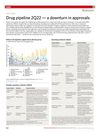
 Drug approvals slowed in 2Q22, but notable drugs like Amvuttra, Camzyos, and Olumiant were approved.
 April 2019 in “Journal of Investigative Dermatology”
 Testosterone affects androgen receptors and lipid storage in cells, while DHEA does not convert to testosterone or affect these receptors in the same way.
 April 2019 in “Journal of Investigative Dermatology”
 The created skin model with melanoblasts improves the study of skin color and offers an alternative to animal testing.
 April 2017 in “Journal of Investigative Dermatology”
 The PON1 192R gene variant is linked to a higher risk of psoriasis and heart disease in Western Mexico.
 April 2017 in “Journal of Investigative Dermatology”
 Researchers created a skin graft that senses blood glucose and could treat diabetes using CRISPR-edited stem cells.
 August 2012 in “Nature Cell Biology”
 Hair grows when stem cell offspring in the follicle base proliferate, influenced by the dermal papilla.