14 citations
,
May 2008 in “Journal of Visualized Experiments” Mouse epidermal neural crest stem cells can become various cell types and are easily obtained from hair follicles.
 7 citations
,
January 2010 in “Animal”
7 citations
,
January 2010 in “Animal” Angora goat hair grows faster and produces more protein than cashmere goat hair, and certain hormones and nutrients positively affect hair growth and protein synthesis.
 September 2013 in “Science”
 Human stem cells can aid stroke recovery, research experiences boost students' career aspirations, minoxidil may reduce cancer spread, a molecule can slow tumor growth, a protein affects water flow in cells, magnesium behaves differently at tiny scales, and a new method detects slow-moving objects.
1 citations
,
August 1992 in “Proceedings annual meeting Electron Microscopy Society of America” Mammoth hair from different ages shows distinct surface textures and elemental compositions.
5 citations
,
August 2023 in “Preprints.org” Droplet-based microfluidics improves delivery of bioactive compounds in food using precise encapsulation and release.
Genes and metabolites affect cashmere fiber thickness, which can improve cashmere quality.
 7 citations
,
October 2024 in “AAPS PharmSciTech”
7 citations
,
October 2024 in “AAPS PharmSciTech” CA-SLN-Ngel significantly reduces cellulite more effectively than regular caffeine gel.
11 citations
,
January 2005 in “Brazilian Journal of Medical and Biological Research” Hairless USP mice have enlarged skin cysts as they age.
4 citations
,
June 2020 in “Cosmetics” Broussonetia papyrifera extract helps hair growth by regulating specific proteins.
13 citations
,
July 2019 in “Chemical papers/Chemické zvesti” A new sensor can detect minoxidil accurately and effectively.
 12 citations
,
November 1987 in “Pediatric dermatology”
12 citations
,
November 1987 in “Pediatric dermatology” Four children had unmanageable pale blond hair due to uncombable-hair syndrome.
 March 2011 in “Focus on surfactants”
 Several companies launched new hair care ingredients in 2011 to improve conditioning, color retention, combability, and heat protection.
1 citations
,
June 2019 in “IEEJ Transactions on Sensors and Micromachines” A new device mimics hair follicle functions and detects tiny forces with high sensitivity.
7 citations
,
February 1985 in “Textile Research Journal” Cellular debris sticks to damaged wool fibers and affects wool cleanliness.
 January 1994 in “Nihon Chikusan Gakkaiho”
 Collagen fibrils in mink skin change structure during hair growth, becoming looser and thicker in the active phase.
 May 2023 in “Pharma xplore : jurnal sains dan ilmu farmasi”
 Hair tonic with equal parts Moringa and rambutan leaf extracts grew rabbit hair longer and heavier than the control product.
Fermented Cornus officinalis promotes hair growth effectively.
 20 citations
,
October 2018 in “Physics and chemistry of liquids”
20 citations
,
October 2018 in “Physics and chemistry of liquids” Minoxidil dissolves better in ethanol-water mixtures at different temperatures, with water playing a key role.
December 2013 in “대한피부미용학회지” Wheat sprout extract (fr. 5) promotes hair growth similar to minoxidil.
14 citations
,
August 2013 in “Journal of Parasitology” Mite infestations severely harm the health of endangered Amargosa voles.
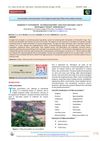 March 2023 in “International journal of pharmaceutical sciences review and research”
 The F2 Emulgel with Tridax procumbens extract showed good physical properties and antimicrobial effectiveness for wound healing.
 May 2026 in “Zenodo (CERN European Organization for Nuclear Research)”
 The new minoxidil nanogel may be a better treatment for hair loss.
 14 citations
,
March 2020 in “Scientific Reports”
14 citations
,
March 2020 in “Scientific Reports” Using dual-frequency ultrasound with microbubbles can potentially improve the delivery of hair growth treatment through the skin and enhance hair growth.
2 citations
,
September 1996 in “Neuroscience letters” Adding fetal calf serum to the medium kept Merkel cells alive and changed their shape.
 11 citations
,
September 2012 in “Journal of animal physiology and animal nutrition”
11 citations
,
September 2012 in “Journal of animal physiology and animal nutrition” Higher protein diets with DL-methionine improve mink hair growth and fur quality.
29 citations
,
October 2004 in “Differentiation” Multiple mouse desmoglein 1 isoforms have distinct roles in skin and hair development.
 November 2023 in “BMC genomics”
 The study concluded that the arachidonic acid pathway and the protein KRT79 play a role in determining the fineness of cashmere.
1 citations
,
January 2025 in “Regenerative Biomaterials” Exosomes from Pinctada martensii mucus can safely reduce melanin production, offering a new treatment for skin pigment issues.
 14 citations
,
March 2020 in “Cold Spring Harbor Perspectives in Biology”
14 citations
,
March 2020 in “Cold Spring Harbor Perspectives in Biology” Mouse spermatogenesis shows that stem cells can behave flexibly and move widely in open environments.
 January 2014 in “Sen'i Gakkaishi”
 Researchers developed a method to identify animal fibers in textiles, which works on processed and blended materials.