47 citations
,
December 2003 in “Journal of Investigative Dermatology” DS cells in hair follicles can help form and restore hair, especially in hair loss conditions.
September 2015 in “Research Portal (King's College London)” Human hair movement is affected by its inner structure and chemical treatments.
1647 citations
,
June 2014 in “BMJ” Evidence-based medicine needs improvement to better tailor treatments to individual patients.
May 2016 in “WakeSpace (Wake Forest University)” Black women digital creators use online platforms to empower others to embrace natural hair.
 November 2022 in “Journal of Investigative Dermatology”
 Dynlt3 is important for melanosome transport and skin coloration.
 April 2019 in “Journal of Investigative Dermatology”
 Calcium signals and SHH guide the direction of feather growth in chicken skin.
13 citations
,
June 2012 in “Dermatologic Surgery” Severe scars need a mix of treatments for best results.
35 citations
,
March 2010 in “BMC veterinary research” Goats with BSE or scrapie show varying symptoms, and using only clinical signs may not detect all scrapie cases.
14 citations
,
September 2017 in “Hormones and behavior” δ-GABAA receptors affect alcohol consumption based on the estrous cycle and influence movement regardless of the cycle.
September 2025 in “Toxins” Botulinum toxins show promise in treating various conditions, but more research is needed for hair and scalp disorders.
 113 citations
,
June 2019 in “F1000Research”
113 citations
,
June 2019 in “F1000Research” Scarless healing is complex and influenced by genetics and environment, while better understanding could improve scar treatment.
56 citations
,
December 1978 in “The Journal of Dermatologic Surgery and Oncology” Transplanting small skin grafts can successfully repigment leukoderma.
55 citations
,
October 2008 in “American Journal Of Pathology” mIGF-1 in skin cells speeds up wound healing and hair growth in mice without harmful effects.
52 citations
,
February 2012 in “PloS one” Lack of Ctip2 in skin cells delays wound healing and disrupts hair follicle stem cell markers in mice.
 38 citations
,
June 2019 in “International Journal of Molecular Sciences”
38 citations
,
June 2019 in “International Journal of Molecular Sciences” Tiny particles called extracellular vesicles could help with skin healing and hair growth, but more research is needed.
 26 citations
,
October 2021 in “Clinical, Cosmetic and Investigational Dermatology”
26 citations
,
October 2021 in “Clinical, Cosmetic and Investigational Dermatology” The secretome from mesenchymal stem cells shows promise for treating skin conditions and improving skin and hair health, but more research is needed.
 25 citations
,
July 2019 in “Experimental Dermatology”
25 citations
,
July 2019 in “Experimental Dermatology” Cholesterol balance is important for hair health, and problems with it can lead to hair loss conditions.
 13 citations
,
January 2020 in “Scientific Reports”
13 citations
,
January 2020 in “Scientific Reports” The African spiny mouse heals skin without scarring due to different protein activity compared to the common house mouse, which heals with scarring.
 10 citations
,
November 2010 in “Pigment Cell & Melanoma Research”
10 citations
,
November 2010 in “Pigment Cell & Melanoma Research” Only skin melanocytes, not other types, can color hair in mice.
 8 citations
,
January 2021 in “Smart materials in medicine”
8 citations
,
January 2021 in “Smart materials in medicine” The new hydrogel is good for wound dressing because it absorbs water quickly, has high porosity, can release drugs, fights bacteria, and helps wounds heal with less scarring.
 8 citations
,
March 2016 in “Hair transplant forum international”
8 citations
,
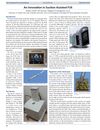
March 2016 in “Hair transplant forum international” The new FUE device improves hair transplant safety and efficiency.
 7 citations
,
June 2021 in “Cell Proliferation”
7 citations
,
June 2021 in “Cell Proliferation” Low oxygen levels improve the function of hair and skin cells when they are in direct contact.
 6 citations
,
September 2022 in “Frontiers in pharmacology”
6 citations
,
September 2022 in “Frontiers in pharmacology” Epimedium extract helps increase skin pigmentation and could be a new treatment for conditions with reduced pigmentation.
 6 citations
,
May 2022 in “Frontiers in physiology”
6 citations
,
May 2022 in “Frontiers in physiology” Injecting CHIR-99021 into goose embryos improves feather growth by changing gene activity and energy processes.
 6 citations
,
January 2015 in “Biochemical Society Transactions”
6 citations
,
January 2015 in “Biochemical Society Transactions” The Ysc84/SH3yl1 protein family is important for cell movement and the process of taking in materials by interacting with actin and cell membranes.
 5 citations
,
October 2021 in “PubMed”
5 citations
,
October 2021 in “PubMed” Exosomes from human fat stem cells can potentially enhance hair growth and survival, providing a new possible treatment for hair loss.
 3 citations
,
July 2022 in “Stem Cell Research & Therapy”
3 citations
,
July 2022 in “Stem Cell Research & Therapy” Turning off a specific gene in stem cells speeds up skin healing by helping cells move better.
2 citations
,
October 2021 in “Experimental Cell Research” Injectable platelet-rich fibrin helps hair growth by boosting key cell functions.
 1 citations
,
June 2023 in “Journal of steroid biochemistry and molecular biology/The Journal of steroid biochemistry and molecular biology”
1 citations
,
June 2023 in “Journal of steroid biochemistry and molecular biology/The Journal of steroid biochemistry and molecular biology” Vitamin D helps skin stem cells heal wounds by working with a key skin protein.
 July 2025 in “The Journal of Physiology”
 C-tactile afferents are linked to emotional touch and social bonding through hair movement.