 81 citations
,
October 2014 in “The journal of investigative dermatology/Journal of investigative dermatology”
81 citations
,
October 2014 in “The journal of investigative dermatology/Journal of investigative dermatology” Certain genes control the color of human hair by affecting pigment production.
 4 citations
,
July 2012 in “Genesis”
4 citations
,
July 2012 in “Genesis” The Megsin-Cre transgene is a new tool for genetic manipulation in the skin and upper digestive tract.
 98 citations
,
June 2001 in “Journal of biological chemistry/The Journal of biological chemistry”
98 citations
,
June 2001 in “Journal of biological chemistry/The Journal of biological chemistry” A cluster of sulfur-rich hair protein genes was found on chromosome 17.
6 citations
,
December 2023 in “Journal of Molecular Cell Biology” Removing Gsdma1/2/3 genes reduces skin cell overgrowth by blocking a specific cell pathway.
2 citations
,
January 2022 in “The Application of Clinical Genetics” A young Russian girl with Meier-Gorlin syndrome has two new mutations in the CDC6 gene.
 January 2025 in “Cellular and Molecular Biology”
 The PIP5K1A gene helps cashmere growth in goats by promoting cell proliferation, and melatonin boosts its expression.
13 citations
,
September 2012 in “Cell & tissue research/Cell and tissue research” pCLCA2 protein may help maintain skin structure and function.
April 2010 in “Cancer Research” Mcl-1 can activate Wnt signaling in skin cells, promoting growth and possibly cancer.
 5 citations
,
October 2019 in “The journal of investigative dermatology/Journal of investigative dermatology”
5 citations
,
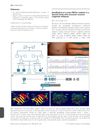
October 2019 in “The journal of investigative dermatology/Journal of investigative dermatology” The research linked PLCD1 gene variants to the development of trichilemmal cysts.
 23 citations
,
December 2013 in “British Journal of Dermatology”
23 citations
,
December 2013 in “British Journal of Dermatology” A new gene mutation linked to a skin condition was found in a Spanish family.
GPC1 is important for blood vessel growth in hair follicles and could help treat hair loss.
29 citations
,
January 2013 in “The journal of investigative dermatology/Journal of investigative dermatology” P-cadherin is crucial for hair follicle pigmentation but not skin pigmentation.
GPC1 is important for hair growth by helping blood vessels form around hair follicles.
28 citations
,
November 2018 in “American Journal of Medical Genetics Part A” ODC1 gene mutations cause a neurodevelopmental disorder with large head size, hair loss, and facial abnormalities.
 21 citations
,
October 2019 in “The journal of investigative dermatology/Journal of investigative dermatology”
21 citations
,
October 2019 in “The journal of investigative dermatology/Journal of investigative dermatology” A specific gene change plus an additional mutation in the same gene cause hereditary trichilemmal cysts.
82 citations
,
December 2011 in “Journal of Biological Chemistry” p63 is essential for skin cell growth and differentiation by controlling specific gene networks.
49 citations
,
July 2000 in “Journal of Histochemistry & Cytochemistry” POMC-derived peptides are important for skin functions like immune response and stress management.
43 citations
,
May 1999 in “Journal of Biological Chemistry” Agouti protein affects melanocortin receptors through competitive antagonism and receptor down-regulation.
17 citations
,
July 2024 in “Frontiers in Oncology” New therapies and trials are needed for Merkel cell carcinoma, a tough skin cancer.
January 2014 in “生命科学(ISSN1934-7391)” A certain gene variation can affect protein production and is linked to male pattern baldness.
November 2025 in “Journal of Investigative Dermatology” Alpha-MSH affects mitochondrial function, and MC1R mutations may increase skin aging.
 72 citations
,
November 2012 in “PloS one”
72 citations
,
November 2012 in “PloS one” The protein folliculin, involved in a rare disease, works with another protein to control how cells stick together and their organization, and changes in this interaction can lead to disease symptoms.
 April 2023 in “The journal of investigative dermatology/Journal of investigative dermatology”
 p120-catenin helps control skin inflammation by regulating cadherin levels.
Matriptase-2 helps control iron levels by suppressing hepcidin, and its deficiency can cause iron-deficiency anemia.
 November 2022 in “The journal of investigative dermatology/Journal of investigative dermatology”
 A patient with a new PLEC gene mutation showed symptoms of both muscular dystrophy and myasthenia gravis, which improved with steroid treatment.
Pvalb8 is essential for zebrafish hearing and hair cell development, and its mutation causes hearing loss.
26 citations
,
June 2003 in “PubMed” Alpha-difluoromethylornithine prevents cancer in mice but causes hair loss.
22 citations
,
September 2003 in “Journal of Investigative Dermatology” New mutations in the EBP gene cause CDPX2, affecting bones, skin, eyes, and hair, with females generally less affected than males.
 July 2022 in “The journal of investigative dermatology/Journal of investigative dermatology”
 MPZL3 is important for controlling the hair growth cycle in mice and humans.
 9 citations
,
December 2023 in “Journal of Neuroimmune Pharmacology”
9 citations
,
December 2023 in “Journal of Neuroimmune Pharmacology” NDP-MSH protects brain cells and reduces inflammation in Parkinson's disease by activating MC1R and involving Tregs.