 5 citations
,
July 2020 in “JAMA Dermatology”
5 citations
,
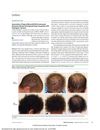
July 2020 in “JAMA Dermatology” Minoxidil solution applied twice daily improved hair growth in patients with Woolly Hair/Hypotrichosis due to LIPH gene issues, with mild side effects.
RNA-based treatments show promise for managing Hutchinson-Gilford Progeria Syndrome.
21 citations
,
September 1997 in “British Journal of Dermatology” Monilethrix is linked to the type II keratin gene on chromosome 12q13.
 71 citations
,
October 2008 in “The journal of investigative dermatology/Journal of investigative dermatology”
71 citations
,
October 2008 in “The journal of investigative dermatology/Journal of investigative dermatology” HFMs can help study hair growth and test potential hair growth drugs.
6 citations
,
May 2013 in “The Journal of Dermatology” Autoimmune reactions may cause both alopecia areata and HAM.
2 citations
,
July 2016 in “Veterinary dermatology” Hyperaesthetic leucotrichia in horses causes painful, recurring skin lesions and hair color changes, especially in Arabian and American paint horses.
 April 2020 in “Journal of The American Academy of Dermatology”
 SMAs improve patient satisfaction and may be cost-effective for female hair loss.
 5 citations
,
January 2018 in “Annals of Dermatology”
5 citations
,
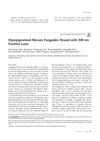
January 2018 in “Annals of Dermatology” A 308 nm excimer laser successfully treated a boy with a rare skin condition after about a year of weekly sessions.
2 citations
,
December 2013 in “Journal of dermatology” A specific gene mutation causes a rare hair loss condition in a Chinese patient.
April 2021 in “The journal of investigative dermatology/Journal of investigative dermatology” MPZL3 protein is important for controlling hair growth cycles.
 15 citations
,
July 2020 in “Dermatologic Therapy”
15 citations
,
July 2020 in “Dermatologic Therapy” FPHL is common in women, influenced by genetics and hormones, and can be treated with medications, laser therapy, or hair transplantation.
2 citations
,
April 2008 in “PubMed” A gene mutation causes monilethrix in a Chinese family.
 6 citations
,
August 2012 in “The Journal of Pediatrics”
6 citations
,
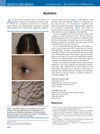
August 2012 in “The Journal of Pediatrics” A 12-year-old girl was diagnosed with monilethrix, a genetic condition causing fragile, beaded hair that breaks easily, with no effective treatment available.
 April 2025 in “Journal of the Association for Research in Otolaryngology”
 NM2 and RLC phosphorylation are essential for normal inner ear hair cell function.
175 citations
,
August 1997 in “Nature Genetics” 54 citations
,
November 2014 in “JEADV. Journal of the European Academy of Dermatology and Venereology/Journal of the European Academy of Dermatology and Venereology” Combining LFQS and IPL is more effective and faster for treating melasma than LFQS alone.
 January 2024 in “Asian Journal of Medical Sciences”
 Dermoscopes help tell FPHL apart from other hair loss types and can detect it early by identifying specific patterns.
January 2000 in “The Mouseion at the JAXlibrary (Jackson Laboratory)” The lanceolate hair-J mutation in mice helps understand human hair disorders like Netherton's syndrome.
 24 citations
,
July 2013 in “Oncologist”
24 citations
,
July 2013 in “Oncologist” Bendamustine combined with rituximab is an effective and well-tolerated treatment for certain types of lymphoma.
10 citations
,
January 2003 in “Dermatology” The E413K mutation in the hHb6 gene causes monilethrix, a hair disorder, but doesn't show consistent symptoms.
 1 citations
,
November 1983 in “The Lancet”
1 citations
,
November 1983 in “The Lancet” Acute leukemias with the Philadelphia chromosome may be biphenotypic, and identifying this is important for proper treatment.
8 citations
,
April 2023 in “Dermatology Practical & Conceptual” Certain blood markers, especially MLR, can help diagnose alopecia areata.
 August 2023 in “Clinical, Cosmetic and Investigational Dermatology”
 Different types of female pattern hair loss have unique characteristics and are associated with various health conditions.
2 citations
,
June 2018 in “International Journal of Pharmacological Research” Hutchinson-Gilford Progeria Syndrome caused rapid aging due to a genetic mutation, with treatments to manage symptoms.
 4 citations
,
January 2014 in “International Journal of Trichology”
4 citations
,
January 2014 in “International Journal of Trichology” A 12-year-old boy with a rare genetic condition has progressive hair loss with no effective treatment.
 2 citations
,
May 2017 in “International journal of pharmacy and pharmaceutical sciences/International Journal of Pharmacy and Pharmaceutical Sciences”
2 citations
,
May 2017 in “International journal of pharmacy and pharmaceutical sciences/International Journal of Pharmacy and Pharmaceutical Sciences” Hutchinson-Gilford Progeria Syndrome is a rare genetic disorder caused by a specific gene mutation, characterized by aging symptoms and managed by monitoring heart health and using low-dose aspirin.
 January 2022 in “Autopsy and Case Reports”
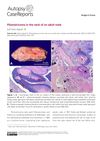
 A man had a non-cancerous neck tumor related to hair follicles removed with no return of the tumor.
109 citations
,
April 1997 in “Archives of Dermatological Research” Mast cell and nerve fiber interactions in mouse skin change with the hair cycle.
32 citations
,
July 2001 in “Journal of the American Academy of Dermatology” SLHA can be hard to diagnose and needs teamwork between specialists.
July 2025 in “Journal of Investigative Dermatology” Scarring alopecia involves increased immune cells and specific gene changes near damaged hair follicles.