 February 2026 in “Molecules”
 BBR-SA nanomedicine is a safe and effective treatment for breast cancer.
9 citations
,
February 2018 in “Journal of Patient-Reported Outcomes” New tools were created to help lupus patients report their symptoms and impacts more accurately.
 4 citations
,
January 2025 in “Translational Psychiatry”
4 citations
,
January 2025 in “Translational Psychiatry” Remote photobiomodulation improves brain injury outcomes and behavior in rats.

Careful diagnosis and management of MCTD are crucial due to potential severe complications.
January 2008 in “Journal of Clinical Dermatology” Scalp medⓇ effectively and safely improves hair growth in men with androgenetic alopecia.
3 citations
,
March 2021 in “Indian Journal of Rheumatology” Remote monitoring of chronic diseases like dermatomyositis is challenging and needs better tools for early detection and patient education.
5 citations
,
May 2022 in “Clinical & Experimental Metastasis” Minoxidil and ranolazine together can reduce the spread of certain breast cancer cells.
 1 citations
,
April 2025 in “Romanian Journal of Ophthalmology”
1 citations
,
April 2025 in “Romanian Journal of Ophthalmology” Minoxidil might cause eye issues, so early detection is important.
 April 2016 in “Journal of Investigative Dermatology”
 MEK and BRAF inhibitors increase sebum production and accumulation, which could cause acne-like side effects.
6 citations
,
July 2005 in “Acta Ophthalmologica Scandinavica” Mitochondriopathy may cause eyelash loss.
 3 citations
,
January 2008 in “Endocrine journal”
3 citations
,
January 2008 in “Endocrine journal” A new mutation linked to partial Androgen Insensitivity Syndrome and prostate cancer was found in a patient unhappy with their female gender assignment.
January 2026 in “SSRN Electronic Journal” 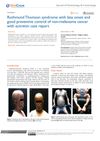 August 2024 in “Journal of Dermatology & Cosmetology”
 Acitretin effectively prevented skin cancer in a patient with late-onset Rothmund-Thomson syndrome.
2 citations
,
November 2004 in “Blood” RXRa is crucial for Th2 immune cell development and may link nutrition to immune health.
26 citations
,
September 2012 in “Cell Reports” B-Raf and C-Raf are essential for maintaining melanocyte stem cells to prevent hair graying.
May 2023 in “Zenodo (CERN European Organization for Nuclear Research)” Pyoderma gangrenosum can occur in rheumatoid arthritis patients and may be mistaken for vasculitis.
8 citations
,
July 2017 in “The journal of investigative dermatology/Journal of investigative dermatology” Certain microRNAs might help identify and understand Frontal Fibrosing Alopecia.
 February 2010 in “Journal of The American Academy of Dermatology”
 The document concludes that using gadolinium-based contrast agents during MRI can be linked to Nephrogenic Systemic Fibrosis in patients with severe kidney disease.
 1 citations
,
December 2014 in “Scanning”
1 citations
,
December 2014 in “Scanning” Multiphoton microscopy effectively images rabbit skin structures in detail without staining and shows differences from human skin.
January 2016 in “e-Oftalmo CBO Revista Digital de Oftalmologia” CSC is linked to mineralocorticoid receptor damage, stress, and steroid use, with treatments including drugs and laser therapies to prevent eye damage.
 February 2026 in “Scientific Reports”
 The gel is safe and effective for treating oral mucositis from chemotherapy and radiation.
January 2022 in “Wiadomości lekarskie (Warsaw Poland)” MSM reduces hair loss and promotes hair growth in male mice.
1036 citations
,
August 2019 in “Cells” Mesenchymal stem cells can help repair body tissues with low risk of rejection.
 April 2023 in “The journal of investigative dermatology/Journal of investigative dermatology”
 Ritlecitinib significantly improves scalp hair regrowth in alopecia areata patients over time.
May 2015 in “The Journal of Dermatology” Alopecia areata and polymyalgia rheumatica may be linked autoimmune conditions.
May 1985 in “The Pediatric Infectious Disease Journal” Trimethoprim-sulfamethoxazole can cause aseptic meningitis.
 2 citations
,
November 2017 in “PloS one”
2 citations
,
November 2017 in “PloS one” Some vitamin D analogs can thicken skin and reduce pore size like a common acne treatment, with one analog also affecting skin growth factors.
 60 citations
,
August 2008 in “Human molecular genetics online/Human molecular genetics”
60 citations
,
August 2008 in “Human molecular genetics online/Human molecular genetics” A position effect on the TRPS1 gene causes excessive hair growth in humans and mice.
3 citations
,
July 2025 in “Clinical and Experimental Dermatology” Ritlecitinib may be more effective for severe alopecia areata than conventional treatments.
112 citations
,
August 2012 in “The American Journal of Human Genetics” Mutations in the RBPJ gene cause Adams-Oliver Syndrome.