Search
for
Sort by
Research
240-270 / 1000+ results
research 645 MIG6 is MEK-regulated and affects EGF-induced migration in mutant NRAS melanoma
Decreasing MIG6 can increase the movement and invasiveness of MEK-inhibited mutant NRAS melanoma, particularly when stimulated by EGF.

research Mediator 1 ablation induces enamel-to-hair lineage conversion in mice through enhancer dynamics
Removing Mediator 1 from certain mouse cells causes teeth to grow hair instead of enamel.
research XEDAR activates the non-canonical NF-κB pathway
XEDAR triggers a specific signaling pathway in cells.
research EctopicAtoh1expression drives Merkel cell production in embryonic, postnatal and adult epidermis
Atoh1 expression can create new Merkel cells in the skin.
research A polymorphism in the matrix metalloproteinase-1 gene promoter is associated with the presence of polycystic ovary syndrome in Caucasian women
A specific gene variation is linked to a higher risk of polycystic ovary syndrome in Caucasian women.
research Novel Mutations in X-Linked Dominant Chondrodysplasia Punctata (CDPX2)
New mutations in the EBP gene cause CDPX2, affecting bones, skin, eyes, and hair, with females generally less affected than males.
research Biological significance of FoxN1 gain-of-function mutations during T and B lymphopoiesis in juvenile mice
FoxN1 overexpression in young mice harms immune cell and skin development.

research GSDMA deficiency impairs cutaneous squamous cell carcinoma growth
GSDMA deficiency slows skin cancer growth.

research RSPO1-mutated keratinocytes from palmoplantar keratoderma display impaired differentiation, alteration of cell–cell adhesion, EMT-like phenotype and invasiveness properties: implications for squamous cell carcinoma susceptibility in patients with 46XX disorder of sexual development
RSPO1 mutations in certain patients lead to skin cells that don't develop properly and are more likely to become invasive, increasing the risk of skin cancer.
research Paxbp1 is Indispensable for the Maintenance of Hair Follicle Homeostasis
The Paxbp1 gene is crucial for healthy hair follicles.

research Selection signatures in goats reveal a novel deletion mutant underlying cashmere yield and diameter
A specific genetic deletion in goats affects cashmere yield and thickness.

research Characterisation, genomic organisation, expression and function of the mEphA1 receptor Tyrosine Kinase
mEphA1 receptor tyrosine kinase is important for skin and hair development and may play a role in certain diseases.

research Twins with psychiatric features and a nonsense HRAS variant affecting transcript processing
A new HRAS gene variant may cause a range of symptoms including intellectual disability and psychiatric issues.

research Sdr16c5 and Sdr16c6 control a dormant pathway at a bifurcation point between meibogenesis and sebogenesis
Sdr16c5 and Sdr16c6 genes regulate a key point in lipid production that affects eye and skin gland function.
research Mesenchymal Meis2 controls whisker development independently from trigeminal sensory innervation
Mesenchymal MEIS2 is essential for whisker development without needing sensory nerves.
research A polygenic mouse model of psoriasiform skin disease in CD18-deficient mice.
CD18-deficient mice developed psoriasis-like skin disease, useful for studying inflammatory skin disorders.

research Ptch2 is a Potential Regulator of Mesenchymal Stem Cells
Ptch2 plays a key role in controlling stem cell function and the ability to regenerate after birth.
research Novel ABCD1 Gene Mutation in Adrenomyeloneuropathy with Hypoplasia and Agenesis of the Corpus Callosum
Researchers found a new ABCD1 gene mutation linked to a rare brain and nerve disorder with unusual brain changes.
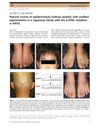
research Natural course of epidermolysis bullosa simplex with mottled pigmentation in a Japanese family with the p.P25L mutation in KRT 5
The p.P25L mutation in the KRT5 gene causes a rare skin condition that worsens over time and may lead to hair loss starting in young adulthood.
research Exosomal miR-222-3p derived from dermal papilla cells inhibits melanogenesis in melanocytes by targeting SOX10 in rabbits
Exosomal miR-222-3p reduces melanin production in rabbits by targeting the SOX10 gene.

research 875 A novel animal model of Desmoglein 1 (Dsg1) deficiency reveals an essential role for Dsg1 in epidermal barrier formation
Dsg1 is essential for maintaining a healthy skin barrier in mice.
research Activation of the transcription factor Gli1 and the Sonic hedgehog signalling pathway in skin tumours

research 1326 Hes1 regulates anagen initiation and hair follicle regeneration through modulation of hedgehog signaling
research Targeted expression of spermidine/spermine N1-acetyltransferase increases susceptibility to chemically induced skin carcinogenesis
Increasing SSAT makes skin more prone to cancer.
research Coactivator MED1 Ablation in Keratinocytes Results in Hair-Cycling Defects and Epidermal Alterations
Deleting MED1 in skin cells causes hair loss and skin changes.

research The polygenic architecture of hidradenitis suppurativa reveals signaling mechanisms that implicate epithelial remodeling
Blocking CXCR4 may help treat hidradenitis suppurativa.

research The senescence-like activity of BMS-470539 is associated with anti-fibrotic actions in models of dermal fibrosis
BMS-470539 reduces skin fibrosis and inflammation.
research Message of protease nexin-1 is expressed in human dermal papilla cells and is affected by androgen
Protease Nexin-1 is found in human hair growth cells and is affected by male hormones.
research 647 Alternative splicing factor Esrp1 controls homeostasis of skins by regulating barrier formation and function
Esrp1 is important for skin health by helping form and maintain the skin barrier.