 May 1999 in “Journal of Oral and Maxillofacial Surgery”
 The book provides practical guidance on cosmetic facial surgery for clinicians.
Multiphoton microscopy helps understand and improve vitiligo treatments by visualizing skin cell changes.
Liposomes with minoxidil and PEP penetrate skin slowly but reach deeper layers than foam.
7 citations
,
January 1992 in “Acta Histochemica” Porcine and human pilosebaceous units are very similar.
91 citations
,
August 2024 in “Acta Pharmaceutica Sinica B” Microneedles can improve skin disease treatment by delivering drugs directly through the skin.
 61 citations
,
May 2016 in “Scientific reports”
61 citations
,
May 2016 in “Scientific reports” The peptide IMT-P8 can effectively deliver proteins into the skin and cells for potential skin treatments.
 13 citations
,
October 2012 in “InTech eBooks”
13 citations
,
October 2012 in “InTech eBooks” Nanocarriers could improve how drugs are delivered through the skin but require more research to overcome challenges and ensure safety.
 January 2025 in “Journal of Pharmaceutical Research Science & Technology”
 Dissolving microneedles offer efficient, minimally invasive drug delivery through the skin.
9 citations
,
December 2023 in “Materials Today Bio” Multibranch carboxyl-modified cellulose is a safe and effective material for stopping bleeding.
 3 citations
,
September 2005 in “International Journal of Cosmetic Science”
3 citations
,
September 2005 in “International Journal of Cosmetic Science” Different oils penetrate hair differently; monounsaturated oils like olive oil penetrate better than polyunsaturated oils.
January 2026 in “AAPS PharmSciTech” Liposomal formulations with caffeine and cafestol enhance skin penetration effectively.
54 citations
,
January 1984 in “Molecular and Cellular Biochemistry” 
Fibronectin nanogel microneedles improve skin health and wound healing.
18 citations
,
October 2019 in “Advanced Pharmaceutical Bulletin” Microemulsions can improve skin delivery of finasteride.
 263 citations
,
February 2011 in “Journal of Controlled Release”
263 citations
,
February 2011 in “Journal of Controlled Release” Medium-sized particles penetrate hair follicles better than smaller or larger ones, which could improve delivery of skin treatments.
 25 citations
,
December 2013 in “Journal of Investigative Dermatology Symposium Proceedings”
25 citations
,
December 2013 in “Journal of Investigative Dermatology Symposium Proceedings” New methods like nanoparticles and microneedles show promise for better skin drug delivery, especially for hair disorders.
20 citations
,
February 1977 in “The anatomical record” Excess vitamin A changes skin and hair follicle development and affects polysaccharide distribution.
50 citations
,
November 2010 in “Tissue Engineering Part A” Hair follicle cells and intestinal tissue can create strong, functional blood vessel replacements.
12 citations
,
March 2023 in “Pharmaceutics” Gas-propelled dissolving microneedles improve drug loading and delivery efficiency.
5 citations
,
April 2023 in “Pharmaceuticals” The new delivery system improved hair growth in alopecia treatment.
 5 citations
,
October 2015 in “The American journal of pathology”
5 citations
,
October 2015 in “The American journal of pathology” Mice with a mutated Dsg3 gene showed severe symptoms but not the typical blistering of pemphigus vulgaris.
50 citations
,
December 2017 in “Nanoscale” Polymeric micelle nanocarriers deliver adapalene more effectively to hair follicles than commercial products.
 14 citations
,
March 2020 in “Scientific Reports”
14 citations
,
March 2020 in “Scientific Reports” Using dual-frequency ultrasound with microbubbles can potentially improve the delivery of hair growth treatment through the skin and enhance hair growth.
 14 citations
,
January 2016 in “Experimental and molecular pathology”
14 citations
,
January 2016 in “Experimental and molecular pathology” Giving immune serum from vaccinated mice to mice without T cells prevents infection and tumor growth.
November 2025 in “Cureus” A young man had a rare skin condition causing hair loss and forehead lesions.
 1 citations
,
June 2014 in “International Journal of Dermatology”
1 citations
,
June 2014 in “International Journal of Dermatology” Pregnancy can trigger follicular mucinosis, which may resolve after delivery.
October 2020 in “Plastic Surgery” Bone marrow stem cells improve healing of deep skin wounds.
 28 citations
,
March 2010 in “British Journal of Dermatology”
28 citations
,
March 2010 in “British Journal of Dermatology” Genetic marker rs12558842 strongly linked to male hair loss.
 5 citations
,
May 2021 in “Journal of Cosmetic Dermatology”
5 citations
,
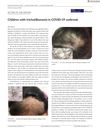
May 2021 in “Journal of Cosmetic Dermatology” More children are showing signs of hair-pulling disorders during the COVID-19 pandemic due to stress and lack of social interaction.
 1 citations
,
February 2013 in “InTech eBooks”
1 citations
,
February 2013 in “InTech eBooks” Genetic mutations cause various hair diseases, and whole genome sequencing may reveal more about these conditions.