51 citations
,
May 1984 in “Journal of the American Academy of Dermatology” Benign follicular mucinosis involves immune cells attacking hair follicles.
5 citations
,
May 2009 in “American Journal of Dermatopathology” A rare hair follicle tumor showed unusual high levels of mucin.
 1 citations
,
July 2009 in “Journal of dermatology”
1 citations
,
July 2009 in “Journal of dermatology” A 29-year-old man had a jaw plaque diagnosed as follicular mucinosis, linked to nestin-positive hair follicle stem cells.
11 citations
,
June 1974 in “Journal of Cutaneous Pathology” Follicular mucinosis causes significant damage to hair follicle cells.
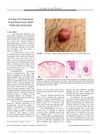 1 citations
,
February 2017 in “The American journal of dermatopathology/American journal of dermatopathology”
1 citations
,
February 2017 in “The American journal of dermatopathology/American journal of dermatopathology” A man with a skin nodule was diagnosed with a rare skin condition called cutaneous focal mucinosis, which can be confused with other skin cancers.
6 citations
,
September 2014 in “Journal of the American Academy of Dermatology” Researchers found a potential new type of skin growth called follicular mucinous nevus.
 1 citations
,
June 2014 in “International Journal of Dermatology”
1 citations
,
June 2014 in “International Journal of Dermatology” Pregnancy can trigger follicular mucinosis, which may resolve after delivery.
77 citations
,
April 1968 in “Development” Excess vitamin A can cause hair follicles to change into gland-like structures.
July 2019 in “Zenodo (CERN European Organization for Nuclear Research)” Follicular mucinosis in a 15-year-old is usually harmless but needs monitoring for possible lymphoma.
10 citations
,
August 1998 in “Journal of Investigative Dermatology”  April 2024 in “Journal of Cytology”
 A rare skin tumor with bone formation was successfully removed without recurrence.
20 citations
,
February 1977 in “The anatomical record” Excess vitamin A changes skin and hair follicle development and affects polysaccharide distribution.
19 citations
,
July 2004 in “Clinical and experimental dermatology” Acneiform follicular mucinosis can be controlled with systemic corticosteroids.
18 citations
,
January 2002 in “Pediatric Dermatology” A rare skin condition in children can look like other diseases.
June 2025 in “Histopathology” Epithelial elements in superficial angiomyxomas are non-neoplastic growths mimicking embryogenesis.
27 citations
,
February 2003 in “European Journal Of Oral Sciences” SVpgC2a cells show abnormal growth and keratin changes, modeling early cancer development.
 3 citations
,
July 2013 in “Journal of Cutaneous Pathology”
3 citations
,
July 2013 in “Journal of Cutaneous Pathology” A woman's hair loss, resembling an autoimmune condition, improved after treatment, but requires ongoing checks due to potential serious associations.
29 citations
,
July 2008 in “British Journal of Dermatology” The patient had paraneoplastic pemphigus without mucosal involvement.
76 citations
,
October 2000 in “Journal of the American Academy of Dermatology” Follicular mucinosis can be an early sign of aggressive mycosis fungoides.
6 citations
,
June 1986 in “The Journal of Dermatology” Reticular erythematous mucinosis syndrome can occur with minimal mucin deposition.
34 citations
,
January 1998 in “Archiv für Pathologische Anatomie und Physiologie und für Klinische Medicin” Trichoblastomas may mimic fetal skin development by having many Merkel cells, unlike adult skin.
 May 2018 in “Cell stem cell”
 Myoepithelial cells can repair airways after severe injury.
9 citations
,
February 2002 in “International Journal of Dermatology” The patient's symptoms improved with treatment but recurred when the steroid dose was reduced, requiring ongoing therapy.
5 citations
,
August 2021 in “Experimental dermatology” Overexpressing Merkel cell virus proteins in human hair follicles can create clusters of cells that resemble Merkel cell cancer.
December 2017 in “Canadian journal of ophthalmology” A rare skin condition was misdiagnosed as a harmless mole on a woman's eyelid.
 9 citations
,
July 2008 in “Oncology Reports”
9 citations
,
July 2008 in “Oncology Reports” HPV16-transformed cells can change human skin cell properties, aiding tumor growth.
40 citations
,
August 2018 in “Disease Models & Mechanisms” Mature cells can re-enter the cell cycle and potentially lead to cancer.
 17 citations
,
May 1987 in “Clinical and Experimental Dermatology”
17 citations
,
May 1987 in “Clinical and Experimental Dermatology” A patient with Sézary syndrome showed improvement after treatment and the study suggested follicular mucinosis might indicate future lymphoma risk.
November 2025 in “Cureus” A young man had a rare skin condition causing hair loss and forehead lesions.
 November 2023 in “BMJ case reports”
 A man in his 30s had patchy hair loss on his leg due to primary follicular mucinosis.