 2 citations
,
February 2021 in “The Pediatric Infectious Disease Journal”
2 citations
,
February 2021 in “The Pediatric Infectious Disease Journal” Hair loss may be a delayed side effect of Multisystem Inflammatory Syndrome in children after COVID-19.
4 citations
,
August 2023 in “Frontiers in Pediatrics” Most children with MIS-C showed significant improvement by 6 months.
 January 2024 in “Pediatria Polska”
 Long-COVID symptoms in children after MIS-C are similar across different COVID-19 variants, with older age being a key factor.
 September 2024 in “The Italian Journal of Pediatrics/Italian journal of pediatrics”
 COVID-19 vaccination may be linked to MIS-C in children, highlighting the need for quick diagnosis and treatment.
 July 2022 in “International Journal of Research in Dermatology”
 Some children with COVID-19 develop skin symptoms linked to a severe inflammatory condition.
 January 2023 in “Acta dermatovenerologica Alpina, Pannonica et Adriatica (Tiskana izd.)”
 The article concludes that schoolchildren and adolescents experienced various skin issues during the COVID-19 pandemic, including acne from masks and other skin reactions from the virus and vaccines.
15 citations
,
March 2023 in “BioMed” MIS-A is a severe complication after COVID-19, mostly in young black males, needing more research and awareness.
 1 citations
,
November 2022 in “Anais Brasileiros de Dermatologia”
1 citations
,
November 2022 in “Anais Brasileiros de Dermatologia” Many hospitalized children with COVID-19 had skin, mouth, or nail changes, with skin rashes being common.
 1 citations
,
January 2013 in “Elsevier eBooks”
1 citations
,
January 2013 in “Elsevier eBooks” The document reviews various hair and nail disorders, their causes, and treatments, emphasizing the need for proper diagnosis and the link between nail changes and systemic diseases.
 57 citations
,
March 2011 in “Pediatric Dermatology”
57 citations
,
March 2011 in “Pediatric Dermatology” Nearly half of children with primary immunodeficiency disorders showed skin problems, often as the first sign of their condition.
 January 2019 in “Springer eBooks”
 Acne is linked to inflammation and insulin resistance, and is associated with various syndromes that require different treatments.
 14 citations
,
January 2015 in “Acta dermato-venereologica”
14 citations
,
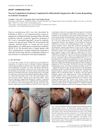
January 2015 in “Acta dermato-venereologica” Acitretin significantly reduced inflammatory attacks in a woman with Naevus Comedonicus Syndrome but caused side effects.
 39 citations
,
January 2013 in “Indian Journal of Dermatology, Venereology and Leprology”
39 citations
,
January 2013 in “Indian Journal of Dermatology, Venereology and Leprology” Eating high glycemic foods and drinking milk may worsen acne by increasing insulin and IGF-1 levels.
10 citations
,
May 2025 in “Nutrition & Metabolism” Metabolic syndrome is linked to skin diseases, requiring integrated treatment and monitoring.
 1 citations
,
October 2014 in “Paediatrics and Child Health”
1 citations
,
October 2014 in “Paediatrics and Child Health” The document concludes that proper diagnosis and management of hair loss in children require a detailed examination and understanding of various hair disorders.
 3 citations
,
November 2021 in “Applied Microscopy”
3 citations
,
November 2021 in “Applied Microscopy” Hair microscopy is a simple and cost-effective method to help diagnose systemic diseases in children.
 December 2023 in “Research Square (Research Square)”
 People with Down syndrome have higher rates of certain immune-related conditions and need special medical attention.
 10 citations
,
January 2012 in “Lupus”
10 citations
,
January 2012 in “Lupus” NEMO syndrome and systemic lupus erythematosus are linked in a new disease association.
 80 citations
,
March 2004 in “Neuropediatrics”
80 citations
,
March 2004 in “Neuropediatrics” Coats' Plus is a genetic disorder with eye abnormalities, brain calcification, poor growth, bone and skin issues, and movement disorders.
56 citations
,
October 2010 in “Pediatric Clinics of North America” Epidermal nevi are skin cell clusters linked to various syndromes.
 353 citations
,
February 2022 in “Nature Immunology”
353 citations
,
February 2022 in “Nature Immunology” Long-haul COVID can cause lasting symptoms affecting many body systems and may be linked to ongoing inflammation and immune system issues.
44 citations
,
July 2013 in “Journal of the American Academy of Dermatology” Poliosis circumscripta is a patch of white hair caused by lack of melanin, linked to genetic and acquired conditions.
 December 2023 in “Health Information Jurnal Penelitian”
 Post-COVID syndrome causes long-lasting symptoms like fatigue, breathing issues, and anxiety.
 26 citations
,
August 2020 in “Dermatology Research and Practice”
26 citations
,
August 2020 in “Dermatology Research and Practice” COVID-19 can cause various skin problems, including reactions to protective gear and medication, with different rates reported worldwide, and more research is needed to fully understand these skin issues.
 2 citations
,
January 2011 in “Elsevier eBooks”
2 citations
,
January 2011 in “Elsevier eBooks” Early treatment of acne is crucial to prevent scarring and psychological effects.
6 citations
,
February 2023 in “Lara D. Veeken” Satoyoshi syndrome is likely an autoimmune disease.
6 citations
,
August 2024 in “Viruses” Long COVID is a complex condition with many symptoms and unknowns, needing more research.
 June 2025 in “Basrah Researches Sciences”
 Medicinal plants might help with post-COVID-19 issues, but more research is needed.
 11 citations
,
September 2021 in “Anais Brasileiros de Dermatologia”
11 citations
,
September 2021 in “Anais Brasileiros de Dermatologia” The conclusion is that early diagnosis of skin signs linked to diseases like Lupus, Dermatomyositis, and Rheumatoid Arthritis is crucial to prevent serious complications.
 September 2009 in “Pediatric Dermatology”
 UVB is good for a skin condition in Asian kids, a lotion works for head lice, a drug helps with a skin blistering disorder, a foam reduces itchiness in skin inflammation, birthmarks can be more widespread, and criteria for a neurocutaneous disorder were agreed upon.