 November 2022 in “Journal of Investigative Dermatology”
 Dynlt3 is important for melanosome transport and skin coloration.
 31 citations
,
June 2022 in “Journal of Yeungnam Medical Science”
31 citations
,
June 2022 in “Journal of Yeungnam Medical Science” PRP may help reduce musculoskeletal pain, but its effectiveness is still uncertain.
 11 citations
,
October 2015 in “Journal of Cosmetic Dermatology”
11 citations
,
October 2015 in “Journal of Cosmetic Dermatology” Half of hair restoration surgeons experience body discomfort, especially after follicular unit extraction procedures, and using ergonomic equipment or robotic devices could reduce this discomfort.
 4 citations
,
November 2015 in “Journal of Investigative Dermatology”
4 citations
,
November 2015 in “Journal of Investigative Dermatology” Testosterone may worsen hair loss by affecting hair growth signals, while different prostaglandins can either hinder or promote hair growth.
 3 citations
,
May 2023 in “Current Molecular Medicine”
3 citations
,
May 2023 in “Current Molecular Medicine” PRP is not a stem cell treatment and should not be marketed as such.
 November 2025 in “Clinical Cosmetic and Investigational Dermatology”
 Tattoos may trigger autoimmune symptoms in some people.
Proper care and diet are crucial to prevent health issues in gerbils.
 53 citations
,
October 1993 in “Drug Safety”
53 citations
,
October 1993 in “Drug Safety” Oral retinoids can cause side effects ranging from mild to severe, including birth defects, and require careful monitoring and contraception.
 41 citations
,
August 1988 in “Journal of The American Academy of Dermatology”
41 citations
,
August 1988 in “Journal of The American Academy of Dermatology” A woman with subacute cutaneous lupus erythematosus had widespread skin symptoms triggered by medication and sunlight, which improved with specific treatments.
 April 2025 in “Revista de Ciências da Saúde Nova Esperança”
 Botulinum Toxin Type A effectively treats various conditions with high patient satisfaction and minimal side effects.
 June 2011 in “CRC Press eBooks”
 Low-Level Laser Therapy can stimulate healing and cell function, potentially leading to wider medical use.
 7 citations
,
November 2020 in “Experimental Dermatology”
7 citations
,
November 2020 in “Experimental Dermatology” Different cell types work together to repair skin, and targeting them may improve healing and reduce scarring.
 1 citations
,
April 2023 in “Science Advances”
1 citations
,
April 2023 in “Science Advances” High levels of ERK activity are key for tissue regeneration in spiny mice, and activating ERK can potentially redirect scar-forming healing towards regenerative healing in mammals.
5 citations
,
August 2023 in “G3 Genes Genomes Genetics” The improved genome of the African spiny mouse will help understand its tissue regeneration abilities.
 276 citations
,
December 2017 in “Journal of Dermatological Science”
276 citations
,
December 2017 in “Journal of Dermatological Science” The document concludes that mouse models are helpful but have limitations for skin wound healing research, and suggests using larger animals and genetically modified mice for better human application.
 2 citations
,
December 2022 in “Scientific Data”
2 citations
,
December 2022 in “Scientific Data” The study maps how genes are regulated during mouse hair growth.
 8 citations
,
October 1988 in “Clinics in dermatology”
8 citations
,
October 1988 in “Clinics in dermatology” The best animal model for studying male-pattern baldness is the stumptailed macaque, not rats or mice.
 2 citations
,
May 2018 in “Journal of Investigative Dermatology”
2 citations
,
May 2018 in “Journal of Investigative Dermatology” Mice can regrow hair on wounds due to specific cell interactions and mechanical forces not seen in rats.
 48 citations
,
July 2008 in “Acta Biochimica et Biophysica Sinica”
48 citations
,
July 2008 in “Acta Biochimica et Biophysica Sinica” Wnt signaling is important for development and cell regulation but can cause diseases like cancer when not working properly.
 35 citations
,
November 1931 in “Journal of Genetics”
35 citations
,
November 1931 in “Journal of Genetics” Hairless mice lack fur due to a genetic mutation affecting skin response, not hormone issues.
 22 citations
,
May 2021 in “Nature Communications”
22 citations
,
May 2021 in “Nature Communications” Tissue stiffness affects hair follicle regeneration, and Twist1 is a key regulator.
 20 citations
,
February 2016 in “American Journal of Pathology”
20 citations
,
February 2016 in “American Journal of Pathology” The genes OVOL1 and OVOL2 are important for hair growth and may be involved in a type of skin tumor.
 7 citations
,
January 2020 in “Scientific Reports”
7 citations
,
January 2020 in “Scientific Reports” Rabbit skin analysis showed changes in hair growth and identified miRNAs that may regulate hair follicle development.
 1 citations
,
August 2023 in “bioRxiv (Cold Spring Harbor Laboratory)”
1 citations
,
August 2023 in “bioRxiv (Cold Spring Harbor Laboratory)” Certain cells in the adult mouse ear come from cranial neural crest cells, but muscle and hair cells do not.
 February 2025 in “International Journal of Morphology”
 Vitamin E can reduce the negative effects of valproic acid on hair and skin development.
 July 2023 in “The Journal of Family Practice”
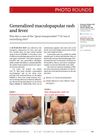
 The man was diagnosed with lupus and improved with treatment.
 40 citations
,
November 2021 in “npj Regenerative Medicine”
40 citations
,
November 2021 in “npj Regenerative Medicine” Adult spiny mice recover better from heart attacks than common lab mice.
 27 citations
,
December 2013 in “Endocrinology”
27 citations
,
December 2013 in “Endocrinology” Researchers created a mouse model for Cushing's syndrome to study glucocorticoid excess and potential treatments.
 50 citations
,
November 2010 in “Plastic and Reconstructive Surgery”
50 citations
,
November 2010 in “Plastic and Reconstructive Surgery” Botox increased hair count in men with baldness and might work by improving scalp blood flow.
 19 citations
,
April 2015 in “Developmental Dynamics”
19 citations
,
April 2015 in “Developmental Dynamics” The conclusion is that skin and hair patterns are formed by a mix of cell activities, molecular signals, and environmental factors.