 25 citations
,
June 2018 in “Clinical and Experimental Dermatology”
25 citations
,
June 2018 in “Clinical and Experimental Dermatology” Combined microneedling and minoxidil improves hair growth more than minoxidil alone.
17 citations
,
May 1969 in “American Journal of Physical Anthropology” The silver marmoset's skin is thin, lacks pigment cells, and has unique features like keratinized spines and specialized glands.
December 1963 in “Medical Entomology and Zoology” Wnt1a from stem cells boosts hair growth and regeneration in mice.
29 citations
,
October 2004 in “Differentiation” Multiple mouse desmoglein 1 isoforms have distinct roles in skin and hair development.
 10 citations
,
May 2020 in “Journal of Dermatological Treatment”
10 citations
,
May 2020 in “Journal of Dermatological Treatment” Microneedling with 5% minoxidil improves hair loss in Chinese men by activating Wnt/ß-catenin pathway.
2 citations
,
January 1998 in “Neurourology and Urodynamics” AMN can cause bladder problems due to nerve damage.
 March 2026 in “Zenodo (CERN European Organization for Nuclear Research)”
 The N-K GM Series offers highly selective, eco-friendly antimicrobials free for everyone.
 October 2021 in “Journal of Investigative Dermatology”
 The study concluded that the developed models are effective for studying hair growth mechanisms and testing new treatments.
 November 2022 in “Journal of Investigative Dermatology”
 Dynlt3 is important for melanosome transport and skin coloration.
150 citations
,
May 1993 in “The journal of cell biology/The Journal of cell biology” Mouse Notch is important for determining cell roles in hair follicles.

A patient with Myotonic dystrophy type 1 had multiple tongue hemangiomas and was sensitive to anesthesia.
 April 2018 in “Journal of Investigative Dermatology”
 Dsg1 is essential for maintaining a healthy skin barrier in mice.
 13 citations
,
July 2012 in “Pigment Cell & Melanoma Research”
13 citations
,
July 2012 in “Pigment Cell & Melanoma Research” A mutation in the Adam10 gene causes freckle-like spots on Hairless mice.
11 citations
,
July 2023 in “Applied Nanoscience” 12 citations
,
August 2015 in “Experimental Dermatology” The mineralocorticoid receptor temporarily affects mouse skin development, but the glucocorticoid receptor has a more lasting impact.
 13 citations
,
June 2020 in “BMC genomics”
13 citations
,
June 2020 in “BMC genomics” A specific microRNA, chi-miR-30b-5p, slows down the growth of hair-related cells by affecting the CaMKIIδ gene in cashmere goats.
 October 2025 in “Advanced Healthcare Materials”
 Stevioside-based microneedles improve minoxidil delivery and hair growth for treating hair loss.
 2 citations
,
January 2009 in “Journal of Drug Delivery Science and Technology”
2 citations
,
January 2009 in “Journal of Drug Delivery Science and Technology” Minoxidil in distearyldimethylammonium chloride vesicles significantly promotes hair growth, while minoxidil in microparticles or poloxamer solutions doesn't.
2 citations
,
November 2004 in “Blood” RXRa is crucial for Th2 immune cell development and may link nutrition to immune health.
 December 2023 in “Frontiers in microbiology”
 Mannan oligosaccharides improve raccoon dogs' fur quality and overall health.
 April 2023 in “Journal of Investigative Dermatology”
 Changing YBX1 protein activity affects skin stem cell function and aging.
 1 citations
,
January 2023 in “In vivo/In Vivo”
1 citations
,
January 2023 in “In vivo/In Vivo” Box A of HMGB1 can improve stem cell function, aiding anti-aging therapy.
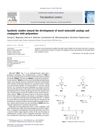 12 citations
,
February 2010 in “Tetrahedron Letters”
12 citations
,
February 2010 in “Tetrahedron Letters” New minoxidil compounds with better water solubility were made, but their full effects and safety need more research.
1 citations
,
May 2024 in “Animal Biotechnology” Reducing miR-361-5p boosts hair growth in cashmere goats by activating stem cells.
 4 citations
,
May 2025 in “npj Parkinson s Disease”
4 citations
,
May 2025 in “npj Parkinson s Disease” PINK1 is important for controlling gut immune responses linked to early Parkinson's disease.
1 citations
,
November 2024 in “eLife” Mesenchymal MEIS2 is essential for whisker development without needing sensory nerves.
1 citations
,
April 2008 in “Pigment Cell & Melanoma Research” Foxn1 is essential for hair pigmentation by directing pigment transfer to hair cells.
January 1999 in “Journal of Investigative Dermatology”  23 citations
,
January 2011 in “International Journal of Immunopathology and Pharmacology”
23 citations
,
January 2011 in “International Journal of Immunopathology and Pharmacology” Minoxidil 2% effectively treats Monilethrix without side effects.
 1 citations
,
April 2016 in “Journal of Investigative Dermatology”
1 citations
,
April 2016 in “Journal of Investigative Dermatology” NLRP1 helps melanoma tumors grow by boosting inflammasome activation and reducing caspase-3 activity.