 June 2023 in “Deleted Journal”
 Healthy dogs and cats can carry and spread skin infections without showing symptoms.
 1 citations
,
November 1983 in “The Lancet”
1 citations
,
November 1983 in “The Lancet” Acute leukemias with the Philadelphia chromosome may be biphenotypic, and identifying this is important for proper treatment.
14 citations
,
January 2014 in “Annals of Dermatology” Some cases of folliculotropic mycosis fungoides may progress slowly and not need aggressive treatment.
2 citations
,
May 2023 in “Veterinary Pathology” Understanding genetic variations in mice is crucial for studying skin, hair, or nail abnormalities.
 December 2024 in “Indian Journal of Veterinary Public Health”
 Argentine-cross polo ponies commonly develop sarcoid tumors with distinct types and histopathological features.
1 citations
,
January 2022 in “Journal of veterinary diagnostic investigation” A British Bulldog had a unique viral plaque caused by Canine papillomavirus 18, different from typical tumors.
 September 2025 in “Media Kedokteran Hewan”
 90% of African pygmy hedgehogs in the study had fungal infections.
 May 2024 in “Australasian journal of dermatology”
 A man with a type of skin lymphoma had unusual yellowish skin growths despite normal blood lipid levels, and treatment reduced some symptoms but not the growths.
 1 citations
,
July 2022 in “BMJ Case Reports”
1 citations
,
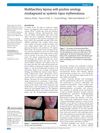
July 2022 in “BMJ Case Reports” A woman was wrongly diagnosed with lupus but actually had leprosy.
65 citations
,
April 1999 in “Journal of Parasitology” The topical treatment WR 279,396 effectively healed cutaneous leishmaniasis in mice without relapse.
December 2025 in “Mycoses” The study developed a successful mouse model to study skin infections, highlighting the importance of choosing the right fungal strains.
 November 2025 in “Zenodo (CERN European Organization for Nuclear Research)”
 Dermatophytosis is a common cat fungal infection, usually mild but can be severe in weak or young animals.
 14 citations
,
May 2019 in “Human gene therapy”
14 citations
,
May 2019 in “Human gene therapy” MC-DNA vector-based gene therapy can temporarily treat CBS deficiency in mice.

The study found genetic variations in sheep linked to traits like milk production, growth, and health.
9 citations
,
February 2002 in “PubMed” A new gene mutation causes hereditary coproporphyria with reduced enzyme activity.
2 citations
,
November 2025 in “Plant Molecular Biology” 23 citations
,
February 2010 in “European Journal of Medicinal Chemistry”  November 2025 in “Archiv für Pathologische Anatomie und Physiologie und für Klinische Medicin”
 Sporadic trichoblastic neoplasms generally don't recur or spread, with one case showing a specific genetic fusion.
 October 2025 in “Animal Bioscience”
 Key RNAs and genes linked to cashmere shedding in goats were identified.
 8 citations
,
January 2011 in “Experimental and Therapeutic Medicine”
8 citations
,
January 2011 in “Experimental and Therapeutic Medicine” Stromal cells in melanoma promote tumor growth and spread.
April 2024 in “American Journal Of Pathology”  August 2023 in “Frontiers in Endocrinology”
 Mutations in mitochondrial DNA might significantly contribute to the development of Polycystic Ovarian Syndrome.
 40 citations
,
November 2017 in “International journal of nanomedicine”
40 citations
,
November 2017 in “International journal of nanomedicine” DA liposomes with chloramphenicol effectively target hair follicles and combat MRSA with minimal skin toxicity.
 October 2021 in “Journal of Investigative Dermatology”
 The COVID-19 pandemic has led to more severe cases of Leprosy due to delayed medical care.
2 citations
,
January 2022 in “Indian dermatology online journal” Dermoscopy may not show hookworms clearly, and comparing it with tissue studies could improve diagnosis accuracy for skin conditions caused by parasites.
22 citations
,
January 2012 in “Mediators of inflammation” Nonantibiotic macrolides show promise for treating various inflammatory skin conditions.
A 69-year-old smoker was wrongly diagnosed with lung cancer but actually had a rare lymphatic system disorder.
5 citations
,
January 2017 in “Chalmers Publication Library (Chalmers University of Technology)” Cubosomes enhance antimicrobial peptide stability and effectiveness.
71 citations
,
December 2010 in “Preventive Veterinary Medicine” Young dogs and cats in Western Turkey often have skin infections caused by fungi, especially Microsporum canis.