 7 citations
,
December 2013 in “The Journal of Dermatology”
7 citations
,
December 2013 in “The Journal of Dermatology” A woman's hair turned gray and fell out after starting a cancer drug called imatinib mesylate.
6 citations
,
October 1983 in “PubMed” Coenzyme Q10 may protect liver function but doesn't reduce hair loss from anthracycline antibiotics.
5 citations
,
January 2021 in “Indian Journal of Pharmacology” Nilotinib can cause generalized keratosis pilaris.
4 citations
,
January 2014 in “Bone marrow transplantation” Alopecia areata can be transferred through stem cell transplants from affected siblings.
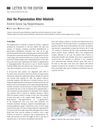 April 2025 in “Turkish Journal of Hematology”
 Nilotinib may cause gray hair to return to its original color.
 February 2024 in “Future science OA”
 Loss of the Y chromosome and UTY gene activity increases cancer risk in men.
May 2023 in “Blood cancer discovery” Finasteride reduces AML cell growth by inhibiting androgen receptors.
2 citations
,
February 2021 in “Indian Dermatology Online Journal” Imatinib can cause hair loss due to lichen planopilaris.
 63 citations
,
May 2000 in “Australasian Journal of Dermatology”
63 citations
,
May 2000 in “Australasian Journal of Dermatology” Chemotherapy and bone marrow transplant can cause permanent hair loss.
19 citations
,
April 2016 in “Case Reports in Dermatology” Nilotinib can cause keratosis pilaris, a skin condition.
 5 citations
,
March 2015 in “Clinical and Experimental Dermatology”
5 citations
,
March 2015 in “Clinical and Experimental Dermatology” Chemotherapy caused a woman's permanent hair loss and early menopause.
 January 2018 in “General internal medicine and clinical innovations”
 Busulfan/cyclophosphamide and total bone irradiation are equally effective for AML transplants.
 9 citations
,
January 2018 in “International Journal of Trichology”
9 citations
,
January 2018 in “International Journal of Trichology” A woman's hair loss from graft versus host disease helps understand similar hair loss conditions.
 6 citations
,
January 2016 in “Bioorganic & Medicinal Chemistry Letters”
6 citations
,
January 2016 in “Bioorganic & Medicinal Chemistry Letters” Some minoxidil combinations can help differentiate leukemia cells without harming other cells.
 January 2025 in “HemaSphere”
 The term "low-risk" in myelodysplastic syndrome is misleading and should be changed to better reflect patient experiences and needs.
 January 2023 in “IntechOpen eBooks”
 The document concludes that specific methods for making diazine-based drugs can lead to high yields and are important for creating effective treatments for various diseases.
 January 2019 in “Springer Reference Medizin”
 Follicle Stimulating Hormone is important for fertility.
 November 2018 in “Atlas of genetics and cytogenetics in oncology and haematology”
 WNT10B is linked to cancer development and affects survival and disease progression in various cancers.
January 2017 in “Anais do 5º Encontro Brasileiro para Inovação Terapêutica” The oils showed potential to kill certain cancer cells, especially from Dysphania ambrosioides.
September 2014 in “Archives of disease in childhood” A 12-year-old boy had severe shingles and skin damage after a stem-cell transplant.
 55 citations
,
April 2022 in “Journal of Molecular Medicine”
55 citations
,
April 2022 in “Journal of Molecular Medicine” Aging and chronic inflammation weaken the immune system, increasing cancer and infection risks.
 1 citations
,
October 2022 in “Molecular therapy”
1 citations
,
October 2022 in “Molecular therapy” The FDA approved the first gene therapy for a blood disorder after overcoming early challenges and demonstrating patient benefits.
July 2025 in “Ultrasound in Medicine & Biology” UTMD with diclofenac and Doxil® improves cancer treatment by boosting immune response and reducing tumor-supporting cells.
 April 2018 in “Journal of Investigative Dermatology”
 IL-17C is important in inflammatory skin diseases and could be a target for treatment.
 February 2012 in “Community oncology”
 The document concludes that accurately identifying leukemia types is crucial, and the risks of cancer from finasteride need careful evaluation against its benefits.
4 citations
,
February 2023 in “Stem Cell Research & Therapy” Mouse skin cells can become sperm-like cells in the lab.
October 2022 in “bioRxiv (Cold Spring Harbor Laboratory)” Small changes in cell division and differentiation can activate blood progenitors.
 44 citations
,
April 2017 in “Genes & development”
44 citations
,
April 2017 in “Genes & development” Scientists found cells in hair that are key for growth and color.
4 citations
,
September 2020 in “Stem Cell Research & Therapy” Xenobiotic-free progenitor cells improve wound healing and blood vessel formation.
February 2020 in “Journal of chemical neuroanatomy” Researchers found a way to make rat hair follicle cells start turning into motor neuron-like cells, but couldn't fully turn them into working motor neurons.