December 2023 in “bioRxiv (Cold Spring Harbor Laboratory)” Actin filaments help stabilize and integrate cell membranes during transfer.
 100 citations
,
March 2006 in “Journal of biological chemistry/The Journal of biological chemistry”
100 citations
,
March 2006 in “Journal of biological chemistry/The Journal of biological chemistry” Cystatin M/E strongly inhibits cathepsin V and cathepsin L, important for skin formation.
31 citations
,
October 1992 in “PubMed” A mycobacterial protein shares a similar region with a human skin protein, possibly affecting skin diseases.
 November 2022 in “Journal of Investigative Dermatology”
 Dynlt3 is important for melanosome transport and skin coloration.
33 citations
,
August 2000 in “Experimental Cell Research” 1 citations
,
February 1991 in “Journal of Biological Chemistry” 5 citations
,
June 2020 in “Medicine” A patient with a rare disease had a unique genetic mutation linked to their symptoms.
 17 citations
,
September 2014 in “PLoS ONE”
17 citations
,
September 2014 in “PLoS ONE” SK2 channels help control sensory signals in rat muscle spindles and hair follicles.
113 citations
,
June 2010 in “Biological Chemistry” Cathepsin L deficiency causes large, abnormal cell structures and health issues in mice.
80 citations
,
June 2002 in “Molecular Biology of the Cell” Type II keratins are uniquely phosphorylated during stress and mitosis, affecting their structure and function.

There is no cure for myotonic dystrophy type 1, so treatment focuses on managing symptoms and complications.
26 citations
,
December 2003 in “Experimental Dermatology” Specific keratin gene mutations can cause monilethrix.
 1 citations
,
July 2023 in “Nature communications”
1 citations
,
July 2023 in “Nature communications” MOF controls key genes for skin development by regulating mitochondrial and ciliary functions.
 March 2024 in “Cytologia”
 LncRNA MTC boosts growth of goat skin cells, improving cashmere quality.
18 citations
,
February 1992 in “Molecular Biology Reports” A specific type II hair keratin was identified and found in hair cortex and tongue cells.
 November 2022 in “bioRxiv (Cold Spring Harbor Laboratory)”
 MOF controls skin development by regulating genes for mitochondria and cilia.
109 citations
,
April 1997 in “Archives of Dermatological Research” Mast cell and nerve fiber interactions in mouse skin change with the hair cycle.
15 citations
,
June 2012 in “British Journal of Dermatology” A new mutation in the KRT86 gene causes a hair disorder with variable expression.
62 citations
,
March 2017 in “Journal of Investigative Dermatology” Mutations in the ACTB gene cause Becker’s nevi and may lead to muscle issues in Becker’s nevus syndrome.
 11 citations
,
December 2010 in “Archives of Dermatology”
11 citations
,
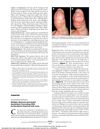
December 2010 in “Archives of Dermatology” A man with rare skin changes on his fingers was diagnosed with multiple myeloma-linked amyloidosis.
The protein's size was reduced, but more work is needed to confirm its function.
1 citations
,
October 2010 in “2010 3rd International Conference on Biomedical Engineering and Informatics” The LEF-1 gene in cashmere goats was successfully cloned and analyzed, showing potential for improving cashmere production.
19 citations
,
February 2001 in “Journal of paediatrics and child health” A new mutation in the mitochondrial DNA was found in a boy with MELAS, even though his family didn't show typical signs.
35 citations
,
August 2006 in “Molecular genetics and metabolism” Tissue-specific variation in mutant load complicates genetic counseling and prenatal diagnosis.
June 2010 in “Chinese Journal of Dermatology” A new gene mutation is linked to monilethrix in the studied family.
January 1964 in “OSTI OAI (U.S. Department of Energy Office of Scientific and Technical Information)” CXCL7 is essential for muscle repair by aiding early neutrophil infiltration.
January 2022 in “Figshare” lncRNA MTC helps goat skin cells grow and may aid hair growth by controlling proteins linked to cell growth.
110 citations
,
April 2009 in “Cell Motility and the Cytoskeleton” β‐thymosins, especially thymosin β4, help in heart protection, wound healing, and hair growth by stabilizing actin in cells.
22 citations
,
October 2004 in “Journal of Investigative Dermatology” The gene causing hair loss and heart issues in rough coat mice is still unknown.
2 citations
,
October 2025 in “Cells” PKM2 is a promising target for heart repair and regeneration.