 July 2023 in “Developmental medicine and child neurology/Developmental medicine & child neurology”
 DFMO treatment improves hair growth, muscle tone, and development in Bachmann-Bupp syndrome patients.
January 2024 in “Frontiers research topics” Comprehensive genetic testing and international collaboration are crucial for better understanding and managing Ehlers-Danlos syndromes.
 20 citations
,
March 1985 in “Journal of The American Academy of Dermatology”
20 citations
,
March 1985 in “Journal of The American Academy of Dermatology” Genetic factors alone might not cause pemphigus vulgaris; other factors like birth complications and puberty may trigger it.
 6 citations
,
June 2019 in “International Journal of Dermatology”
6 citations
,
June 2019 in “International Journal of Dermatology” Frontal fibrosing alopecia has occurred in two related male families.
 1 citations
,
July 1990 in “PubMed”
1 citations
,
July 1990 in “PubMed” The document's conclusion cannot be determined from the provided text.
 1 citations
,
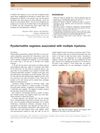
January 2013 in “The Journal of Dermatology”
1 citations
,
January 2013 in “The Journal of Dermatology” A skin condition called pyodermatitis vegetans was found in a patient with multiple myeloma for the first time.
January 1982 in “Clinical Cosmetic and Investigational Dermatology” Familial dyskeratotic comedones are a rare, inherited skin condition that is hard to treat but may improve slightly with topical retinoids and urea cream.
ANE syndrome is caused by a mutation in the RBM28 protein that disrupts ribosome assembly.
October 2021 in “bioRxiv (Cold Spring Harbor Laboratory)” A small BOTOX dose improved sperm production and movement in older mice.
9 citations
,
December 1987 in “Archives of Dermatology” Two genetic disorders affect biotin metabolism, causing severe skin, hair, and metabolic issues.
1 citations
,
February 2025 in “Journal of the Neurological Sciences” Beta-trace protein may help diagnose and predict treatment response in certain nerve disorders.
 4 citations
,
July 1994 in “Clinics in Dermatology”
4 citations
,
July 1994 in “Clinics in Dermatology” Eosinophilia-myalgia syndrome, linked to contaminated L-tryptophan supplements, caused severe symptoms and some deaths, with long-term effects in survivors.
77 citations
,
March 2000 in “Journal of Investigative Dermatology” The research identified six functional hair keratin genes and four pseudogenes, providing insights into hair formation and gene organization.
Sox13 is a marker for early hair follicle development but not essential for skin and hair growth.
 February 2020 in “Definitions”
 KRT72 gene helps form hair.
 November 2022 in “Journal of Investigative Dermatology”
 Some people with schwannomatosis have a new type of mutation in the LZTR1 gene.
26 citations
,
May 2024 in “Molecular Neurodegeneration” H1 increases risk for neurodegenerative diseases, while H2 offers protection but is linked to other disorders.
1 citations
,
April 2018 in “Journal of Investigative Dermatology” The Trichodysplasia spinulosa virus protein can cause abnormal hair growth in mice.
12 citations
,
July 2015 in “Tissue Antigens” The A allele of the C2 gene increases the risk of lupus, while the G allele may protect against it.
Recognizing mild or atypical cases of ectodermal dysplasia is crucial for better treatment and future planning.
 November 2025 in “Archiv für Pathologische Anatomie und Physiologie und für Klinische Medicin”
 Sporadic trichoblastic neoplasms generally don't recur or spread, with one case showing a specific genetic fusion.
43 citations
,
April 2011 in “AJP Endocrinology and Metabolism” Androgens increase muscle mass by promoting myoblast growth through ornithine decarboxylase.
September 2022 in “Indian Journal of Paediatric Dermatology” Clouston syndrome is inherited in an autosomal dominant pattern and caused by a specific gene mutation, with no current treatment available.
18 citations
,
January 2016 in “Journal of Clinical Medicine Research” A woman with lupus and severe nerve damage improved with specific treatments.
27 citations
,
November 1991 in “Journal of Investigative Dermatology”  June 2025 in “International Medical Case Reports Journal”
 Timely diagnosis and treatment of complex autoimmune diseases like APS2 are crucial to prevent complications and improve life quality.
38 citations
,
May 2017 in “Medical Science Monitor” Myositis in lupus patients is linked to skin rash, hair loss, blood issues, and high disease activity.
15 citations
,
November 2009 in “Journal of diabetes and its complications” Patients with Type 1 diabetes should be screened for pernicious anemia.
July 2024 in “Journal of Investigative Dermatology” DS-2325a is safe and well-tolerated, supporting further development for Netherton Syndrome treatment.
July 2025 in “Journal of Investigative Dermatology” Tissue-engineered skin substitutes can model junctional epidermolysis bullosa and may help develop gene therapy.