27 citations
,
June 2020 in “Genes” Lykoi cats' unique sparse hair is linked to specific genetic variants in the Hairless gene.
6 citations
,
January 2022 in “BMC Medical Genomics” Different gene mutations cause different types of ichthyosis, with some new mutations found.
 April 2018 in “Journal of Investigative Dermatology”
 Glycogen metabolism is important for energy and processes in human hair follicles, and hair follicles may produce glucose from lactate.
 May 2022 in “bioRxiv (Cold Spring Harbor Laboratory)”
 Primary cilia affect the size and oil production of eye glands but not the oil's makeup.
Avicennia Marina extract and avicequinone C can reduce hair loss hormone production and increase hair growth factors, suggesting they could be used to treat androgenic alopecia.
 November 2023 in “International Journal of Pharmaceutics”
 New hair loss treatment using marine collagen and dissolvable needles improves hair growth.
April 2017 in “Journal of Investigative Dermatology” Deleting Crif1 in mouse skin disrupts skin balance and hair growth.
 January 2025 in “Turkish Journal of Cerebrovascular Diseases”
 CARASIL can cause different symptoms even with the same genetic mutation.
31 citations
,
November 1991 in “Brain Research” Aδ-LTMRs have complex synapses with glycine, while Aβ-LTMRs have simpler ones.
 January 2025 in “Natural Product Research”
 Nyctanthes arbor-tristis has potential health benefits and needs more research for safe medicinal use.
4 citations
,
September 2025 in “Journal of the American Academy of Dermatology” 27 citations
,
April 2008 in “Journal of Biological Chemistry” HMG-CoA reductase is crucial for skin wound healing by regulating keratinocyte growth and blood vessel formation.
November 2024 in “European Journal of Pharmacology” MitoQ may help treat hair loss by boosting hair growth pathways.
37 citations
,
January 1993 in “Journal of Investigative Dermatology” 14 citations
,
March 2022 in “Plant Cell & Environment” The protein AtRXR3 limits root hair growth in Arabidopsis, affecting phosphorus uptake.
42 citations
,
September 2003 in “Journal of Investigative Dermatology” A missing mK6irs1 gene causes hair loss in mice.
 July 2023 in “Institutional Repositories DataBase (IRDB)”
 Malassezia species may contribute to hair loss in AGA patients.
24 citations
,
July 2005 in “Journal of the American Academy of Dermatology” A woman's eyelashes grew thicker and longer after taking topiramate, but returned to normal when she stopped the medication.
12 citations
,
August 2016 in “Mycopathologia” A man's pubic hair infection was treated by shaving and using antifungal medications.
July 2025 in “Nano Research” Microneedles offer a promising, less invasive way to treat and monitor psoriasis.
 May 2017 in “Journal of The American Academy of Dermatology”
 A woman with a skin disorder was found to have hepatitis C, which may be linked, and was safely treated with methotrexate.
 1 citations
,
September 2023 in “Applied sciences (Basel)”
1 citations
,
September 2023 in “Applied sciences (Basel)” Ishige sinicola extract may help prevent muscle atrophy through its antioxidant and anti-inflammatory effects.
19 citations
,
May 2001 in “Endocrinology” Mrp3 may aid in wound healing and hair growth.
44 citations
,
January 2021 in “Research” MCSA hydrogels can effectively treat melanoma and aid wound healing.
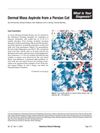 22 citations
,
December 2003 in “Veterinary clinical pathology”
22 citations
,
December 2003 in “Veterinary clinical pathology” The Persian cat has a skin infection caused by a fungus, treatable with antifungal medication.
3 citations
,
May 2025 in “Lasers in Surgery and Medicine” Microneedle radiofrequency helps skin repair and rejuvenate by activating fibroblasts and remodeling the skin's structure.
 May 2024 in “FEBS open bio”
 Annurca apple extract may help treat hair loss and protect against oxidative stress.
6 citations
,
June 2021 in “The journal of investigative dermatology/Journal of investigative dermatology” A mutation in the SREBF1 gene causes both hereditary mucoepithelial dysplasia and IFAP syndrome, which are related conditions.

Fraser's Dolphin can heal skin wounds with minimal scarring, unlike humans.
36 citations
,
June 2016 in “Journal of dermatological treatment” The combination therapy significantly improved Riehl’s melanosis in patients without serious side effects.