 April 2019 in “Journal of Investigative Dermatology”
 Testosterone affects androgen receptors and lipid storage in cells, while DHEA does not convert to testosterone or affect these receptors in the same way.
50 citations
,
December 2017 in “Nanoscale” Polymeric micelle nanocarriers deliver adapalene more effectively to hair follicles than commercial products.
14 citations
,
June 2011 in “Steroids” New compounds may help treat prostate issues without affecting androgen receptors.
 21 citations
,
February 2021 in “BMJ case reports”
21 citations
,
February 2021 in “BMJ case reports” Anabolic steroid users may face higher risk of severe COVID-19.
 59 citations
,
October 2012 in “Pharmaceutical Research”
59 citations
,
October 2012 in “Pharmaceutical Research” Squalene-based carriers improve delivery of a treatment to hair follicles for alopecia areata.

The new microneedle system improves hair growth in alopecia treatment.
 August 2024 in “Drug Design Development and Therapy”
 Decursin shows promise for treating cancer, neuroprotection, inflammation, and hair loss.
April 2023 in “Journal of Investigative Dermatology” A new treatment for hair loss shows promise with fewer side effects.
 March 2018 in “International Pharmacy Acta”
 New niosomal formulation effectively delivers aminexil through rat skin.
5 citations
,
November 2015 in “Journal of Enzyme Inhibition and Medicinal Chemistry” Certain derivatives are more effective 5α-reductase type 2 inhibitors than finasteride.
 July 2021 in “International journal of dermatology, venereology and leprosy sciences”
 Diphenylcyclopropenone is more effective and has fewer side effects than dinitrochlorobenzene for treating alopecia areata.
 December 2023 in “Biointerface Research in Applied Chemistry”
 Stiripentol shows promise as a potential treatment for androgen-related diseases but needs more testing.
 27 citations
,
October 1945 in “Endocrinology”
27 citations
,
October 1945 in “Endocrinology” Synthetic hormone treatment reduces melanin and hair growth in rats.
 January 2026 in “International Journal of Dermatology Venereology and Leprosy Sciences”
 Intradermal dutasteride effectively and safely improves hair growth in early-stage androgenetic alopecia.
January 2025 in “SSRN Electronic Journal” 3 citations
,
March 2024 in “Journal of the American Academy of Dermatology” Low-dose naltrexone helps improve symptoms and stabilize frontal fibrosing alopecia and lichen planopilaris.
40 citations
,
March 2019 in “Pharmaceutical development and technology” Smaller particles of the drug carrier penetrated skin better, with 300 nm size being best for targeting hair follicles.
January 2019 in “11th World congress for hair research”  July 2023 in “Journal of Drug Delivery Science and Technology”
 Finasteride niosomes were developed and found to be effective in treating hair loss, with better results than commercial minoxidil, and could be a promising topical treatment for hair loss.
5 citations
,
December 2021 in “Pediatric investigation” Testosterone undecanoate safely and effectively increased penis size in male children with 5-alpha-reductase deficiency.
19 citations
,
January 1993 in “Dermatologic Clinics” 22 citations
,
June 2002 in “Journal of Medicinal Chemistry” Compounds 15, 20, and 25 are strong inhibitors of human steroid 5α-reductase type 2.
 July 2026 in “Journal of Drug Delivery and Therapeutics”
 The Finasteride-loaded gel may effectively treat hair loss with fewer side effects.
June 2025 in “Archives of Dermatological Research”  32 citations
,
April 2016 in “Aaps Pharmscitech”
32 citations
,
April 2016 in “Aaps Pharmscitech” Nanostructured lipid carriers improve minoxidil delivery for hair loss treatment.
 June 2026 in “Aesthetic Cosmetology and Medicine”
 The polynucleotide-based gel effectively treats hair loss with minimal side effects.
May 2026 in “Journal of Medicinal Chemistry” dAR-6–1 is a promising new treatment for hair loss that works better than minoxidil.
 1 citations
,
June 2018 in “International Journal of Dermatology”
1 citations
,
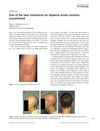
June 2018 in “International Journal of Dermatology” DNCB is highly effective for treating alopecia areata with minimal long-term side effects.
November 2014 in “DOAJ (DOAJ: Directory of Open Access Journals)” Nanostructured lipid carriers can effectively deliver spironolactone to hair follicles for treating hair loss.
 July 2018 in “DOAJ (DOAJ: Directory of Open Access Journals)”
 The new gel formula could improve the delivery of a hair loss treatment through the skin and might be an alternative to taking it by mouth.