 3 citations
,
December 2021
3 citations
,
December 2021 Niosomes are a promising method for delivering drugs directly to targeted areas in the body.
1 citations
,
November 2022 in “Diagnostics” A woman with a rare hormone resistance condition also had missing teeth and hair loss, which might be new symptoms of her genetic disorder.
July 2012 in “American Journal of Clinical Pathology” Hair examination is crucial for diagnosing Netherton syndrome in patients with certain skin symptoms.
4 citations
,
April 1978 in “PubMed” Netherton syndrome in a boy caused skin and hair issues, and treatment didn't work.
35 citations
,
April 2021 in “Current Biology” January 2026 in “Case Reports in Dermatological Medicine” Intralesional steroids effectively treated a young female's scalp nodules without recurrence.
 November 2023 in “Global Medical Genetics”
 Netherton syndrome can cause severe dehydration, infections, and growth issues in infants.
 14 citations
,
August 2006 in “Clinical and Experimental Dermatology”
14 citations
,
August 2006 in “Clinical and Experimental Dermatology” A girl with no hair neglect developed plica neuropathica in the hospital, lost all her hair, but it grew back.
 21 citations
,
April 1982 in “Genetics Research”
21 citations
,
April 1982 in “Genetics Research” Mice with the naked gene have missing or abnormal hair cells.
February 2025 in “International Journal of Research Publication and Reviews” Butterfly pea flower is valued for its health benefits, color-changing ability, and use in food and drinks.
 12 citations
,
June 2022 in “FARMACIA”
12 citations
,
June 2022 in “FARMACIA” Transethosomal gels improve naftifine skin delivery better than Exoderil cream.
 July 2024 in “International Journal of Molecular Sciences”
 Nannochloropsis salina fermented oil may help treat hair loss by promoting hair growth and reducing oxidative stress.
 July 2023 in “New phytologist”
 The BUZZ gene is important for root hair growth and overall root structure in the plant Brachypodium distachyon.
 27 citations
,
September 2017 in “Journal of Medicinal Food”
27 citations
,
September 2017 in “Journal of Medicinal Food” Annurca apple supplement safely increases hair growth and keratin in humans.
2 citations
,
February 2012 in “PubMed” Gp₄G promotes hair growth and improves skin health.
January 2019 in “Springer eBooks” PLGA nanospheres in cosmetics improve skin and hair treatment effectiveness.
20 citations
,
August 2023 in “Saudi Pharmaceutical Journal” Niosomes can effectively deliver cetirizine topically for treating alopecia.
4 citations
,
January 2023 in “Marine Drugs” Marine compounds from gorgonians and soft corals show promise for drug development, especially for chronic disorders.
 January 2023 in “Indian dermatology online journal”
 A child with ectodermal dysplasia-syndactyly syndrome has a new mutation in the NECTIN4 gene.
 February 2026 in “Frontiers in Pediatrics”
 Consider trichobezoars in young girls with vague symptoms for accurate diagnosis.
124 citations
,
January 1995 in “The journal of allergy and clinical immunology/Journal of allergy and clinical immunology/The journal of allergy and clinical immunology” Netherton's syndrome is linked to high IgE levels and unique skin and hair symptoms, and may improve with ammonium lactate lotion and allergy management.
 2 citations
,
March 2023 in “European Polymer Journal”
2 citations
,
March 2023 in “European Polymer Journal” The new nanofiber improves wound healing by releasing growth factors, reducing inflammation, and helping skin regeneration.
 8 citations
,
April 2019 in “ACS Biomaterials Science & Engineering”
8 citations
,
April 2019 in “ACS Biomaterials Science & Engineering” The new SIS-PEG sponge is a promising material for skin regeneration and hair growth.
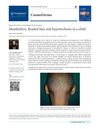 January 2026 in “Cosmoderma”
 A 9-year-old girl has a rare hair disorder causing beaded, sparse hair.
7 citations
,
February 2019 in “Veterinary medicine and science” An American Bully with a genetic skin condition improved significantly with specific topical treatments.
1 citations
,
November 2003 in “SKINmed Dermatology for the Clinician” A 17-year-old with Netherton syndrome has dry, itchy skin, brittle hair, and high IgE levels, treated with antihistamines and emollients.
11 citations
,
June 2025 in “Polymers” Polysaccharide-based niosomes improve drug delivery and show promise in cancer therapy but face challenges in scalability and stability.
 April 1974 in “Pediatric Research”
 The Naked (N) trait in mice is linked to lower glycine and tyrosine in hair proteins.
 January 2016 in “Korean Journal of Pharmacognosy”
 Grateloupia elliptica, a type of marine algae, may promote hair growth by activating a specific cell growth pathway.