 18 citations
,
January 2016 in “Elsevier eBooks”
18 citations
,
January 2016 in “Elsevier eBooks” Nanotechnology improves cosmetics' effectiveness and safety.
 30 citations
,
December 2017 in “Advanced Healthcare Materials”
30 citations
,
December 2017 in “Advanced Healthcare Materials” Nanoencapsulation creates adjustable cell clusters for hair growth.
5 citations
,
December 2023 in “Materials” Organic and biogenic nanocarriers can improve drug delivery but face challenges like consistency and safety.
June 2021 in “Zenodo (CERN European Organization for Nuclear Research)” Nanoemulsions can effectively improve the delivery of certain hydrophobic molecules.
20 citations
,
January 2022 in “REVIEWS ON ADVANCED MATERIALS SCIENCE” Nanoparticles can make cosmetics more effective but have challenges like cost and safety.
January 2024 in “LA Referencia (Red Federada de Repositorios Institucionales de Publicaciones Científicas)” Carbon Quantum Dots can effectively detect cobalt ions and methylcobalamin in water.
11 citations
,
July 2023 in “Applied Nanoscience”  69 citations
,
December 2015 in “Journal of Controlled Release”
69 citations
,
December 2015 in “Journal of Controlled Release” Nanocapsules can improve clobetasol delivery to hair follicles, reducing side effects.
 May 2025 in “Insights-Journal of Health and Rehabilitation”
 Aloe vera and lemon extracts can significantly reduce acne, especially when used together.
 March 2025 in “Scientific Reports”
 Menthol-based microemulsions improve skin delivery of finasteride and silodosin.
40 citations
,
March 2019 in “Pharmaceutical development and technology” Smaller particles of the drug carrier penetrated skin better, with 300 nm size being best for targeting hair follicles.
 76 citations
,
July 2019 in “Scientific Reports”
76 citations
,
July 2019 in “Scientific Reports” Baicalin nanocapsules greatly enhance its anticancer effects on breast cancer cells.
 February 2024 in “International Journal For Multidisciplinary Research”
 Nanostructured lipid carriers are effective for treating hyperpigmentation in women aged 30-40.
 1 citations
,
January 2024 in “Journal of molecular structure”
1 citations
,
January 2024 in “Journal of molecular structure” The new finasteride delivery system using chitosan-based nanoniosomes shows promise for prostate cancer prevention.
559 citations
,
October 2020 in “Frontiers in Molecular Biosciences” Solid lipid nanoparticles are promising for safe and effective drug delivery but need more research for clinical use.
8 citations
,
May 2024 in “Advanced NanoBiomed Research” Nanocarriers can improve skin drug delivery but face challenges in clinical use.
 13 citations
,
October 2012 in “InTech eBooks”
13 citations
,
October 2012 in “InTech eBooks” Nanocarriers could improve how drugs are delivered through the skin but require more research to overcome challenges and ensure safety.
 2 citations
,
September 2016 in “Journal of Dermatological Science”
2 citations
,
September 2016 in “Journal of Dermatological Science” Squarticles, tiny particles made from sebum-derived lipids, can effectively deliver minoxidil, a hair growth drug, directly to hair follicles and skin cells, with less skin penetration and more tolerability.
36 citations
,
August 2020 in “Polymers” The patch delivers more drugs through the skin effectively.
22 citations
,
September 2022 in “International Journal of Nanomedicine” CUR-loaded micelles improve skin delivery and effects of curcumin for pain and infections.
Encapsulating curcumin in nanoparticles improves its stability, release, and absorption in the body.
 106 citations
,
April 2010 in “ACS Nano”
106 citations
,
April 2010 in “ACS Nano” C60 fullerenes can alter protein function and may help develop new disease inhibitors.
January 2025 in “SSRN Electronic Journal” 39 citations
,
January 2013 in “Skin pharmacology and physiology” Nanoparticles show promise for drug delivery through hair follicles but not through healthy skin.
49 citations
,
February 2025 in “Science Advances” Biomimetic synthetic vesicles could improve precision medicine by combining natural and synthetic benefits.
30 citations
,
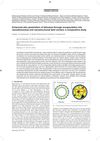
November 2015 in “Advanced Pharmaceutical Bulletin” Nanoethosomes can improve the skin penetration of Lidocaine for topical use.
 15 citations
,
May 2016 in “Die Pharmazie”
15 citations
,
May 2016 in “Die Pharmazie” Nanostructured lipid carriers deliver lidocaine to the skin better than nanoethosomes.
 96 citations
,
September 2021 in “International Journal of Molecular Sciences”
96 citations
,
September 2021 in “International Journal of Molecular Sciences” Chitosan, a natural substance, can be used to create tiny particles that effectively deliver various types of drugs, but more work is needed to improve stability and control of drug release.
 17 citations
,
January 2024 in “Journal of Materials Chemistry B”
17 citations
,
January 2024 in “Journal of Materials Chemistry B” A new nanoagent effectively kills bacteria and speeds up wound healing.
January 2019 in “Springer eBooks” PLGA nanospheres in cosmetics improve skin and hair treatment effectiveness.