Search
for
Sort by
Research
780-810 / 1000+ results
research Fabrication and in vitro evaluation of silk fibroin-folic acid decorated paclitaxel and hydroxyurea nanostructured lipid carriers for targeting ovarian cancer cells: A double sword approach
The new drug carriers show promise for better targeting and treating ovarian cancer.

research Hair-follicle associated pluripotent (HAP)-cell-sheet implantation enhanced wound healing in diabetic db/db mice
HAP-cell-sheets improved wound healing in diabetic mice.
research Heterotypic cell contacts and basal lamina morphology during hair follicle development in the mouse: a light, scanning, and electron microscopic study at the site of tissue interaction
Heterotypic cell contacts likely help hair matrix cells differentiate during mouse hair follicle development.

research Finasteride nano-transferosomal gel formula for management of androgenetic alopecia: ex vivo investigational approach
The new gel formula could improve the delivery of a hair loss treatment through the skin and might be an alternative to taking it by mouth.

research Microtechnology-based methods for organoid models
Microtechnology methods improve organoid production for medical research.
research De novo follicular regeneration of the skin by wingless int 3 and bone morphogenetic protein 2 genes introduced into dermal fibroblasts and fibroblast growth factor‐2 protein
Genetically modified cells can regenerate skin and hair in rats.
research Flutamide-Loaded Zein Nanocapsule Hydrogel, a Promising Dermal Delivery System for Pilosebaceous Unit Disorders
The flutamide-loaded hydrogel is a promising, skin-friendly treatment for acne and hair loss, potentially requiring less frequent application.
research Development of Hair Follicle Dermal Papilla Spheroids Encapsulated in Alginate Hydrogel with Extracellular Matrix Protein
Encapsulating hair follicle cells in a special gel boosts their activity.
research Effects Of Keratin-Gelatin And Basic Fibroblast Growth Factor-Gelatin Composite Film On Open Wound Healing In Dogs And Cats
Keratin-gelatin film improves wound healing in pets better than bFGF-gelatin.

research Mechanical and biological properties of keratose biomaterials
Keratose, derived from human hair, is a non-toxic biomaterial good for tissue regeneration and integrates well with body tissues.

research A Drug‐Free, Hair Follicle Cycling Regulatable, Separable, Antibacterial Microneedle Patch for Hair Regeneration Therapy
A drug-free microneedle patch significantly promotes hair growth and prevents infections.
research Effect of porcine acellular dermal matrix on the expression of stromal cell-derived factor-1 and Wnt3a/β-catenin signaling pathway in mice hair follicle regeneration
Porcine acellular dermal matrix helps hair growth by boosting specific proteins and signals.
research Fiber implantation for pattern baldness
Fiber implantation for pattern baldness was largely unsuccessful with many complications and is not recommended.
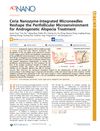
research Ceria Nanozyme-Integrated Microneedles Reshape the Perifollicular Microenvironment for Androgenetic Alopecia Treatment
Microneedles help treat hair loss by improving hair surroundings and promoting growth.

research Elastoinertial effects govern dynamic response of soft hair beds
Hair beds in fluid show nonlinear response due to viscosity, inertia, and elasticity.
research Molecular Engineering of Recombinant Protein Hydrogels: Programmable Design and Biomedical Applications
Engineered protein hydrogels improve medical treatments by mimicking natural body structures.

research MIL-88A derived zerovalent iron embedded mesoporous carbon with carbon black composite based electrochemical sensor for the detection of metol
The new sensor can detect a toxic chemical in water with high sensitivity and accuracy.
research The use of keratin biomaterials derived from human hair for the promotion of rapid regeneration of peripheral nerves
Keratin from human hair helps nerves heal faster.

research Efficient scarless skin regeneration enabled by loading micronized amnion in a bioinspired adhesive wound dressing
A new hydrogel with micronized amnion helps achieve better, scar-free skin healing.
research Synergistic effect of carbodiimide and dehydrothermal crosslinking on acellular dermal matrix
Combining DHT and EDC improves the strength and stability of PADM scaffolds for tissue engineering.

research Protein-based functional hydrogel improves cutaneous nerve repair and diabetic wound healing
A protein-based hydrogel helps heal diabetic wounds and repair nerves.

research Short-term cryoprotectant-free cryopreservation at −20°C does not affect the viability and regenerative capacity of nanofat
Storing nanofat at -20°C for 7 days does not harm its ability to regenerate.
research Mechanoregulative hydrogel enables scar-reduced and functional healing of infected diabetic mobile wounds
The hydrogel helps diabetic wounds heal better with less scarring.

research Hair-on-hair static friction coefficient can be determined by tying a knot
Tying a knot can measure hair friction, useful for medical applications.

research Novel skin patch combining human fibroblast-derived matrix and ciprofloxacin for infected wound healing
The new skin patch with human matrix and antibiotic improves wound healing.
research Three‐in‐One Multifunctional Metal–Organic Gel‐Encapsulated Microneedles for Programmed Treatment of Infected Wounds
The microneedles effectively treat infected wounds by killing bacteria, reducing inflammation, and promoting healing.
research Fractal geometry and topology abstracted from hair fibers
Hair fibers have fractal patterns with properties related to the golden mean, which may affect their functionality.
research Expression of laminin, type IV collagen and fibronectin molecules is related to embryonal skin and epidermal appendage morphogenesis.
Laminin, type IV collagen, and fibronectin help develop skin and hair structures in embryos.

research Duo-role Platelet-rich Plasma: temperature-induced fibrin gel and growth factors’ reservoir for microneedles to promote hair regrowth
A new method using Platelet-rich Plasma (PRP) in a microneedle can promote hair regrowth more efficiently and is painless, minimally invasive, and affordable.