 May 2023 in “Hair transplant forum international”
 A combined surgical approach by different specialists can effectively treat large birthmarks on the scalp.
January 2022 in “The Pan African medical journal” Hypertrichosis causes excessive hair growth and needs psychological support due to its impact on self-esteem.
June 2026 in “Psychiatry Neurology and Medical Psychology” Self-attitude is key for psychological adaptation in women with alopecia.
A new mutation in the TRPS1 gene caused Trichorhinophalangeal syndrome in a 17-year-old, highlighting the need for genetic testing.
30 citations
,
January 2013 in “Human Mutation” A mutation in the HOXC13 gene causes hair and nail problems in a Syrian family.
4 citations
,
October 2015 in “JAAD Case Reports” Surgical grafting may fix nail issues caused by valproic acid.
2 citations
,
May 1991 in “PubMed” Nevus comedonicus is a rare skin condition causing dark bumps, treatable with retinoic acid or surgery.
 30 citations
,
January 2021 in “Journal of Clinical Immunology”
30 citations
,
January 2021 in “Journal of Clinical Immunology” FOXN1 mutations can cause varying immune and physical issues, with severity influenced by gene activity and possibly other factors.
 8 citations
,
September 2021 in “Skin appendage disorders”
8 citations
,
September 2021 in “Skin appendage disorders” Trichotillomania treatment is most successful with a mix of behavioral therapy, medication, and social support.
8 citations
,
January 2016 in “Case Reports in Psychiatry” Trichotillomania in dementia may be better treated with dopamine blockers like quetiapine than with SSRIs.
July 2025 in “Clinical Case Reports” A new genetic mutation in the TRPS1 gene causes Trichorhinophalangeal Syndrome, leading to specific hair, dental, and bone issues.
 December 2023 in “JCEM case reports”
 A new gene variant causes glucocorticoid resistance in a mother and son.
 3 citations
,
December 2001 in “Irish Journal of Psychological Medicine”
3 citations
,
December 2001 in “Irish Journal of Psychological Medicine” Trichotillomania is a challenging-to-treat impulse-control disorder where individuals pull out their hair, more common in females, with some treatments showing benefits.
13 citations
,
March 2014 in “Journal of the American Medical Directors Association” Trichotillomania was successfully treated with risperidone and naltrexone.
 38 citations
,
April 2017 in “Journal of The American Academy of Dermatology”
38 citations
,
April 2017 in “Journal of The American Academy of Dermatology” Many skin patients have mental health issues, but few dermatologists are well-versed in treating these conditions.
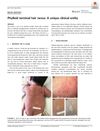 August 2018 in “Pediatric Dermatology”
 A baby had a unique skin condition with a pale patch and surrounding dark hairs, not linked to other health issues.
July 2025 in “Journal of Investigative Dermatology” Scarring alopecia involves increased immune cells and specific gene changes near damaged hair follicles.
 May 2017 in “InTech eBooks”
 Hair pulling disorder is treated with therapy and medication; hair loss from tension can be reversed if caught early.
2 citations
,
March 2003 in “Endocrine Practice” The woman's symptoms and tests suggest her adrenal glands are producing too many male hormones.
 April 2026 in “bioRxiv (Cold Spring Harbor Laboratory)”
 Dopamine receptors in the brain influence itch-related scratching behavior.
 27 citations
,
January 1990 in “Child Psychiatry & Human Development”
27 citations
,
January 1990 in “Child Psychiatry & Human Development” The document concludes that supportive home environments and addressing parent-child interactions can effectively treat trichotillomania in children.
January 2000 in “Neuroscience Research”  December 2022 in “Discover Psychology”
 A young woman developed a bowel obstruction from eating hair from her weave to relieve anxiety.
January 2026 in “Health Science Reports” Personalized hair care can help manage hair-focused repetitive behaviors.
2 citations
,
March 2016 in “Serbian Journal of Dermatology and Venerology” A six-year-old boy with excessive hair growth and other symptoms may have a genetic link on chromosome 17q, requiring regular medical follow-ups.
 2 citations
,
January 2023 in “Journal of Education, Health and Sport”
2 citations
,
January 2023 in “Journal of Education, Health and Sport” Cognitive-behavioral therapy with habit reversal training is the most effective treatment for trichotillomania.
 26 citations
,
September 2009 in “Psychosomatics”
26 citations
,
September 2009 in “Psychosomatics” A girl initially thought to have a psychiatric disorder was later found to have a lupus-related condition, which improved with proper treatment.
 30 citations
,
June 2012 in “Current Opinion in Endocrinology, Diabetes and Obesity”
30 citations
,
June 2012 in “Current Opinion in Endocrinology, Diabetes and Obesity” Nonclassic congenital adrenal hyperplasia is a genetic disorder causing hormone imbalances, affecting fertility and requiring personalized treatment.
 November 2022 in “Journal of the Endocrine Society”
 The patient likely has Chrousos syndrome, a rare condition causing insensitivity to glucocorticoids, requiring high-dose dexamethasone treatment.
 August 2023 in “International Medical Case Reports Journal”
 Acne necrotica can be effectively treated with topical cream and antibiotics.