 January 2019 in “ISGE series”
 Estrogen helps prevent artery plaque by stopping monocyte capture in blood vessels.
 352 citations
,
January 2006 in “The Journal of Clinical Endocrinology and Metabolism”
352 citations
,
January 2006 in “The Journal of Clinical Endocrinology and Metabolism” Most women referred for excess male hormone symptoms had polycystic ovary syndrome (PCOS), with other conditions being less common.
 216 citations
,
November 1999 in “Fertility and Sterility”
216 citations
,
November 1999 in “Fertility and Sterility” Testing basal 17-HP levels is a good way to screen for nonclassic adrenal hyperplasia in women with high androgen levels.
 150 citations
,
November 2007 in “The Journal of Clinical Endocrinology and Metabolism”
150 citations
,
November 2007 in “The Journal of Clinical Endocrinology and Metabolism” About 2.2% of women with symptoms of high male hormones have a mild form of congenital adrenal hyperplasia, and measuring a specific hormone level can accurately diagnose it.
 117 citations
,
May 2017 in “Human Reproduction Update”
117 citations
,
May 2017 in “Human Reproduction Update” The update highlights that non-classic congenital adrenal hyperplasia is common in women with excess male hormones, requires specific hormone tests for diagnosis, and has various treatment options depending on age and symptoms.
 105 citations
,
January 2009 in “Medicine”
105 citations
,
January 2009 in “Medicine” Hirsutism is more linked to high androgen levels than acne or hair loss, and a mix of hormonal tests is best for diagnosis; certain treatments can reduce symptoms.
67 citations
,
February 1994 in “Developmental dynamics” Specific proteins and molecules play key roles in the development of human hair follicles.
 55 citations
,
August 2008 in “Reviews in endocrine and metabolic disorders”
55 citations
,
August 2008 in “Reviews in endocrine and metabolic disorders” Nonclassic adrenal hyperplasia is a genetic condition that can cause early puberty and fertility problems, treated with specific steroids.
 49 citations
,
January 2010 in “International Journal of Pediatric Endocrinology”
49 citations
,
January 2010 in “International Journal of Pediatric Endocrinology” The document concludes that Nonclassic Congenital Adrenal Hyperplasia requires personalized treatment plans to manage symptoms and fertility, with glucocorticoids being a common therapy.
 46 citations
,
September 2014 in “Tissue engineering. Part A”
46 citations
,
September 2014 in “Tissue engineering. Part A” Researchers created hair-inducing human cell clusters using a 3D culture method.
 42 citations
,
April 2013 in “Steroids”
42 citations
,
April 2013 in “Steroids” Non-classic congenital adrenal hyperplasia is a common disorder causing symptoms like acne and infertility, and it's managed based on symptoms, not just test results. Treatment can improve fertility and reduce miscarriage risk.
 42 citations
,
October 2004 in “Experimental and Clinical Endocrinology & Diabetes”
42 citations
,
October 2004 in “Experimental and Clinical Endocrinology & Diabetes” The main cause of excessive hair growth in Turkish women is Polycystic ovary syndrome, but in about one fifth of cases, the reason for high male hormone levels is unknown.
 26 citations
,
March 2009 in “Dermato-endocrinology”
26 citations
,
March 2009 in “Dermato-endocrinology” The document concludes that diagnosing and treating Congenital Adrenal Hyperplasia is complex and requires a team approach due to its effects on the skin and other symptoms.
 16 citations
,
February 2018 in “European Journal of Endocrinology”
16 citations
,
February 2018 in “European Journal of Endocrinology” Diagnosing hyperandrogenism in women is complex and requires accurate testing methods and consideration of SHBG levels.
 14 citations
,
January 2012 in “Endocrine development”
14 citations
,
January 2012 in “Endocrine development” The conclusion is that a thorough approach is needed to diagnose and manage hyperandrogenism in teenage girls, recognizing its major psychological and health effects.
12 citations
,
January 2022 in “Cells” Dermal papilla cell vesicles can boost hair growth genes in fat stem cells.
 10 citations
,
January 2004 in “KARGER eBooks”
10 citations
,
January 2004 in “KARGER eBooks” Diagnosing PCOS in teenage girls is tricky and requires careful evaluation and management.
 7 citations
,
January 2025 in “Archives of Gynecology and Obstetrics”
7 citations
,
January 2025 in “Archives of Gynecology and Obstetrics” Differentiating PCOS from NCAH helps improve diagnosis and treatment.
 5 citations
,
January 2018 in “Springer eBooks”
5 citations
,
January 2018 in “Springer eBooks” Acne in dark skin is influenced by environmental factors and can lead to hyperpigmentation, with various treatment options available.
5 citations
,
March 2013 in “BMJ case reports” Gastric bypass surgery improved a woman's hormonal disorder without the need for medication.
 3 citations
,
October 2022 in “PloS one”
3 citations
,
October 2022 in “PloS one” Scientists have developed a method to keep chicken feather follicles alive and structurally intact in a lab for up to a week.
 2 citations
,
July 2016 in “Clinical and Experimental Dermatology”
2 citations
,
July 2016 in “Clinical and Experimental Dermatology” Some types of extracellular matrix can change how human skin cells grow but don't affect their basic functions.
 1 citations
,
August 2012 in “Journal der Deutschen Dermatologischen Gesellschaft”
1 citations
,
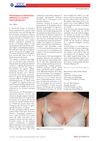
August 2012 in “Journal der Deutschen Dermatologischen Gesellschaft” A woman's hyperandrogenism was caused by a genetic mutation leading to non-classic adrenogenital syndrome.
 November 2025 in “International Journal of Research in Medical Sciences”
 Diffuse alopecia in females is often linked to certain medications, diseases, and low hemoglobin, while female pattern hair loss is linked to age, duration, and family history.
 January 2025 in “Journal of Clinical Medicine”
 PCOS is the most common cause of hirsutism, and personalized treatment is important.
 October 2024 in “Journal of the Endocrine Society”
 Ovarian steroid cell tumors can mimic adrenal hyperplasia, and surgery can normalize hormone levels.
 October 2024 in “Journal of the Endocrine Society”
 Early detection of ovarian steroid cell tumors is crucial to prevent lasting symptoms.
 May 2023 in “Stem cell research & therapy”
 New method efficiently isolates hair growth cells from newborn mouse skin.
 February 2020 in “Open Access Macedonian Journal of Medical Sciences”
 The patient with severe hirsutism improved after being diagnosed with non-classic congenital adrenal hyperplasia and treated with corticosteroids.
 June 2013 in “Expert Review of Dermatology”
 The article concludes that hormonal therapy is an effective long-term acne treatment, even for those without hormonal imbalances.