
There is no cure for myotonic dystrophy type 1, so treatment focuses on managing symptoms and complications.
 January 2023 in “Book of Abstracts”
 COVID-19 can cause different types of hair loss, with telogen effluvium being the most common.
 January 2022 in “Dermatology Review”
 Higher IL-31 levels are linked to worse itching in chronic kidney disease patients.
 September 2021 in “Physiology News”
 Air Vice-Marshal Sir Ralph Jackson significantly advanced dialysis technology in the UK.
 September 2021 in “Physiology News”
 Addressing underrepresentation in Parkinson's research is crucial for better treatments and understanding.

Optical Coherence Tomography has potential in diagnosing hair loss and monitoring blood clotting, and could be improved for deeper tissue observation and better hair loss understanding.

Early NAS level changes affect alcohol consumption vulnerability.
 January 2018 in “Deleted Journal”
 Managing PCOS effectively requires focusing on psychological health, lifestyle changes, and medication.
 October 2017 in “The American journal of gastroenterology”
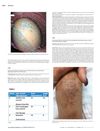
 Three patients suffered severe health issues due to not getting enough vitamins and minerals after weight-loss surgery.
 January 2017 in “Elsevier eBooks”
 Antioxidants may help improve mitochondrial health and could be used to treat diseases related to cell damage.
 January 2016 in “Springer eBooks”
 A 19-year-old male with delayed puberty was successfully treated for a condition that prevents normal hormone production.
 October 2010 in “Epilepsy Currents”
 Ketogenic diet, neurosteroids, and HMGB1-TLR4 signaling pathway are potential targets for new epilepsy treatments.
 June 2019 in “Brain Imaging and Behavior”
 Hair loss can indicate brain aging and potential small vessel disease, but more research is needed to understand the clinical impact.
 12 citations
,
March 2018 in “Analytical chemistry”
12 citations
,
March 2018 in “Analytical chemistry” Researchers created a new method to measure brain steroids, finding higher levels of certain steroids and changes due to a drug.
 18 citations
,
June 2019 in “Twin research and human genetics”
18 citations
,
June 2019 in “Twin research and human genetics” The 25Up study collected extensive data on mental disorders and related factors in Australian twins and siblings to investigate the genetics of psychiatric illnesses.
 14 citations
,
January 2020 in “International Journal of Biological Sciences”
14 citations
,
January 2020 in “International Journal of Biological Sciences” Multiphoton microscopy can effectively assess breast cancer treatment responses without labels.
 November 2023 in “Research Square (Research Square)”
 NIR-II imaging effectively tracked stem cells that helped repair facial nerve defects in rats.
 21 citations
,
September 2008 in “Magnetic Resonance Imaging”
21 citations
,
September 2008 in “Magnetic Resonance Imaging” MRI can effectively image skin structures noninvasively.
2 citations
,
September 2024 in “Lasers in Surgery and Medicine” Noninvasive scalp imaging techniques can improve patient care by reducing the need for biopsies.
46 citations
,
October 2018 in “Neuroscience Bulletin” 13 citations
,
November 2024 in “EClinicalMedicine” Standardized de-facing protocols can prevent identification from anonymized MRI images, enhancing privacy protection.
 November 2022 in “bioRxiv (Cold Spring Harbor Laboratory)”
 Using deep learning to predict gene expression from images could help assess colorectal cancer metastasis.
February 2024 in “Neurophotonics” Light therapy on the brain shows promise for treating brain diseases and improving brain function.
 April 2019 in “Journal of Investigative Dermatology”
 Non-coding RNA boosts retinoic acid production and signaling, aiding regeneration.
 1 citations
,
November 2016 in “Congenital Anomalies”
1 citations
,
November 2016 in “Congenital Anomalies” Get head MRI for babies with achondroplasia early, use free immunoglobulin light chains to detect certain neurodevelopmental disorders, and video calls work for speech therapy in patients with facial anomalies.
1 citations
,
May 2016 in “Journal of nature and science” The method successfully imaged hair follicles under the skin using iron nanoparticles.
 4 citations
,
January 2025 in “Translational Psychiatry”
4 citations
,
January 2025 in “Translational Psychiatry” Remote photobiomodulation improves brain injury outcomes and behavior in rats.
5 citations
,
March 2017 in “Immunology and Cell Biology” Biomedical imaging has greatly improved understanding and treatment of solid tumors.
8 citations
,
November 2019 in “Journal of Trace Elements in Medicine and Biology” Higher hair iron levels are linked to changes in brain structure and function.
26 citations
,
July 2023 in “International Journal of Nanomedicine” The microneedle system shows promise for non-invasive brain drug delivery.