 March 2026 in “Zenodo (CERN European Organization for Nuclear Research)”
 Restoring cell communication can treat tissue disorders.
 March 2026 in “Zenodo (CERN European Organization for Nuclear Research)”
 Restoring cell communication can treat tissue disorders.
 May 2023 in “Elsevier eBooks”
 The document's conclusion cannot be provided because the document is not readable or understandable.
 1 citations
,
November 2021 in “World Family Medicine Journal /Middle East Journal of Family Medicine”
1 citations
,
November 2021 in “World Family Medicine Journal /Middle East Journal of Family Medicine” The document outlines a plan to test if certain methods can prevent developmental delays in children at Pakistani public healthcare centers.
 April 2023 in “Journal of Investigative Dermatology”
 POUF51 and HES3 are key in controlling stem cell numbers in psoriasis.
January 2016 in “Methods in molecular biology” HAP stem cells in hair follicles could help repair nerves and spinal cords.
4 citations
,
April 2025 in “Frontiers in Immunology” Extracellular vesicles could offer precise treatments for psychiatric conditions by targeting brain networks.
109 citations
,
November 2011 in “Nature Neuroscience” 87 citations
,
June 2010 in “Stem Cell Research & Therapy” Stem cells can move to brain injury sites and be tracked, showing promise for treating brain diseases.
January 2026 in “AppliedMath” Pattern mode isolation improves the reliability and predictability of Turing patterns.
Breast cancer patients need better psychological support to improve their quality of life.
September 2004 in “Experimental Dermatology” Stress increases nerve growth factor, causing hair loss in mice.
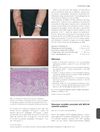 28 citations
,
February 2010 in “British journal of dermatology/British journal of dermatology, Supplement”
28 citations
,
February 2010 in “British journal of dermatology/British journal of dermatology, Supplement” WNT10A mutations cause varied symptoms in patients with odonto-onycho-dermal dysplasia.
 24 citations
,
January 2003 in “Journal of Investigative Dermatology”
24 citations
,
January 2003 in “Journal of Investigative Dermatology” Blocking a specific receptor slows down hair loss in mice.
September 2024 in “Egyptian Journal of Health Care” Teaching programs significantly improve adolescent girls' knowledge of PCOS.
 1 citations
,
May 2001 in “Hair transplant forum international”
1 citations
,
May 2001 in “Hair transplant forum international” The document's conclusion cannot be summarized because the content is not accessible or understandable.
5 citations
,
December 2024 in “Pharmaceutics” Nanomaterials could improve PCOS treatment by delivering drugs more effectively with fewer side effects.
 August 2024 in “Dermatological Reviews”
 New technologies are improving the diagnosis and treatment of hair and nail disorders.
 November 2006 in “Hair transplant forum international”
 The document's content couldn't be processed.
49 citations
,
January 2010 in “Plant and Cell Physiology” LPR1 regulates root growth under low phosphate stress independently of SIZ1 in Arabidopsis thaliana.
14 citations
,
March 2014 in “Acta anaesthesiologica Taiwanica” A man developed rare complications after nose surgery, stressing the need for better prevention.
December 2021 in “Figshare” BBS7 is crucial for maintaining periodontal health by supporting Shh signaling.
130 citations
,
January 2000 in “Nature biotechnology” 
CaBP1 and CaBP2 are important for continuous hearing by preventing inactivation of calcium currents in ear cells, with CaBP2 also able to restore hearing when reintroduced.
 19 citations
,
October 2024 in “BMC Medical Informatics and Decision Making”
19 citations
,
October 2024 in “BMC Medical Informatics and Decision Making” AI can improve early diagnosis and classification of PCOS, aiding in prevention of related health issues.
March 2006 in “The FASEB Journal” Two methods improved nerve regeneration and touch recovery in skin grafts for burn patients.
 January 2023 in “International Journal of Pharmaceutical Research and Development”
 Nanotechnology therapies can help improve quality of life for those with hair loss.
8 citations
,
December 2003 in “Experimental Dermatology” Altering the keratin 17 gene in mice hair follicles caused temporary hair issues, but changes were minimal and short-lived.
 February 2026 in “Dermatology and Therapy”
 AI can improve hair disorder diagnosis and treatment but can't replace doctors yet.