
Search
for
Sort by
Research
300-330 / 1000+ results 
research An Assessment on Impact of COVID-19 Infection in a Gender Specific Manner
Men have higher COVID-19 mortality rates than women due to biological and lifestyle factors.
research Botulinum Toxin Off-Label Use in Dermatology: A Review
Botulinum toxin shows promise for various skin conditions but requires more research for confirmation and standardized use.

research Exploring the Drug Repurposing Versatility of Valproic Acid as a Multifunctional Regulator of Innate and Adaptive Immune Cells
Valproic Acid could potentially be used to treat immune-related conditions due to its ability to modify immune cell functions.

research Hair removal with intense pulsed light
Intense pulsed light (IPL) is an efficient and safe method for hair removal, reducing hair by about 80%.

research Drug Repurposing - Hypothesis, Molecular Aspects and Therapeutic Applications
Drug repurposing is a cost-effective way to find new uses for existing drugs, speeding up treatment development.

research Teriflunomide (Aubagio®) for the treatment of multiple sclerosis
Teriflunomide is an effective and generally safe oral treatment for relapsing MS, reducing relapses and slowing disability progression.

research Two Hypomorphic Alleles of Mouse Ass1 as a New Animal Model of Citrullinemia Type I and Other Hyperammonemic Syndromes
Researchers created a new mouse model for studying Citrullinemia Type I and similar conditions, showing symptoms and treatment responses like those in humans.

research Repurposing existing drugs for COVID-19: an endocrinology perspective
Existing drug dexamethasone may lower death risk in severe COVID-19 cases; more research needed for other drugs.
research Progesterone, neurosteroids, and the hormonal basis of catamenial epilepsy
Progesterone and related compounds may help control seizures linked to the menstrual cycle but have limitations that need addressing.
research Teriflunomide in Patients with Relapsing–Remitting Forms of Multiple Sclerosis
Teriflunomide is effective and generally safe for treating relapsing-remitting multiple sclerosis.

research Parkinson's disease and skin
Parkinson's disease is linked to skin disorders and skin cells help in studying the disease.
research Caspase-1 Level Is Higher in the Scalp in Androgenetic Alopecia
Higher caspase-1 levels found in balding scalps; reducing it may help treat hair loss.

research Finasteride inhibits the disease-modifying activity of progesterone in the hippocampus kindling model of epileptogenesis
Finasteride worsens seizures in epilepsy rats and speeds up epileptogenesis in mice.
research Review of the effects of 17α-estradiol in humans: a less feminizing estrogen with neuroprotective potential
17α-estradiol is a safe estrogen that might protect the brain and doesn't cause feminization, needing more research for treating brain diseases.

research Nuclear Factor I-C Regulates TGF-β-dependent Hair Follicle Cycling*
Nuclear Factor I-C is important for controlling hair growth by affecting the TGF-β1 pathway.
research Procyanidins attenuate neuropathic pain by suppressing matrix metalloproteinase-9/2
Procyanidins from grape seeds reduce nerve pain by blocking specific proteins and inflammation.

research Mechanisms underlying select chemotherapeutic-agent-induced neuroinflammation and subsequent neurodegeneration
Chemotherapy can cause brain inflammation and damage, and understanding this process could help manage side effects.

research Multiple sclerosis disease-modifying therapies: adverse effect surveillance and management
The document concludes that managing side effects of MS therapies is crucial for treatment success and patient adherence.

research DERMATOLOGIC DISEASES AND PROBLEMS OF WOMEN THROUGHOUT THE LIFE CYCLE
Women experience various skin issues at different life stages, requiring careful treatment and awareness.
research Measuring the Burden of Disease in Korea Using Disability-Adjusted Life Years (2008–2020)
Korea should focus health policies on diseases and groups with high burdens.

research Comparison of Complications after Coronavirus Disease and Seasonal Influenza, South Korea
COVID-19 generally causes fewer complications than influenza, except for certain conditions like hair loss and heart issues.

research TSPO activation modulates the effects of high pressure in a rat ex vivo glaucoma model
Activating TSPO helps protect the retina from damage caused by high eye pressure in glaucoma.
research COVID-19 and hypopituitarism
COVID-19 and hypopituitarism (reduced pituitary gland function) are linked, with the latter's related health issues potentially worsening COVID-19 outcomes, and COVID-19 possibly increasing risk for pituitary complications.
research A case of recalcitrant pediatric Vogt-Koyanagi-Harada disease successfully controlled with adalimumab
Adalimumab helped control a child's severe eye disease when other treatments failed.

research Lupus erythematosus: considerations about clinical, cutaneous and therapeutic aspects
Lupus treatment requires a combination of drugs and therapies, with research needed for new options.
research Dermatological aspects of synthetic cannabinoid addiction
Synthetic cannabinoid addiction can cause skin problems like acne and hair loss.
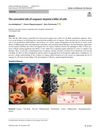
research The concealed side of caspases: beyond a killer of cells
Caspases do more than kill cells; they also help in cell growth and disease, and targeting them could lead to new treatments.
research A review of the sources and pharmacological research of morroniside
Morroniside has many health benefits, including protection against diabetes complications, bone and brain diseases, heart and skin issues, and it supports hair growth and reduces inflammation.
research Live imaging of Smad2/3 signaling in mouse skin wound healing
Smad2/3-dependent TGF-β signaling increases during wound healing.