Search
for
Sort by
Research
150-180 / 1000+ results
research Rapid formation of multicellular spheroids in double-emulsion droplets with controllable microenvironment
A new method quickly creates controllable cell clusters for tissue engineering and drug testing.
research A Body Divided: Toward Reunification of the Paradigm
The body and mind should be seen as interconnected for better medical understanding and treatment.

research Neuro-Inspired Biomimetic Microreactor for Sensory Recovery and Hair Follicle Neogenesis under Skin Burns
The device helps restore sensation and grow new hair follicles after skin burns.
research Multiple cell types guided by neurocytes orchestrate horn bud initiation in dairy goats
Nerve cells and other cell types work together to start horn growth in dairy goats.
research Stem Cells and Peripheral Nerve
Stem cells show promise for nerve injury treatment, but more research is needed before human use.

research 1439 Development of a complex skin organ in human induced pluripotent stem cell-derived organoids
Scientists created skin-like structures from stem cells that include features like hair and sweat glands.
research Three-Dimensional Morphology of Touch Domes in Human Hairy Skin by Correlative Light and Scanning Electron Microscopy
Touch domes in human skin are complex sensory structures not directly linked to hair.
research Isolation of a Novel Population of Multipotent Adult Stem Cells from Human Hair Follicles
Human hair follicles can provide stem cells for regenerative medicine.
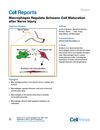
research Macrophages Regulate Schwann Cell Maturation after Nerve Injury
Macrophages help heal nerves by aiding the maturation of Schwann cells and are important for nerve repair.
research The advantages of hair follicle pluripotent stem cells over embryonic stem cells and induced pluripotent stem cells for regenerative medicine
Hair follicle stem cells are a practical and ethical option for nerve repair in regenerative medicine.
research Spherical Skin Model: Stratified Co‐Culture of Fibroblasts and Keratinocytes on Spherical Beads Toward Compound Screening
The Spherical Skin Model improves drug and cosmetic testing by accurately mimicking human skin for efficient compound screening.

research 329 In vitro co-culture models of merkel cell-neurite complex in touch domes
The study concluded that the developed models are effective for studying hair growth mechanisms and testing new treatments.
research Transplanted hair follicle stem cells migrate to the penumbra and express neural markers in a rat model of cerebral ischaemia/reperfusion
Hair follicle stem cells may help repair the brain after a stroke.
research Giant pigmented tumour of the scalp—a diffuse neurofibroma or a congenital naevus showing neurofibromatous changes? Immunohistochemical and electron microscopic studies
The tumor likely shows dual neural crest differentiation.
research TTNPB Promotes Human Pluripotent Stem Cell‐to‐Neural Stem Cell Transition via Modulation of Chromatin Accessibility and the S‐(5′‐adenosyl)‐L‐homocysteine/Choline Metabolic Network
TTNPB helps turn stem cells into neural stem cells, improving depression-like behaviors in rats.
research Defining compartmentalized stem cell populations with distinct cell division dynamics in the ocular surface epithelium
Stem cells in the eye have different roles and behaviors, helping maintain and repair the eye's surface.
research Hair-follicle-associated pluripotent (HAP) stem cells
HAP stem cells can repair nerves and spinal cords by becoming Schwann cells.
research Skin-derived stem cells as a source of primordial germ cell- and oocyte-like cells
Skin-derived stem cells can become various cell types, including germ cell-like and oocyte-like cells.

research Hair follicle stem cell-derived secretome protects astrocytes in an in vitro ischemia/reperfusion model
Hair follicle stem cell secretions may help protect brain cells and improve stroke recovery.

research Tissue homeostasis
Humans have limited regenerative abilities, but new evidence shows the adult brain and heart can regenerate, and future treatments may improve this by mimicking stem cell environments.

research Human Epidermal Neural Crest Stem Cells (hEPI-NCSC)—Characterization and Directed Differentiation into Osteocytes and Melanocytes
Human epidermal neural crest stem cells can become bone and skin pigment cells, making them useful for therapies.
research Faculty Opinions recommendation of Stem cell niche exit in C. elegans via orientation and segregation of daughter cells by a cryptic cell outside the niche.
Stem cell niche exit in C. elegans is influenced by Sh1 cell membrane protrusions.

research Trajectory of hiPSCs derived neural progenitor cells differentiation into dermal papilla-like cells and their characteristics
Human stem cells were turned into cells similar to those that help grow hair and showed potential for hair follicle formation.
research The stem cell niche
Stem cell niches are essential for tissue health and repair.

research Hardwiring Stem Cell Communication through Tissue Structure
The conclusion is that tissue structure is key for stem cell communication and maintaining healthy tissues.
research Isolation of Multipotent Nestin-Expressing Stem Cells Derived from the Epidermis of Elderly Humans and TAT-VHL Peptide-Mediated Neuronal Differentiation of These Cells
Stem cells from elderly skin can become neurons, offering potential for brain therapy.
research The Stem Cell Niche
Understanding stem cell environments is key to developing treatments for various diseases and injuries.

research Neurobiology, Stem Cell Biology, and Immunology: An Emerging Triad for Understanding Tissue Homeostasis and Repair
The nervous system helps control stem cell behavior and immune responses, affecting tissue repair and maintenance.
research Formulation and Evaluation of PLGA Nanoparticulate-Based Microneedle System for Potential Treatment of Neurological Diseases
The microneedle system shows promise for non-invasive brain drug delivery.