 61 citations
,
June 2018 in “Proceedings of the National Academy of Sciences of the United States of America”
61 citations
,
June 2018 in “Proceedings of the National Academy of Sciences of the United States of America” Light can turn on hair growth cells through a nerve path starting in the eyes.
 1 citations
,
April 2022 in “Journal of The American Academy of Dermatology”
1 citations
,
April 2022 in “Journal of The American Academy of Dermatology” Hair loss in men (androgenetic alopecia) is significantly linked to decreased scalp sensitivity, but not temperature sensitivity. More research is needed to confirm this. Comparing this hair loss to leprosy is unsupported and stigmatizing.
 September 2013 in “Science”
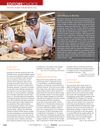
 Human stem cells can aid stroke recovery, research experiences boost students' career aspirations, minoxidil may reduce cancer spread, a molecule can slow tumor growth, a protein affects water flow in cells, magnesium behaves differently at tiny scales, and a new method detects slow-moving objects.
1 citations
,
March 2018 in “F1000Research” Diabetic neuropathy in mice is linked to poor mitochondria function and lower brain hormone production.
2 citations
,
September 2004 in “Experimental Dermatology” VR1 signaling can inhibit hair growth by affecting cell processes and increasing hair growth inhibitors.
61 citations
,
September 2011 in “Pain” PEA reduces pain by increasing neurosteroid synthesis in the spinal cord.
 96 citations
,
October 2000 in “The FASEB Journal”
96 citations
,
October 2000 in “The FASEB Journal” The p75 neurotrophin receptor is important for hair follicle regression by controlling cell death.
135 citations
,
May 2002 in “Anesthesiology” CRPS type I is a complex pain condition with no proven cure, requiring personalized treatment.
33 citations
,
January 2008 in “Journal of Molecular Neuroscience” 52 citations
,
April 2002 in “Brain Research” Lower allopregnanolone levels increase stress-related dopamine release in the brain.
Botulinum toxin type A reduces itch and inflammation from histamine and may help treat certain skin conditions and hair loss.
4 citations
,
January 2024 in “Allergy” Everyone has an immune response to PPD, but reactions differ, causing tolerance, mild inflammation, or allergy.
Women with androgenetic alopecia have noticeable changes in their autonomic nervous system.
 15 citations
,
June 2019 in “Experimental Dermatology”
15 citations
,
June 2019 in “Experimental Dermatology” Old neuropharmacological drugs might be effective for treating inflammatory skin diseases.
The transcription factor Meis2 is essential for touch sensation and proper nerve development in touch receptors.
Meis2 is essential for touch sensation and proper nerve connection to touch receptors in certain skin areas of mice.
Female rats showed more panic-related behavior than males, influenced by hormonal cycles and certain drugs.
 June 2020 in “Faculty Opinions – Post-Publication Peer Review of the Biomedical Literature”
 Stress causes hair graying by overactivating nerves that deplete color-giving stem cells.
 May 2024 in “Scientific Reports”
 Androgen receptors in the mouse brain may explain cognitive and mood changes in prostate cancer treatment.
January 2025 in “TURKDERM” Alopecia areata patients experience more psychological distress, linked to certain neurotrophin levels.
 August 2004 in “Journal of the American College of Surgeons”
 Dermagraft and Dermalogen had a lot of granulation, while Alloderm, Integra, and ADM had good blood vessel growth for skin healing.
 May 2022 in “Голова и шея.”
 Elderly women in Northern Russia have higher anxiety and different brain energy patterns than men.
 December 2015 in “Vascular Pharmacology”
 Different cells affect hair follicle blood vessels, endothelial cells react differently to inflammation and oxidized fats, and prasugrel better protects heart vessels during a procedure than clopidogrel.
24 citations
,
July 2016 in “Steroids” Progesterone and testosterone protect brain cells from damage through specific pathways.
 4 citations
,
January 2025 in “Translational Psychiatry”
4 citations
,
January 2025 in “Translational Psychiatry” Remote photobiomodulation improves brain injury outcomes and behavior in rats.
 February 2024 in “Curēus”
 Regional nerve blocks are better than ring blocks for pain relief during PRP hair treatment.
 27 citations
,
May 2008 in “Neuroscience”
27 citations
,
May 2008 in “Neuroscience” Finasteride given to baby rats causes anxiety-like behavior and worsens learning from punishment in adult rats.
November 2007 in “Science” Keratin-based hydrogels from human hair help nerve repair better than traditional methods.
 12 citations
,
April 2020 in “British Journal of Dermatology”
12 citations
,
April 2020 in “British Journal of Dermatology” Caffeine may help reduce stress-induced hair loss.
 31 citations
,
July 2004 in “Molecular Medicine”
31 citations
,
July 2004 in “Molecular Medicine” Certain defective glucocorticoid receptor mutants move faster inside cell nuclei and work less effectively.