 May 2025 in “The Journal of Rheumatology”
 Antiphospholipid syndrome can severely damage adrenal glands, requiring early diagnosis and treatment.
 May 2025 in “The Journal of Rheumatology”
 SLE can cause unusual gastrointestinal symptoms, and immunosuppressive therapy can be effective.
Baricitinib is more effective than methotrexate for severe alopecia areata.
 April 2024 in “Journal of asthma and allergy”
 Abrocitinib effectively treated severe atopic dermatitis and mild alopecia areata in a 12-year-old boy after dupilumab failed.

Ayurvedic herbs may reduce side effects and improve effectiveness of cancer treatments.
 February 2024 in “PloS one”
 Tofacitinib and adalimumab are promising treatments for cicatricial alopecia with few side effects.
 January 2024 in “American journal of clinical dermatology”
 Ritlecitinib is safe and well-tolerated for treating alopecia areata in patients aged 12 and older.
 January 2024 in “Frontiers in immunology”
 Histone modification is key in treating chronic inflammatory skin diseases.
 January 2024 in “International Journal of Dermatology Venereology and Leprosy Sciences”
 Tofacitinib may be safe and effective for treating certain skin conditions in children.
 December 2023 in “Revista de la Facultad de Ciencias Médicas (Quito)”
 Fever and rash can be early signs of lupus.
 October 2023 in “Dermatology practical & conceptual”
 Pulse corticosteroids help regrow hair in alopecia areata but have side effects, especially betamethasone.
 February 2023 in “Acta Scientific Women s Health”
 New treatments like PBMC, G-CSF, and PRP show promise for helping with repeated implantation failure.
 February 2023 in “Journal of Korean Medical Association”
 Targeted cancer therapies can cause new side effects, requiring careful monitoring and management to ensure patient safety.
 December 2022 in “Sudan Journal of Medical Sciences”
 Vaccination is the most effective way to reduce COVID-19 transmission.
 January 2022 in “Dermatology Review”
 Higher IL-31 levels are linked to worse itching in chronic kidney disease patients.
 June 2021 in “International Journal of Ayurveda and Pharma Research”
 Moorvadi choornam may help reduce chemotherapy side effects.
 March 2020 in “Central European Journal of Biology”
 The study found that stem cells and neutrophils are important for regenerating hair follicle structures in mice.
 January 2019 in “Przegląd Dermatologiczny”
 Chemotherapy with docetaxel can cause painful nail and skin side effects that may lead to stopping treatment.
 March 2018 in “International journal of basic and clinical pharmacology”
 Carboplatin-paclitaxel is preferred for advanced lung cancer due to its balance of affordability and patient well-being.
 August 2016 in “PolyPublie (École Polytechnique de Montréal)”
 Doxorubicin causes heart damage, so early detection and monitoring are important during chemotherapy.
 July 2016 in “American Journal of Dermatopathology”
 The meeting showcased rare skin disease cases, highlighting the need for accurate diagnosis and treatment.
 September 2013 in “Neurodegenerative disease management”
 Teriflunomide is effective and generally safe for treating relapsing multiple sclerosis, reducing relapse rates and disability progression.
 January 2013 in “Journal of dermatology”
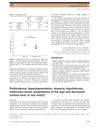
 A new medical syndrome may include skin changes, hair loss, sweating issues, bone malformations, leg swelling, and low cortisol.
 August 2012 in “Pharmaceutical Medicine”
 The document concludes that various medications and treatments can have significant, sometimes adverse, effects on health outcomes.
 March 2010 in “Anti-inflammatory & anti-allergy agents in medicinal chemistry”
 Biologic agents can be effective for rheumatic diseases but have risks like infections and require careful monitoring and patient information.
 July 2008 in “Biomedical Imaging and Intervention Journal”
 New cancer treatments are more precise and less toxic, improving survival rates, but Asia faces challenges in adopting these advancements.
 March 2008 in “Aging health”
 Docetaxel is safe and works well for older people with cancer, with manageable side effects.
 July 1997 in “Journal of Cutaneous Medicine and Surgery”
 Finasteride significantly increases scalp hair and prevents hair loss in young and middle-aged men.
 May 1993 in “Drugs & Therapy Perspectives”
 Formestane is a preferred second-line treatment for advanced breast cancer in postmenopausal women because it's effective and has fewer side effects.
Treatments for acute leukaemia lead to high remission rates, but relapses occur, requiring ongoing advancements in care.