April 2016 in “The journal of investigative dermatology/Journal of investigative dermatology” Neoplasms hide in hair follicles to avoid the immune system.
May 2002 in “Therapeutische Umschau” Hypertrichosis and hirsutism can cause psychological issues, with laser treatments being the most promising for permanent hair removal.
 17 citations
,
January 2011 in “Indian journal of dermatology, venereology, and leprology”
17 citations
,
January 2011 in “Indian journal of dermatology, venereology, and leprology” A rare genetic skin condition usually affecting males was found in a 9-year-old girl.
110 citations
,
August 2004 in “British Journal of Dermatology” The ventral matrix is the main source of the nail plate.
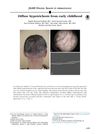 September 2016 in “Journal of The American Academy of Dermatology”
 The girl has a genetic hair condition causing thin hair since childhood.
112 citations
,
January 2013 in “Experimental dermatology” Faulty Notch signalling may cause hair follicle changes and inflammation in hidradenitis suppurativa.
37 citations
,
May 1998 in “Journal of Dermatological Science” Basal cell carcinoma shows keratin patterns similar to undifferentiated hair follicle cells.
38 citations
,
September 1997 in “The journal of investigative dermatology/Journal of investigative dermatology” A mutation in mice causes hair loss and skin issues due to a defect in a gene affecting cell adhesion.
2 citations
,
January 2017 in “Indian Dermatology Online Journal” A rare skin reaction from laser hair removal can be prevented with medication.
5 citations
,
January 2024 in “Aesthetic Surgery Journal” Using sun protection and diode laser SHR reduces unexpected hair growth after laser hair removal.
1 citations
,
January 2017 in “International Journal of Trichology” A new mutation caused a rare hair disorder in a Polish girl, not inherited from her family.
47 citations
,
November 1966 in “Archives of Dermatology” Trichorrhexis nodosa is mainly caused by hair trauma, not a metabolic defect.
1 citations
,
April 2024 in “Animal Genetics” A genetic defect in an Appenzeller Mountain Dog caused skin issues, improved with ketoconazole, showing the importance of advanced genetic testing.
59 citations
,
August 1981 in “PubMed” Trichilemmal keratinization is a unique process in hair follicles where the outer root sheath turns into keratin without a specific layer.
 89 citations
,
June 2012 in “Anais Brasileiros de Dermatologia”
89 citations
,
June 2012 in “Anais Brasileiros de Dermatologia” Actinic keratosis can lead to skin cancer, is more common in fair-skinned people, and can be reduced with sunscreen and treated effectively.
 September 2022 in “IP Indian journal of clinical and experimental dermatology”
 An 8-year-old girl has a rare genetic disorder causing complete, irreversible hair loss and skin bumps.
 November 2017 in “International journal of research in dermatology”
 A rare skin disorder, nevus comedonicus, can appear on one side of the body following Blaschko's lines.
 27 citations
,
April 2018 in “Scientific Reports”
27 citations
,
April 2018 in “Scientific Reports” Psoriasis patients' immune response to a hair protein depends on their specific gene type.
18 citations
,
January 1992 in “Dermatology” A 4-year-old girl has a rare condition causing hairlessness and skin bumps, but normal teeth and sweating.
12 citations
,
January 2013 in “Indian dermatology online journal” Dermatopathia pigmentosa reticularis causes skin discoloration, hair loss, and nail problems.
35 citations
,
January 2008 in “American Journal of Clinical Dermatology” KFSD can be linked to acne keloidalis nuchae and tufted hair folliculitis.
31 citations
,
March 1995 in “Journal of Investigative Dermatology” 38 citations
,
June 2005 in “International Journal of Dermatology” A man with nevus comedonicus syndrome had multiple skin issues, including basal cell carcinomas, which improved with treatment.
 10 citations
,
July 2015 in “Current opinion in pediatrics, with evaluated MEDLINE/Current opinion in pediatrics”
10 citations
,
July 2015 in “Current opinion in pediatrics, with evaluated MEDLINE/Current opinion in pediatrics” New genes linked to ichthyosis were found, but there's still no cure; treatment options are improving.
75 citations
,
September 1985 in “Archives of dermatology” Two boys had a rare skin condition needing to be differentiated from similar disorders, with unclear inheritance due to few cases.
 September 2024 in “Journal of Medical Case Reports”
 People with keratosis pilaris might be more likely to get a rare type of tinea versicolor.
 April 2017 in “The journal of investigative dermatology/Journal of investigative dermatology”
 HSD11b1 affects skin nerves and increases non-histaminergic itch.
10 citations
,
April 2013 in “Journal of Investigative Dermatology” Epidermolytic ichthyosis can be inherited in a semidominant way with mild symptoms in carriers.
4 citations
,
January 2020 in “Dermatology Online Journal” Congenital atrichia with papular lesions causes permanent hair loss and skin bumps due to a gene mutation.
 July 2022 in “The journal of investigative dermatology/Journal of investigative dermatology”
 The early genes of a specific virus can cause abnormal skin cell growth and hair follicle changes.