July 2020 in “Zenodo (CERN European Organization for Nuclear Research)” Pioglitazone combined with metformin or spironolactone improves PCOS symptoms and insulin resistance.
Hedgehog signaling can create new hair follicles in adult skin but may increase cancer risk.
 September 2019 in “Journal of Investigative Dermatology”
 Researchers developed a 3D skin model with its own immune and blood vessel cells to better understand skin health and disease.
 August 2019 in “bioRxiv (Cold Spring Harbor Laboratory)”
 The model successfully predicted new uses for existing drugs, like using certain hormonal and heart medications for respiratory and Parkinson's diseases, and a cancer drug for diabetes.
Hedgehog signaling can create new hair follicles but may also cause tumors.
April 2019 in “Journal of Investigative Dermatology” Researchers created a new mouse model for studying scleroderma.
Researchers created a new mouse model, G4, that mimics human PCOS symptoms and links the condition to a specific gene.
 December 2018 in “Actas urológicas españolas”
 5-alpha reductase inhibitors may have additional effects on cancer, mental health, heart health, and hormone levels beyond treating prostate enlargement.
 November 2018 in “The Journal of Allergy and Clinical Immunology: In Practice”
 Using old drugs for new uses can help treat rare immune deficiencies.
 July 2018 in “European Medical Journal”
 Fumaric acid esters, especially dimethylfumarate, improve psoriasis treatment.
 January 2018 in “Hair transplant forum international”
 Naltrexone shows promise as a safe treatment for a type of hair loss called lichen planopilaris.
 June 2016 in “Experimental Dermatology”
 Changing hair follicle identity could potentially reverse balding.
April 2016 in “Journal of Investigative Dermatology” Mutations in the TSPEAR gene cause a new form of ectodermal dysplasia affecting hair and tooth development.
 January 2016 in “The Australian Pharmacist”
 Tofacitinib might be used to treat hair loss.
 November 2015 in “European Journal of Inflammation”
 Cicatricial alopecia, a permanent hair loss condition, is mainly caused by damage to specific hair follicle stem cells and abnormal immune responses, with gene regulator PPAR-y and lipid metabolism disorders playing significant roles.
 March 2014 in “Journal of The American Academy of Dermatology”
 Cortexolone 17a-propionate may be an effective new treatment for hair loss.
EMTV news harms nation-building in Papua New Guinea by promoting Western values and negative stories, creating a biased and divisive cultural image.
 December 2013 in “International Journal of Dermatology”
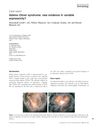
 The clinical signs of Adams-Oliver syndrome can vary greatly, even among family members.
February 2009 in “Mayo Clinic proceedings” A woman's new seizures were caused by a brain tumor likely linked to her past cancer treatment, and choosing safe seizure medications is important for women who can have children.
The curly mutation in SELH/Bc mice affects hair and may help study human genetic disorders.

The vitamin D receptor has many roles in the body beyond managing calcium, affecting the immune system, hair growth, muscles, fat, bone marrow, and cancer cells.
 July 2003 in “Pediatrics in review”
 In 2001, the FDA approved 12 new drugs for children to treat allergies, asthma, ADHD, birth control, and other conditions.
 July 1996 in “Hair transplant forum international”
 The document's content couldn't be processed.
 March 1982 in “American pharmacy”
 The document explains how to determine your tax bracket and the effects of income changes on taxes.
March 1957 in “Archives of Dermatology” The treatments tried did not work for her alopecia areata.
January 2023 in “International Journal of Trichology” Bicalutamide mesotherapy may help with hair loss and seborrhea but needs more research.
June 2022 in “South Florida Journal of Health” Scalp Threading is a promising new treatment for hair loss that may work better than current options.
 January 2022 in “المجلة العراقية للصيدلة”
 Minoxidil, a hair growth stimulant, is effective in treating hair loss and new formulas like nanoemulsion and nanocarrier systems have improved its delivery.
The arrector pili muscle plays a key role in hair loss in androgenetic alopecia.
December 2015 in “Endocrinology and Metabolic Syndrome”