Physical exams are crucial for assessing and managing the health of newborn animals.
June 2019 in “Kufa journal for veterinary medical sciences” Vitamin C deficiency causes severe skin problems in newborn dairy calves.
Platelet-rich plasma improves skin and hair growth in newborn mice.
 April 2017 in “Journal of Investigative Dermatology”
 Researchers improved a method to study individual cells in newborn mouse skin and found a way to assess the severity of a skin condition in humans.
 February 2024 in “Psychoneuroendocrinology”
 Higher anxiety during pregnancy is linked to lower cortisol levels in newborns' hair.
 February 2024 in “Psychoneuroendocrinology”
 Higher prenatal anxiety is linked to lower cortisol levels in newborns' hair.
 205 citations
,
April 2005 in “Journal of Investigative Dermatology”
205 citations
,
April 2005 in “Journal of Investigative Dermatology” Scientists have found a way to create hair follicles from skin cells of newborn mice, which can grow and cycle naturally when injected into adult mouse skin.
 8 citations
,
November 2020 in “Nature Communications”
8 citations
,
November 2020 in “Nature Communications” Adult stem cells with Tp63 can form hair and skin cells when placed in new skin, showing they have hidden abilities for skin repair.
5 citations
,
January 2001 in “Journal of dermatological science” The G(S) alpha subunit gene may help start hair follicle growth in newborn mice.
 May 2016 in “Research opinions in animal & veterinary sciences”
 Maternal aspartame consumption during pregnancy leads to skin damage and higher apoptosis in newborn rat offspring.
 7 citations
,
July 2003 in “Clinics in Dermatology”
7 citations
,
July 2003 in “Clinics in Dermatology” The article helps identify common, non-harmful skin conditions in newborns to avoid undue concern and treatment.
 September 2018 in “Fertility and Sterility”
 High levels of testosterone and anti-Müllerian hormone before pregnancy are linked to a higher risk of newborns needing intensive care.
 28 citations
,
February 1999 in “Journal of Investigative Dermatology”
28 citations
,
February 1999 in “Journal of Investigative Dermatology” Urokinase, a type of protein, helps skin cells multiply faster, especially in newborn mice.
7 citations
,
April 2022 in “Journal of pharmaceutical and biomedical analysis” The method can measure multiple steroids in human hair to study long-term steroid metabolism, especially in newborns and children.
7 citations
,
January 2013 in “Indian dermatology online journal” A rare skin condition with dark, thick, warty patches and some hair loss was found in a newborn boy.
 1 citations
,
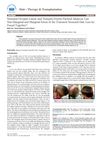
February 2014 in “Hair therapy & transplantation”
1 citations
,
February 2014 in “Hair therapy & transplantation” A baby boy had two types of temporary hair loss at birth, which might be two forms of newborn hair loss combined.
 8 citations
,
September 2002 in “Genes to Cells”
8 citations
,
September 2002 in “Genes to Cells” Killing specific cells in hair follicles can lead to hair growth problems in mice.
January 2022 in “Indian dermatology online journal” A baby with a skin condition improved with treatment but developed a rare form of the condition affecting only his trunk.
 May 2022 in “Clinical Epigenetics”
 A mother's iron levels early in pregnancy can influence the DNA makeup of her child, potentially affecting the child's health.
 11 citations
,
September 1996 in “Neuroscience letters”
11 citations
,
September 1996 in “Neuroscience letters” Adding fetal calf serum helps Merkel cells survive and change shape.
10 citations
,
January 1985 in “PubMed” Low zinc levels in hair are linked to hair loss and diaper rash in infants.
2 citations
,
September 1996 in “Neuroscience letters” Adding fetal calf serum to the medium kept Merkel cells alive and changed their shape.
 December 2025 in “Frontiers in Veterinary Science”
 Key genes like KRT27 and IGF-2 are crucial for hair follicle development in Qianhua Mutton Merino sheep.
 February 2016 in “The journal of allergy and clinical immunology/Journal of allergy and clinical immunology/The journal of allergy and clinical immunology”
 A new TP63 mutation was found in a baby with EEC syndrome, showing the need for TREC testing to check for immune issues.
January 2026 in “Veterinary Sciences” Skin maturation in Dezhou donkey foals involves better barrier function, hair growth, and less collagen production.
January 2026 in “Neuroscience Applied” Hair cortisol levels decrease as children age, stabilizing around age 4.
September 2017 in “Journal of Evidence Based Medicine and Healthcare” Eczema is the most common skin condition in children.
January 2010 in “Zhongguo xiandai yixue/Zhongguo xiandai yixue zazhi” Skin stem cells can become different cell types, like hair or bone cells, in lab conditions.
54 citations
,
June 2001 in “The Indian Journal of Pediatrics” Lower hair zinc levels may be linked to Neural Tube Defects.
39 citations
,
July 1993 in “The journal of investigative dermatology/Journal of investigative dermatology” FGF and EGF are crucial for hair follicle development and growth.