5 citations
,
November 2012 in “Journal of Clinical Psychopharmacology” Valproic acid and isoniazid can interact, causing toxicity, so careful monitoring is needed.
Thai plant extracts, especially Avicennia marina, can promote hair growth by inhibiting certain enzymes and boosting growth factors.
 28 citations
,
March 2014 in “International Journal of Nanomedicine”
28 citations
,
March 2014 in “International Journal of Nanomedicine” New lipid nanoparticles show promise for delivering hair loss treatments but need improvement for better skin penetration.
39 citations
,
November 2017 in “PubMed” Low-dose naltrexone helps reduce symptoms and slow down lichen planopilaris without side effects.
 1 citations
,
April 1987 in “American Journal of Nursing”
1 citations
,
April 1987 in “American Journal of Nursing” Some drugs can cause serious side effects, like hypoglycemia from mix-ups, skin reactions, or depression, and while penicillamine may help rheumatoid arthritis more than auranofin, it has more severe side effects.

DiluCap improves how quickly minoxidil and finasteride dissolve and controls the release of melatonin and naltrexone.
Nanostructured lipid carriers can improve androgenic alopecia treatment by reducing dutasteride dosage and maintaining its presence in hair follicles longer.
 February 2025 in “Journal of Investigative Dermatology”
 DMG-Na may help reduce hair loss and improve hair growth, but more research is needed.
 1 citations
,
July 2016 in “Reactions Weekly”
1 citations
,
July 2016 in “Reactions Weekly” Finasteride can cause itching, burning, and other side effects that may not go away after treatment.
May 2025 in “OPAL (Open@LaTrobe) (La Trobe University)” Jamogenin and other molecules from plants may help treat hair loss.
 7 citations
,
June 2010 in “Bioorganic & medicinal chemistry letters”
7 citations
,
June 2010 in “Bioorganic & medicinal chemistry letters” Two new compounds were found to effectively reduce hair growth in mice.
 November 2019 in “Synapse”
 Brain-made chemicals can control nerve cell function differently in various parts of a mouse's brain, which may help us understand neurological conditions.
May 2025 in “OPAL (Open@LaTrobe) (La Trobe University)” Linoleic acid and magnesium are key in alopecia areata progression, and tofacitinib can help by affecting their pathway.
 May 2015 in “Journal of The American Academy of Dermatology”
 Niosomal minoxidil, when applied topically, increases hair count more than conventional minoxidil solution.
181 citations
,
July 2004 in “Journal of controlled release” Smaller nanoparticles improve minoxidil absorption through hair follicles.
 February 2026 in “Indian Journal of Skin Allergy”
 Ruxolitinib cream effectively treats skin conditions like atopic dermatitis and vitiligo with minimal side effects.
54 citations
,
March 2024 in “Journal of Medicinal Chemistry” N-oxides are important in medicine for improving drug properties and targeting.
3 citations
,
June 2023 in “Molecules/Molecules online/Molecules annual” Cepharanthine has many medicinal uses but needs improvement for better effectiveness.
253 citations
,
June 2004 in “Journal of Controlled Release” Smaller nanoparticles improve minoxidil delivery through hair follicles.
1 citations
,
May 2021 in “Journal of the Endocrine Society” A woman developed Cushing syndrome and adrenal insufficiency from using fluticasone and ritonavir together.
 4 citations
,
January 2014 in “RSC Advances”
4 citations
,
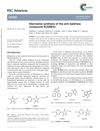
January 2014 in “RSC Advances” A new, less toxic and more efficient method to create the anti-baldness compound RU58841 was developed in 2014.
 17 citations
,
February 1989 in “Fertility and sterility”
17 citations
,
February 1989 in “Fertility and sterility” Cimetidine did not reduce hair growth in women with hirsutism.
September 2019 in “Journal of Investigative Dermatology” PCE-DP brightens skin and promotes hair growth by enhancing cell growth and reducing melanin uptake.
3 citations
,
November 1998 in “PubMed” 
Lipid carriers improve delivery of hair loss treatments to follicles.
6 citations
,
October 2021 in “Brain Sciences” Dutasteride may help reduce brain inflammation and improve cognition.
 January 2024 in “Case Reports in Dermatological Medicine”
 Baricitinib may effectively treat nail changes in alopecia areata.
 February 2024 in “Current Bioactive Compounds”
 The new gel formulation effectively delivers Finasteride for hair growth treatment without skin irritation.
1 citations
,
April 2002 in “PubMed” Anti-epileptic drugs may cause visual and hair side effects due to enzyme inhibition, especially in genetically predisposed individuals.
January 2011 in “Archivio Istituzionale della Ricerca (Universita Degli Studi Di Milano)” New molecules can prevent cell death in hair follicles.