November 2025 in “Journal of Clinical Medicine” Advancements in regenerative science and longevity research can improve healthspans, but must be balanced with ethics and safety.
October 2025 in “Pharmaceuticals” Auranofin shows promise as a cancer treatment, especially when combined with other therapies.
August 2025 in “Animal nutrition” α-Ketoglutaric acid improves hair growth, rabbit performance, and antioxidant levels.
July 2025 in “Nano Research” Nanotechnology can improve tissue healing by controlling immune responses.

Periplaneta americana extract promotes hair growth and is safe for treating hair loss.
 June 2025 in “Current Issues in Molecular Biology”
 Meloside A may help protect hair cells from damage linked to hair loss.
1′S-1′-Acetoxychavicol acetate may help treat hair loss by reducing oxidative stress.
May 2025 in “Journal of Clinical Medicine” Women with alopecia areata have poor blood flow, possibly due to nerve inflammation.
 March 2025 in “Nature Communications”
 NSC167409 can effectively inhibit the virus causing hand, foot, and mouth disease.
 February 2025 in “Healthcare”
 Caffeine may help with hair loss, but more research is needed.
 January 2025 in “Journal of Cutaneous and Aesthetic Surgery”
 Low-level laser therapy effectively improves hair growth in androgenetic alopecia with minimal side effects.
 January 2025 in “Yonsei Medical Journal”
 Mastic gum and peppermint extracts may promote hair growth and health.
 January 2025 in “Dermatologic Therapy”
 Targeting multiple pathways may improve treatments for androgenetic alopecia.
 November 2024 in “Journal of Clinical Medicine”
 The treatment improved hair thickness, shine, and reduced hair loss effectively.
 November 2024 in “Applied Sciences”
 Placenta products might help with hair loss, but more research is needed.
 October 2024 in “Our Dermatology Online”
 Mitochondrial dysfunction links metabolic syndrome and inflammatory skin diseases, suggesting targeted therapies and lifestyle changes.
 September 2024 in “International Journal of Molecular Sciences”
 Hydrangea serrata extract may promote hair growth and improve hair health.
July 2024 in “International Journal of Molecular Sciences” MicroRNAs could help assess and manage multiple chronic diseases.
 June 2024 in “jurnal ABDIMAS Indonesia”
 Vitamin D education and supplementation improve hair health in the elderly.
 June 2024 in “Computational and Structural Biotechnology Journal”
 Multi-omics techniques help understand the molecular causes of androgenetic alopecia.
 June 2024 in “Molecules/Molecules online/Molecules annual”
 Platycladus orientalis flavonoids protect balding hair from UV damage and slow hair color change.
June 2024 in “Regenerative Therapy” Exosomes from stem cells may help rejuvenate skin and regrow hair, but more research is needed.
 May 2024 in “BMC veterinary research”
 Metabolites and diet affect hair growth cycles in cashmere goats.
March 2024 in “International journal of molecular sciences” Mitochondrial dysfunction is linked to various skin conditions and could be a target for treatments.
Light exposure is crucial for health, helping prevent and treat illnesses.
February 2024 in “Veterinary sciences” Canine pemphigus foliaceus involves significant immune activity and shares similarities with human pemphigus.
 January 2024 in “Biology of sex differences”
 Dihydrotestosterone makes arteries stiffer in female mice by reducing estrogen receptor expression.
 October 2023 in “Cell & bioscience”
 A special gene region controls the re-emergence of a primitive wool type in Merino sheep, improving their wool yield and adaptability.
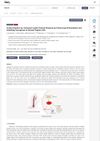 June 2023 in “Antioxidants”
 Lipids from Schizochytrium sp. help prevent hair loss by protecting hair cells from damage and promoting hair growth.
 May 2023 in “International Journal of Molecular Sciences”
 Mesenchymal stem cells could help treat radiation-induced bladder damage but more research is needed to overcome current limitations.